Known as Lisboa (leezh BOH ah)by the residents – which comes from the Phoenician Alis Ubbo, meaning “calm port”.
“I haven’t been everywhere, but it’s on my list.” – Susan Sontag
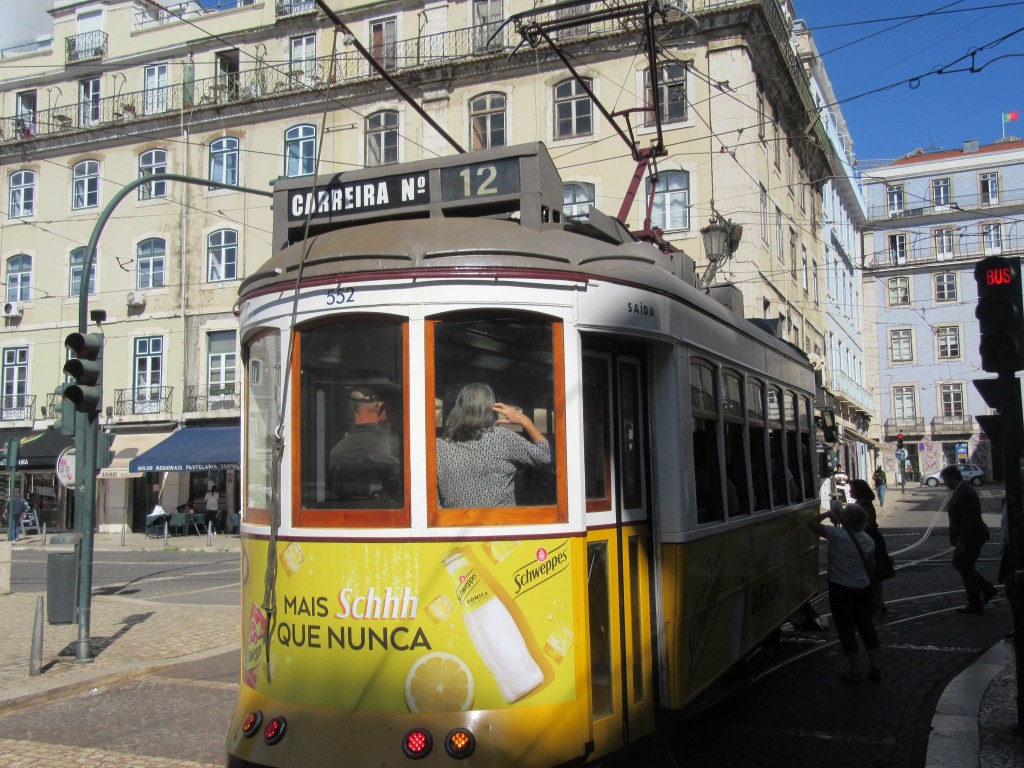
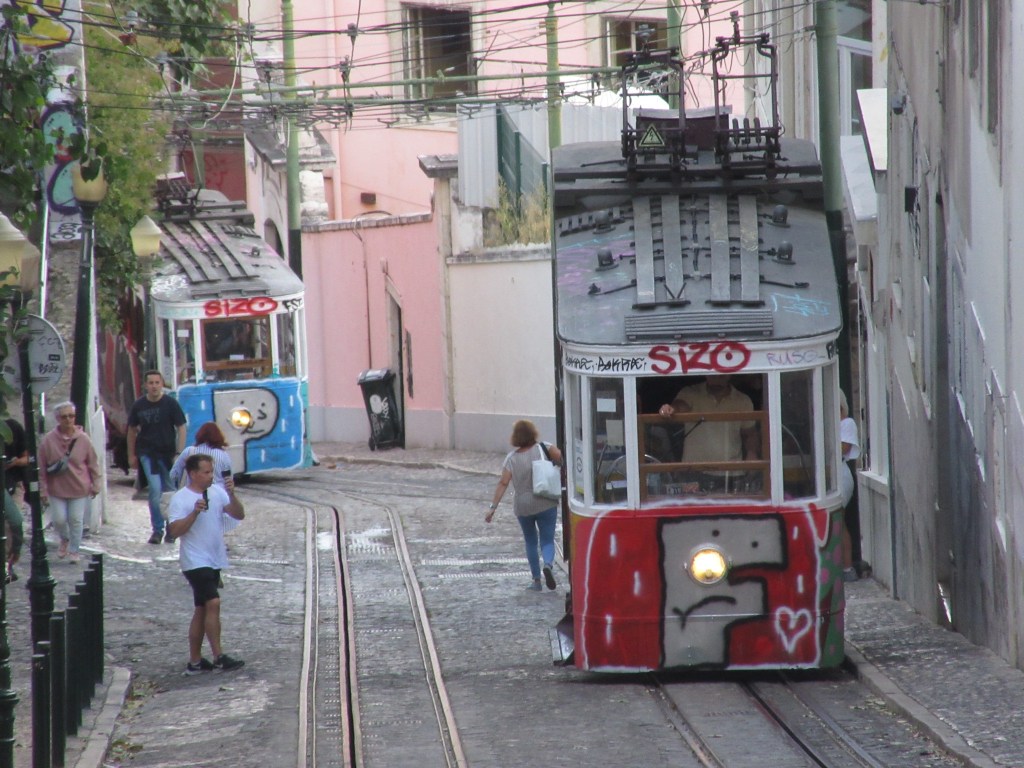
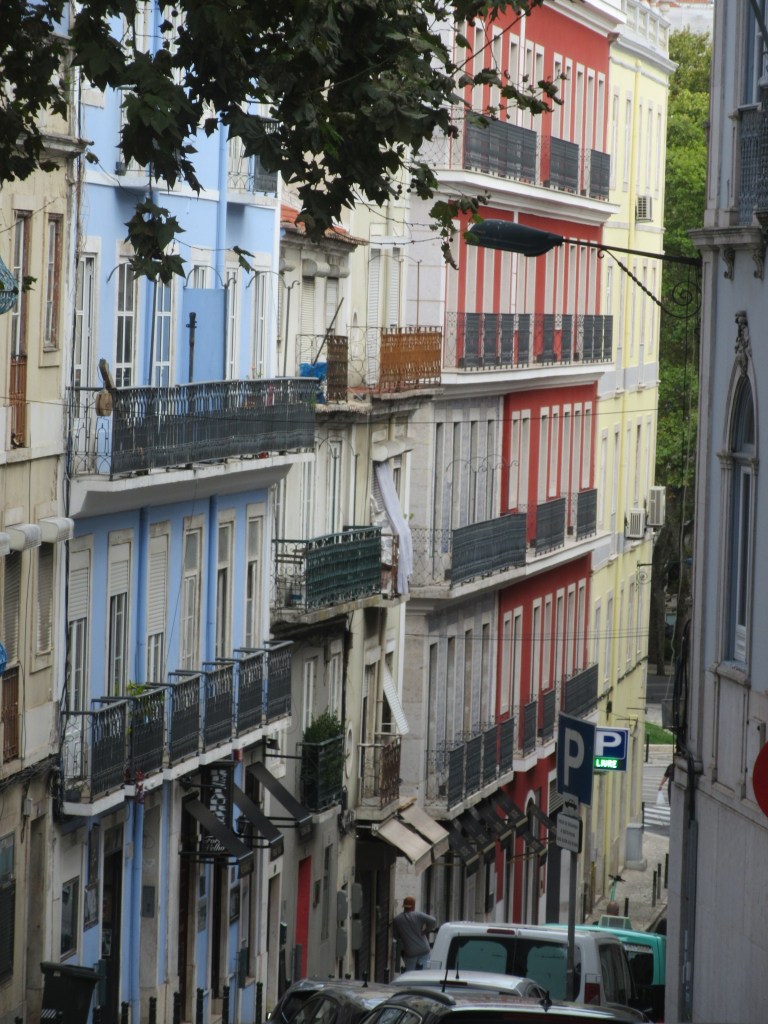
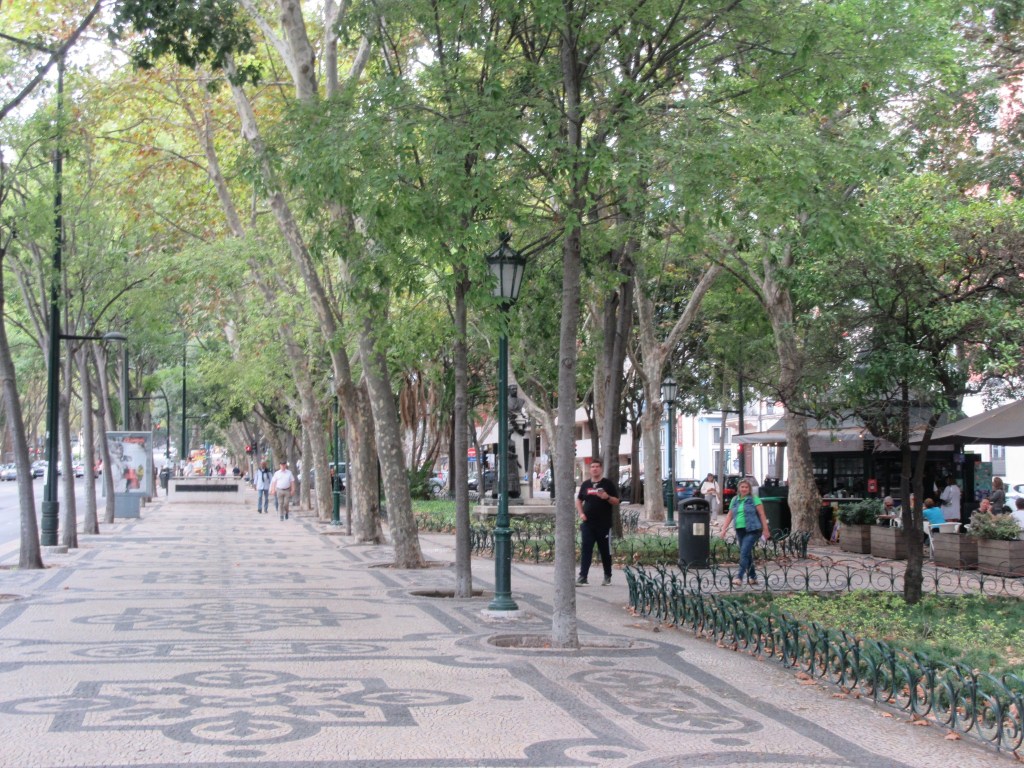
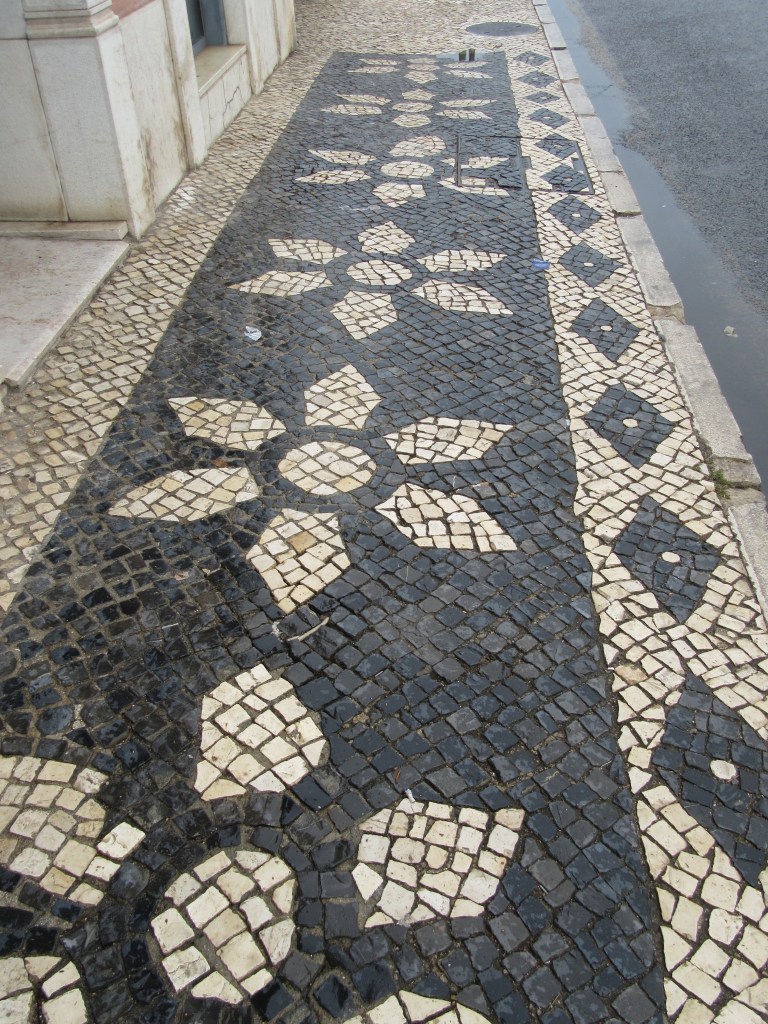
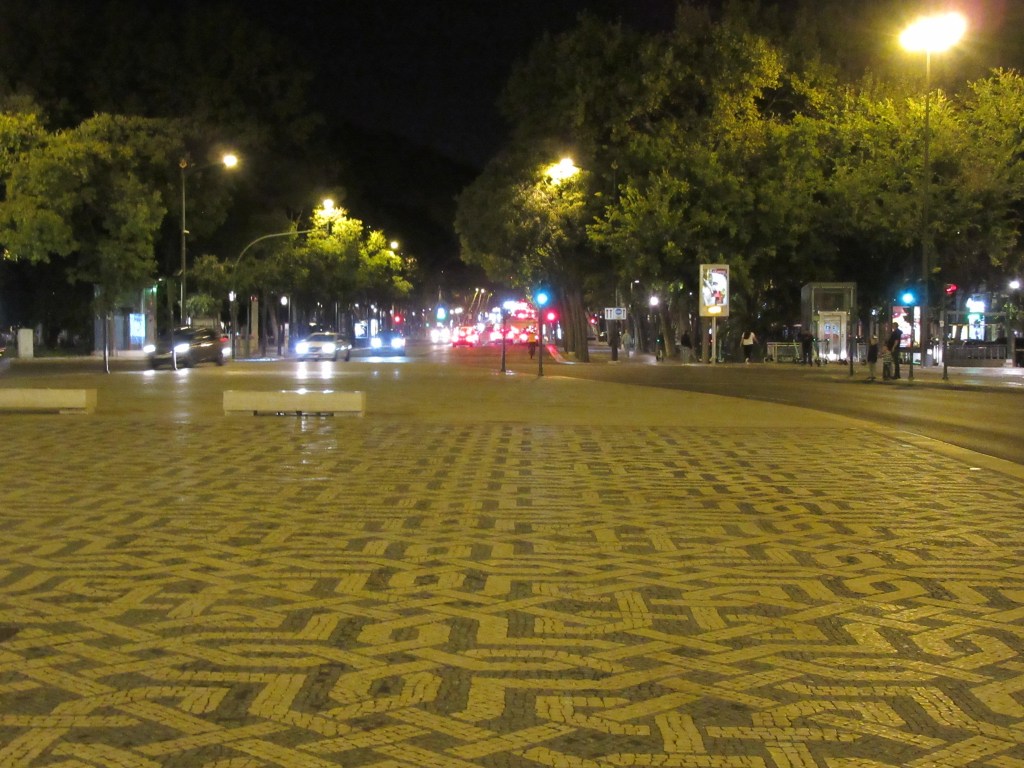
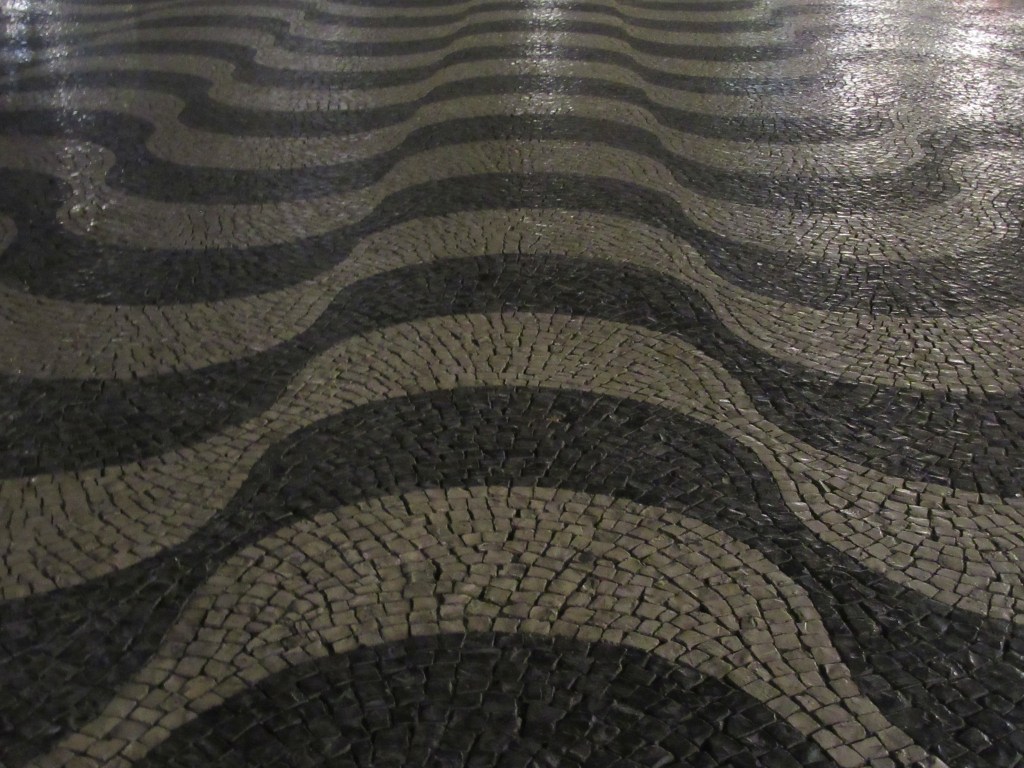
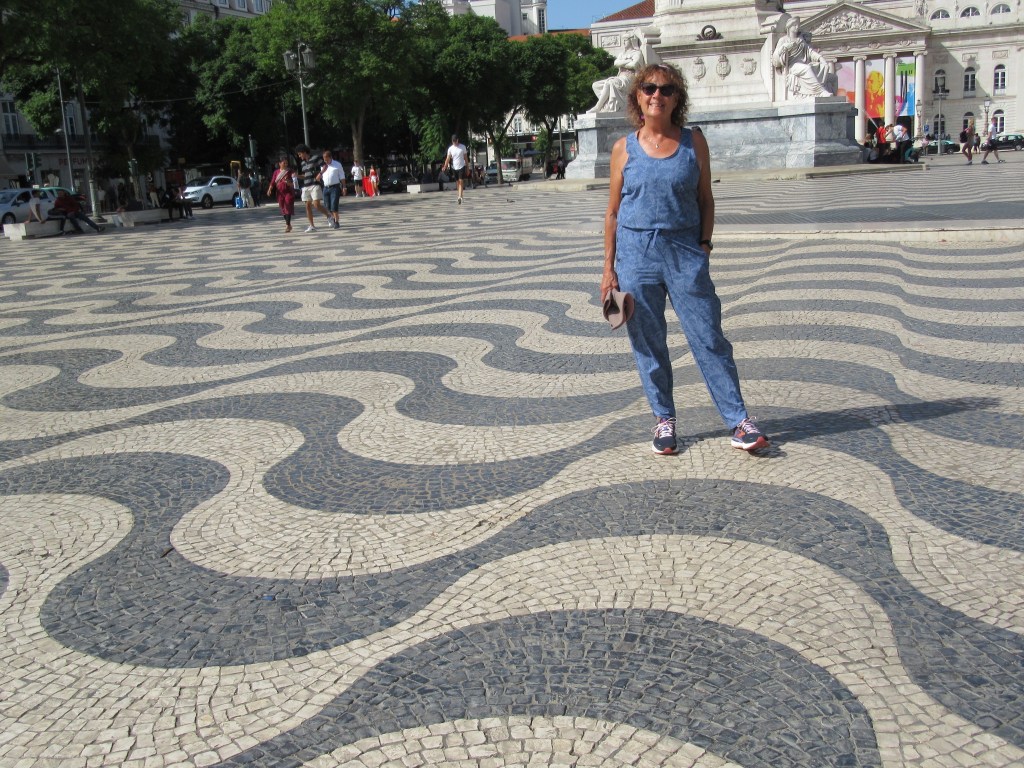
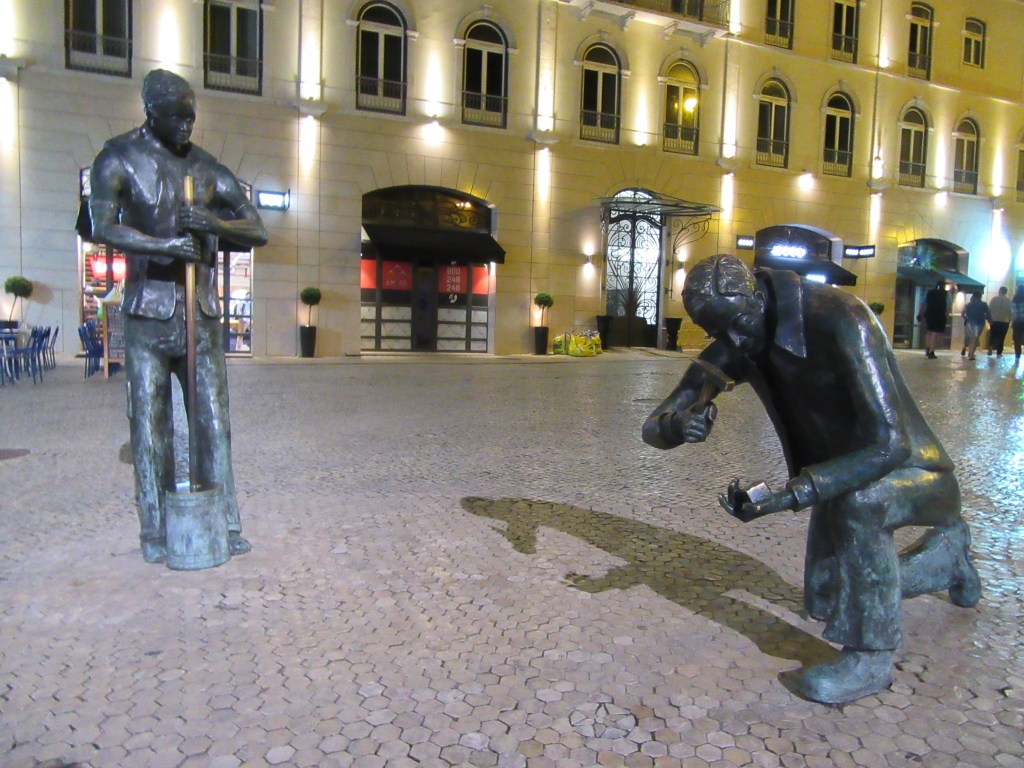
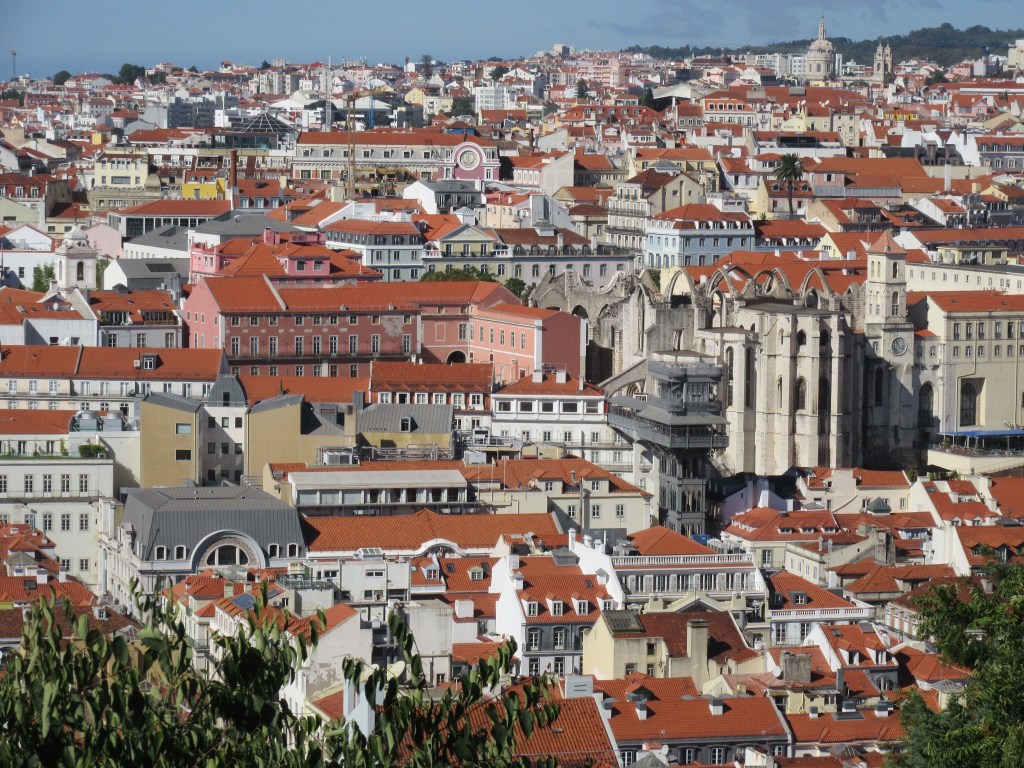
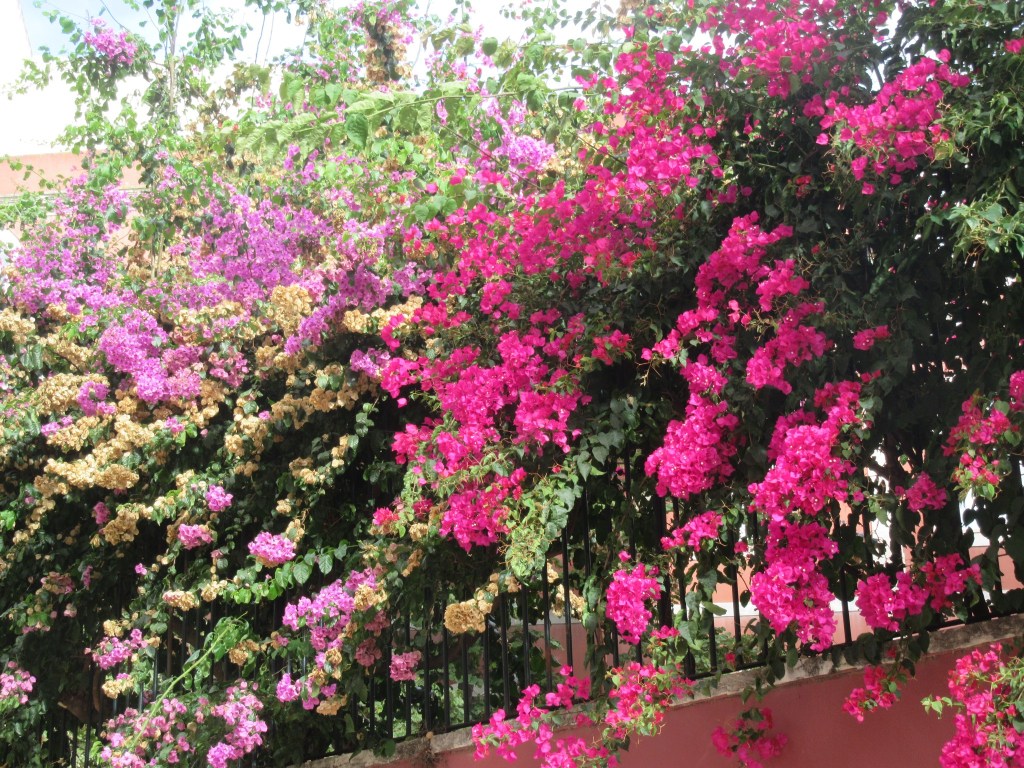
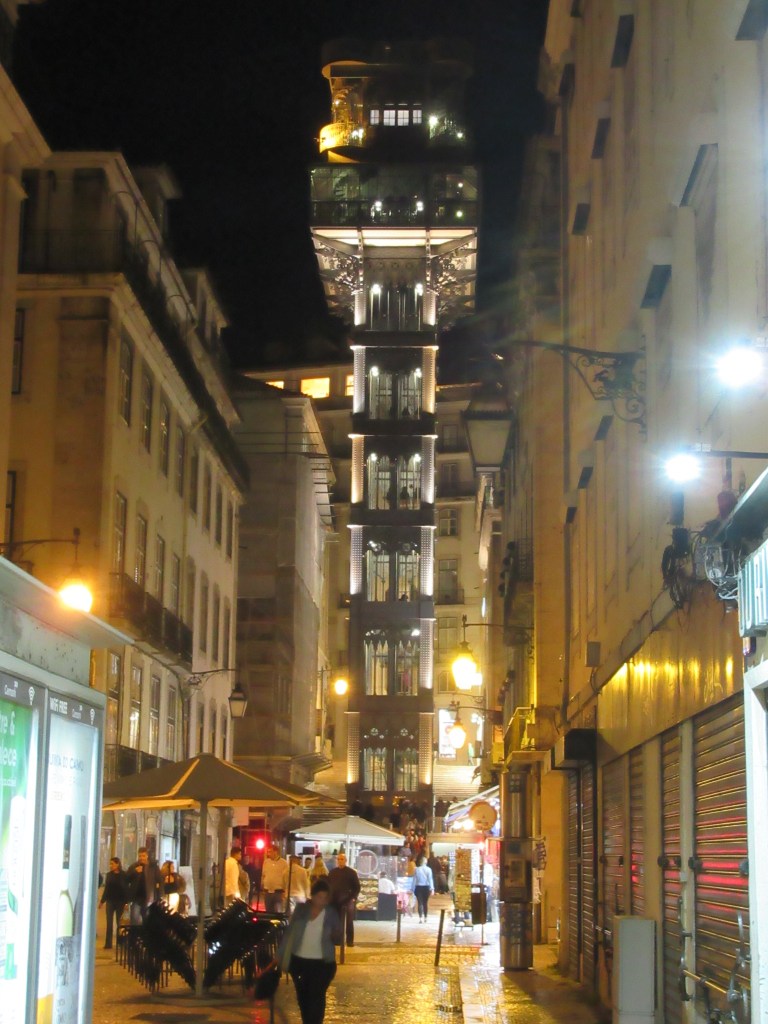
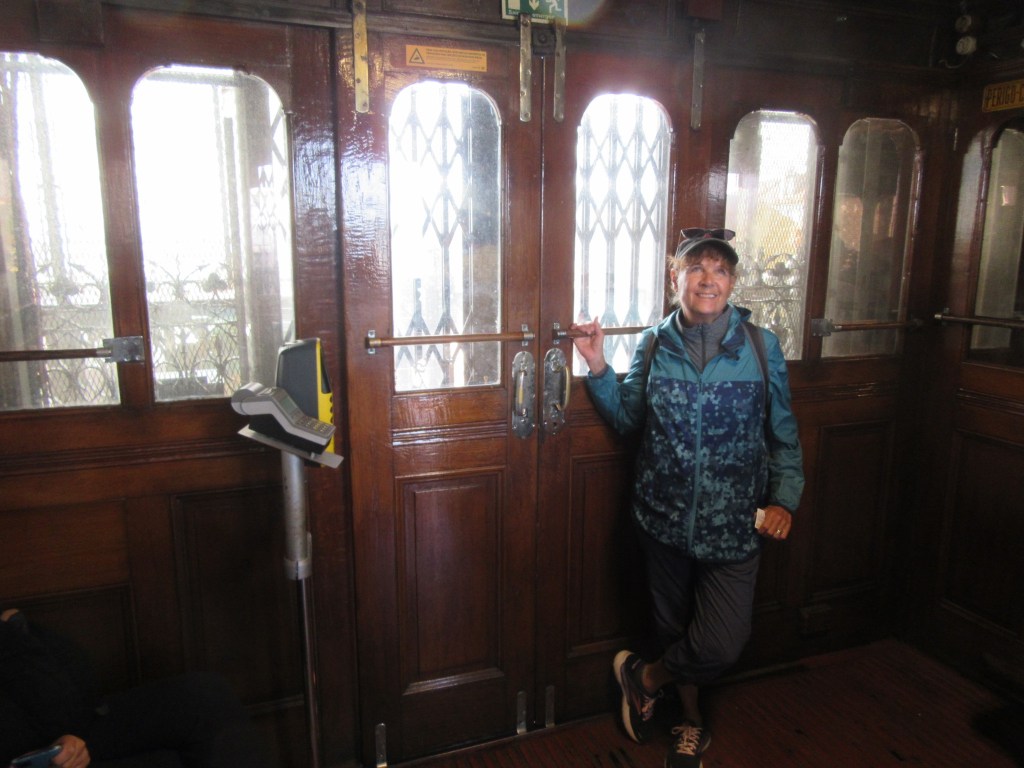
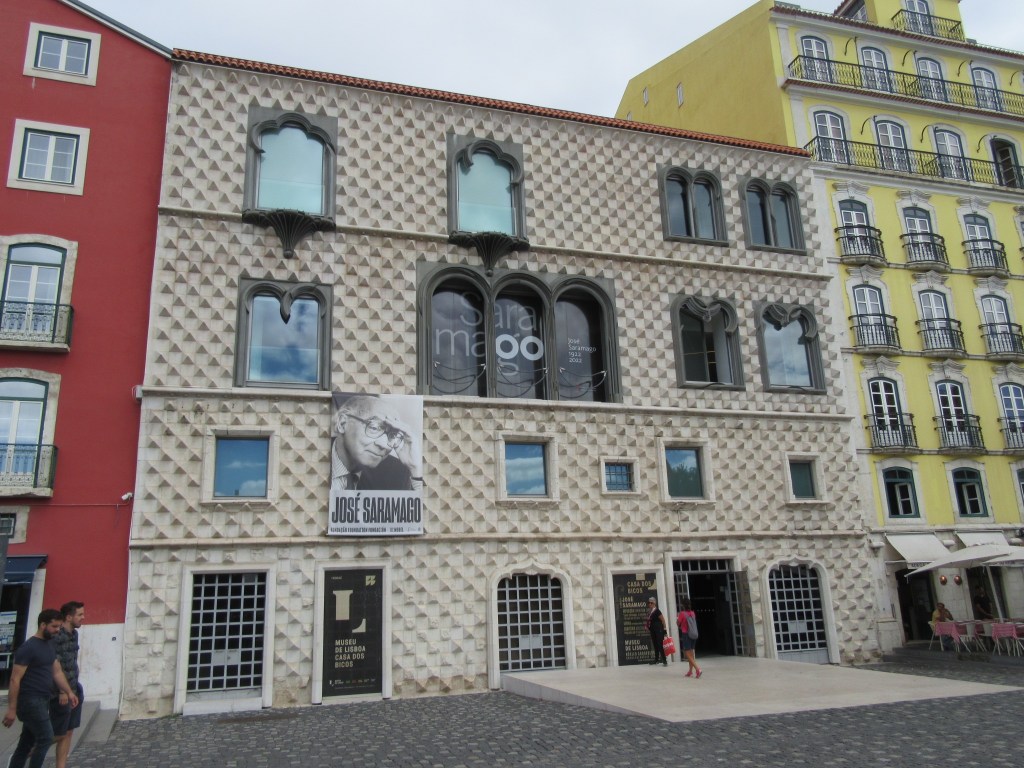
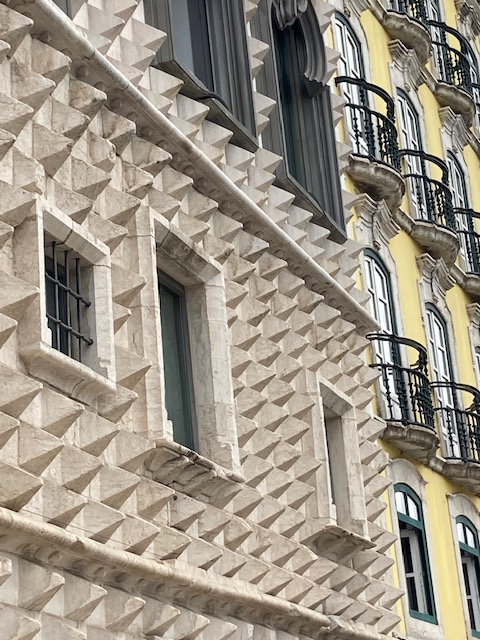
Vintage trolleys andfuniculars shiver up and down it’s hills.It’s a proud city of ironwork balconies and mosaic sidewalks.So manydifferent patterns.This was a favorite of ours – Rossio Square – with fine stone patterns in the pavement—evoking waves encountered by the great explorers. (more on that later)If you’re prone to seasickness, don’t look down as you cross this square!Here’s to all the hard work that went into creating those wonderful squares.It’s a city of red tiled roofs and bougainvillea.In 1902, an architect who had studied under Gustav Eiffel (remember him from Paris?) completed this 150 foot tall iron elevator, connecting the lower and upper parts of town.Look at the beautiful woodwork inside this elevator!The Casa dos Bicos – “House of the Beaks/Spikes” is a historical house in the civil parish of Santa Maria Maior. The house was built in the early 16th century and has a curious façade of spikes, influenced by Italian Renaissance palaces. It survived the disastrous 1755 Lisbon earthquake that destroyed much of the city.
Ya see, spikes – not bad for over 500 years old, eh?
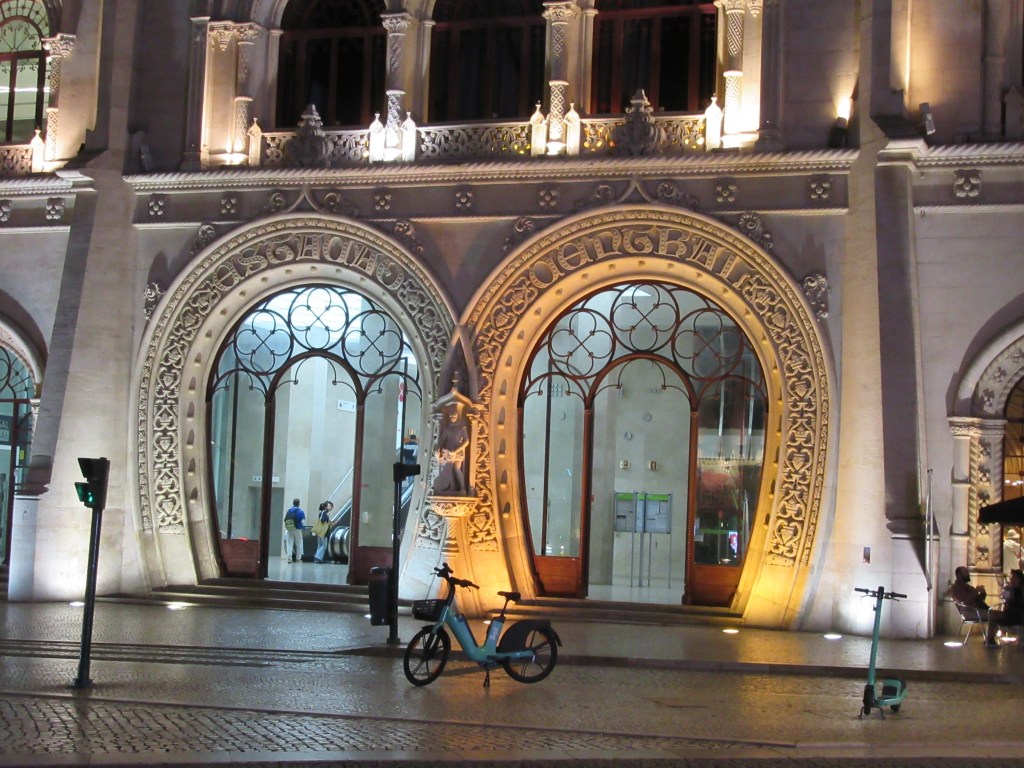
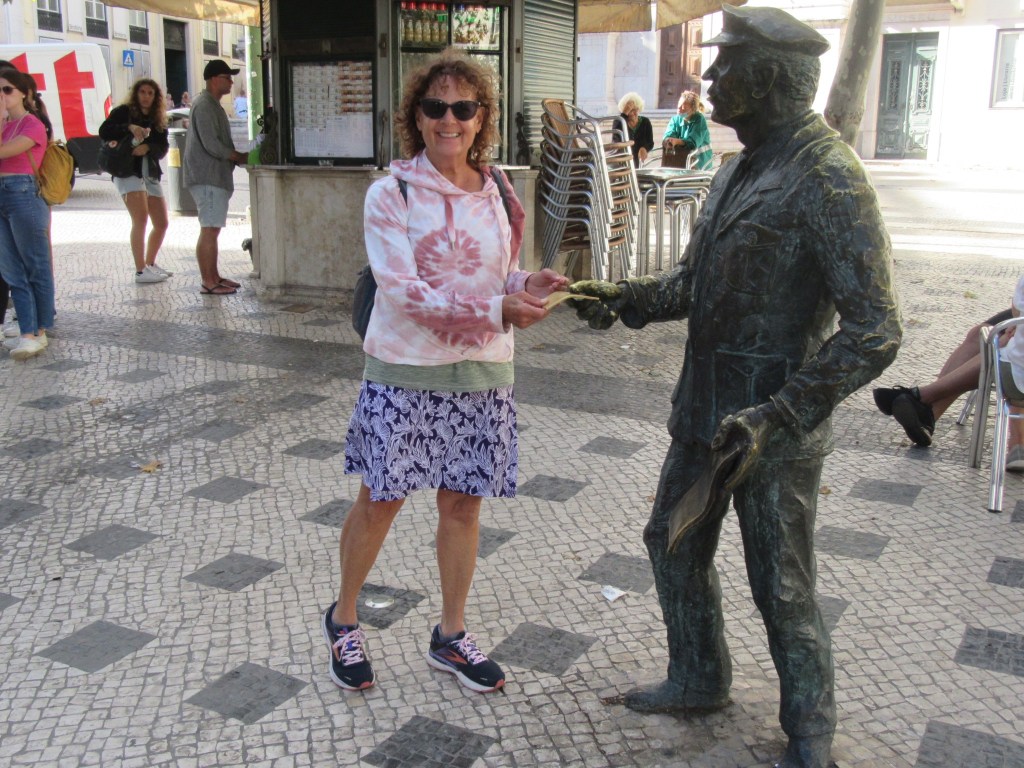
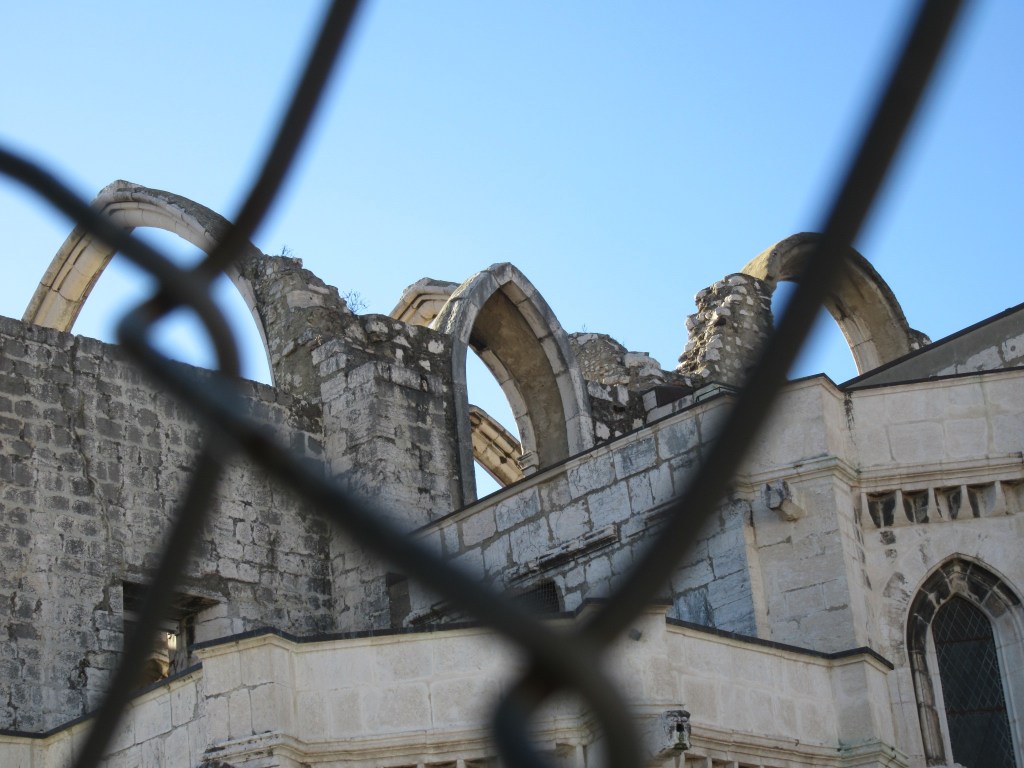
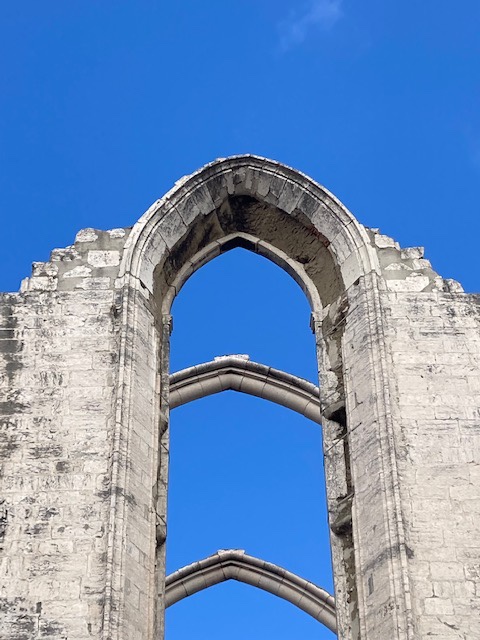
Lisbon’s striking train station.So, when we spotted this guy, we thought he was handing out train tickets but nope – lottery tickets. 😂Convento do Carmo – After the convent was destroyed by the 1755 earthquake, the Marquês de Pombal directed that the delicate Gothic arches of its church be left standing—supporting nothing but open sky—as a permanent reminder of that disastrous event.
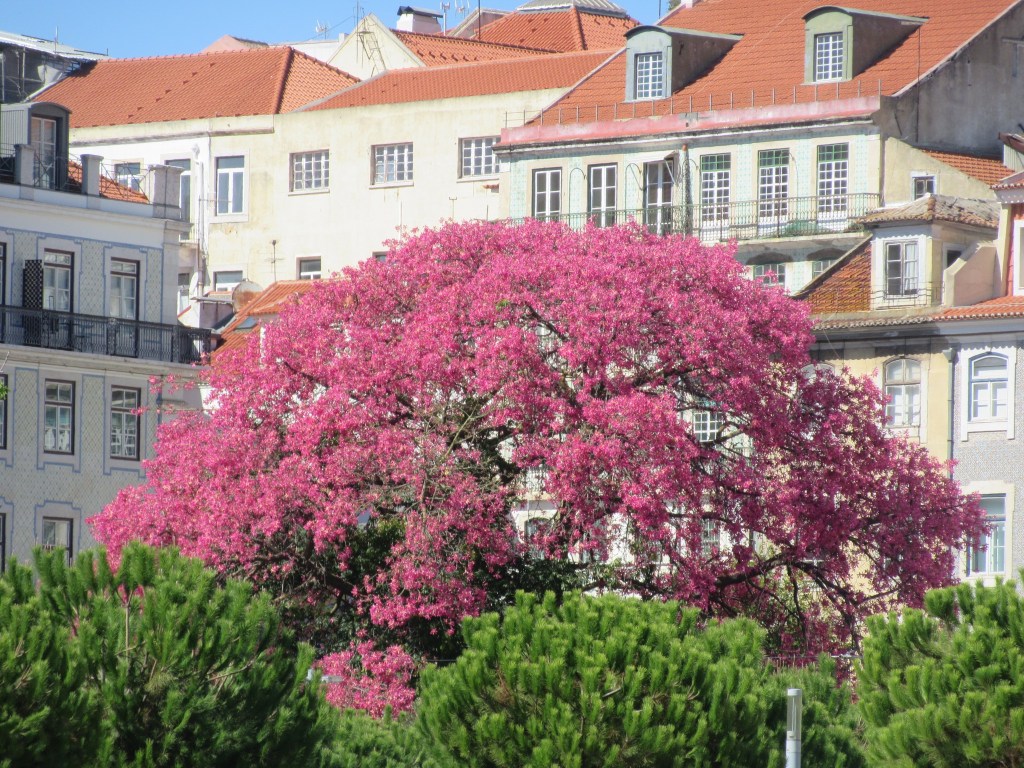
It was a bit of a shock to me to see flowering trees so close to October.

 Murphys on the Move
Amazing tile work!! I cannot imagine how long it must have taken to put it down.
Sent from my iPad
>
LikeLike
Yes! And one brick (calçada) at a time!
LikeLike
Thanks again for sharing your pics. It has been a treat to see these wonderful cities. Loved the elevator.
LikeLike
❤️
LikeLike
Did some of the architecture remind you of Amsterdam?
Again, great photos!!!
LikeLike
Hmmm, not really!
LikeLike
Such a vibrant and joyful city!
LikeLike