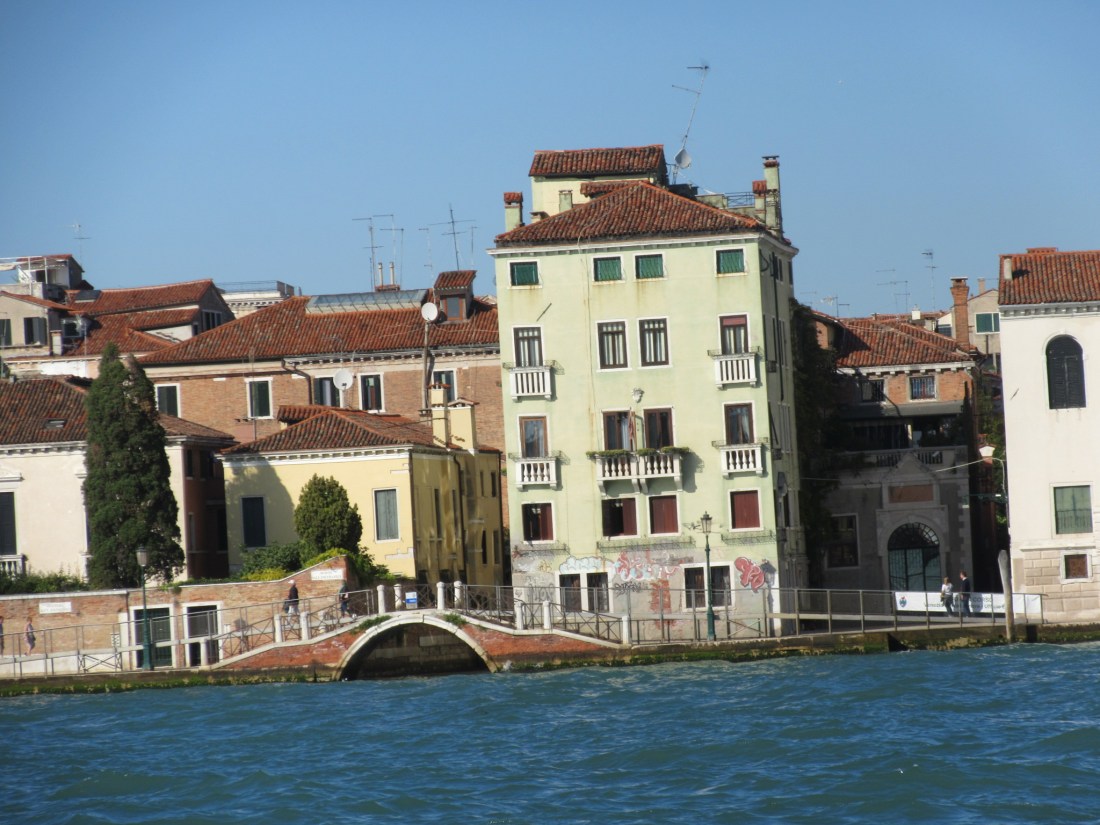
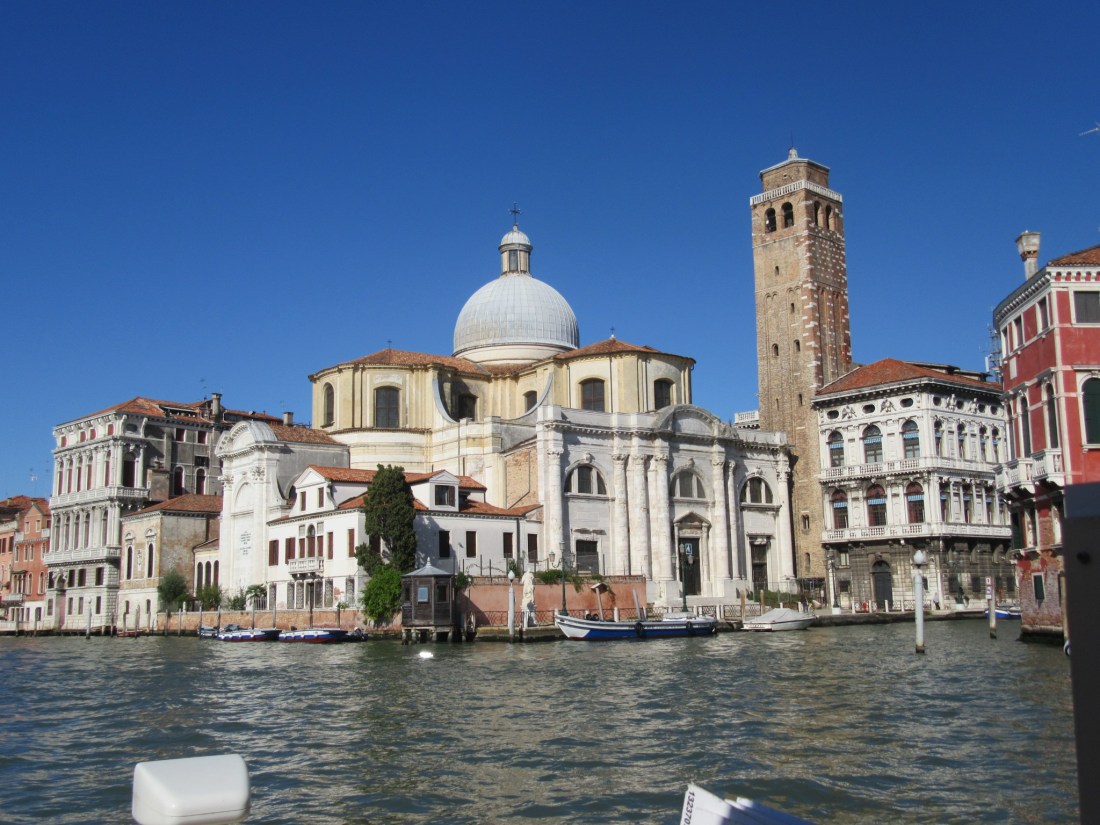
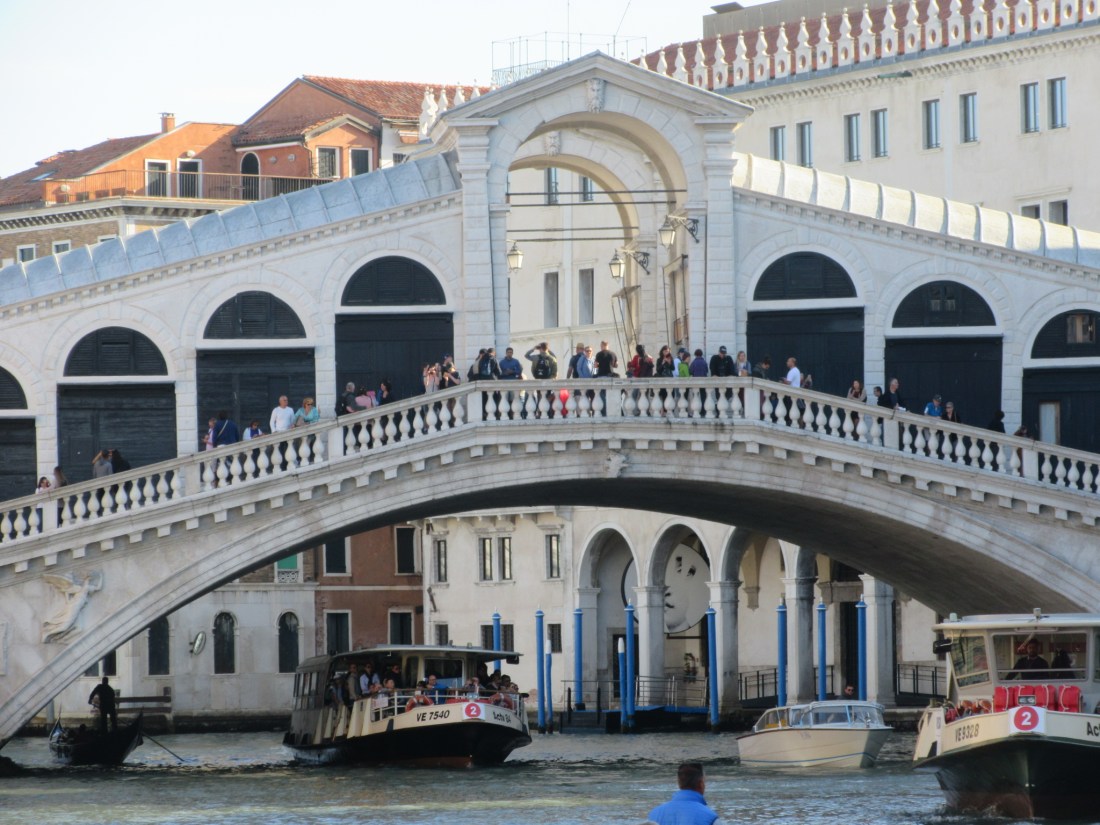
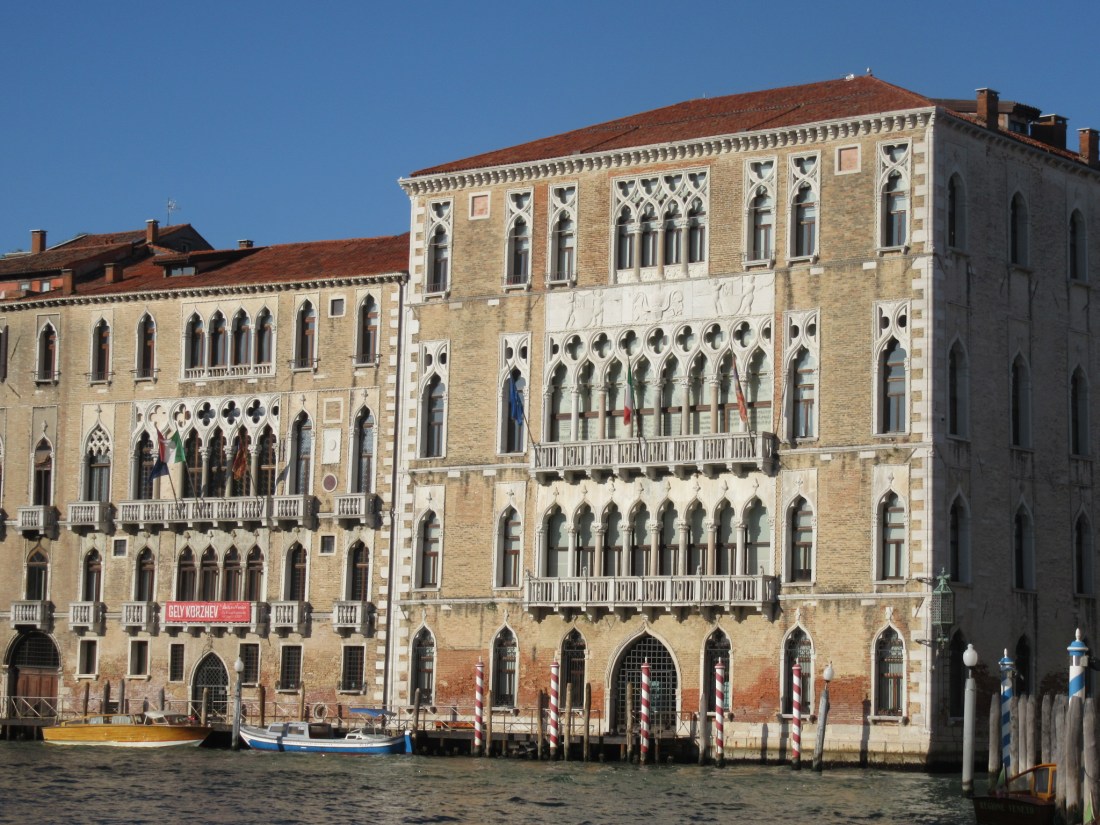
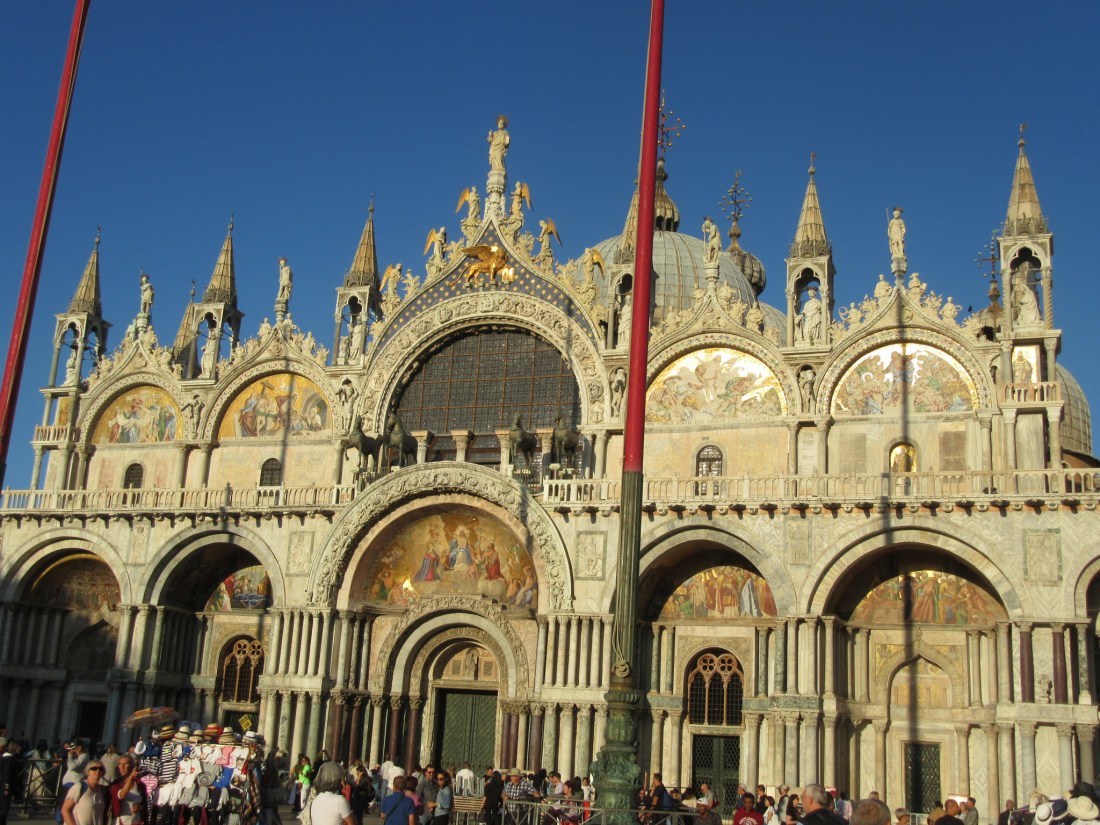
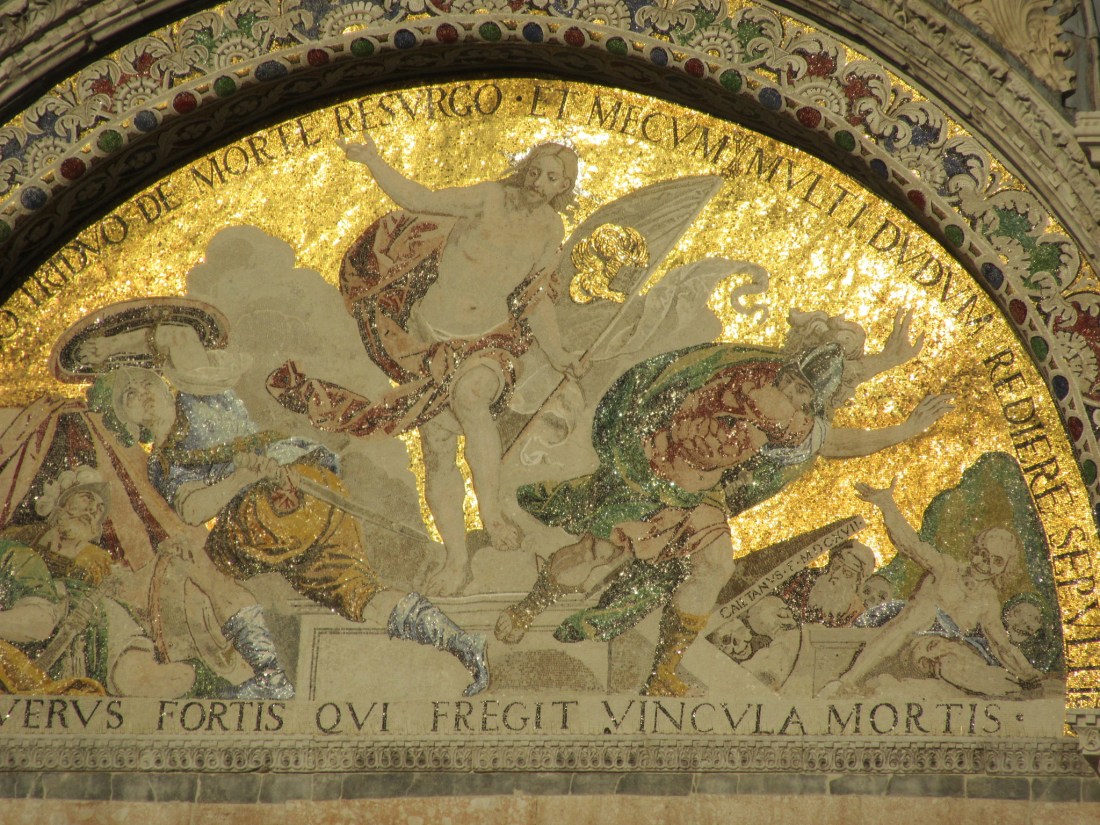
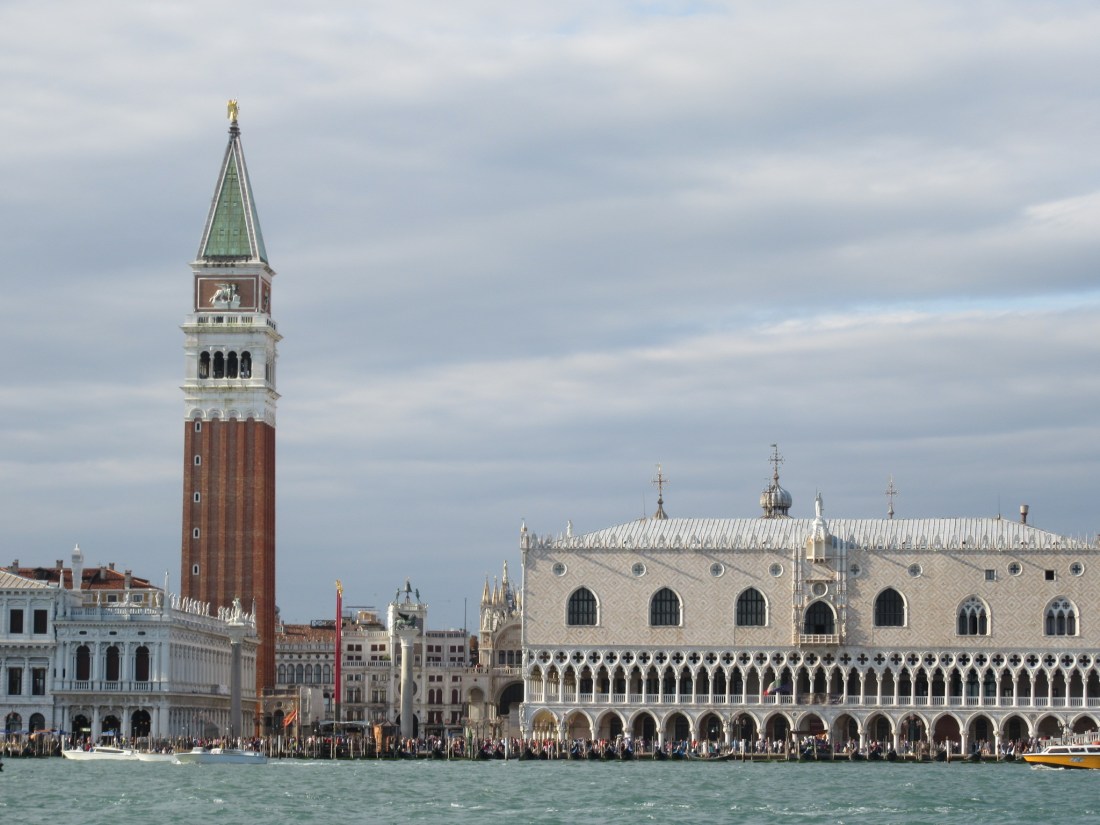
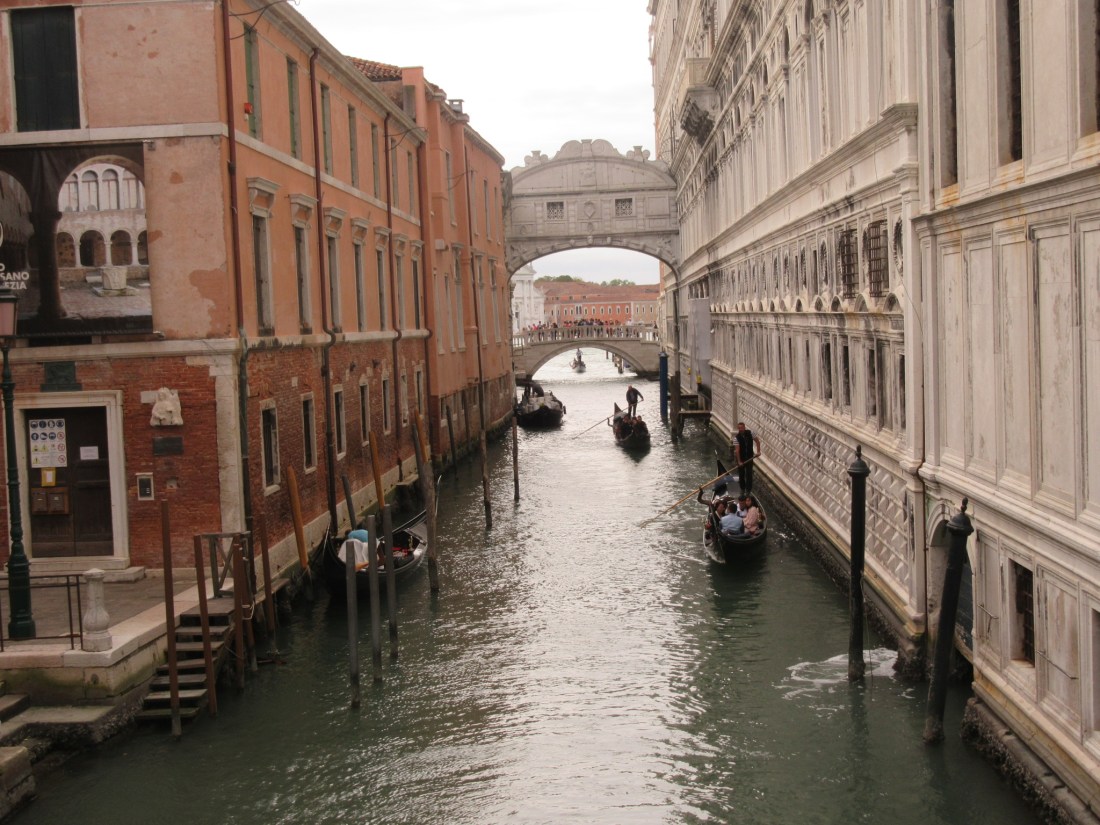
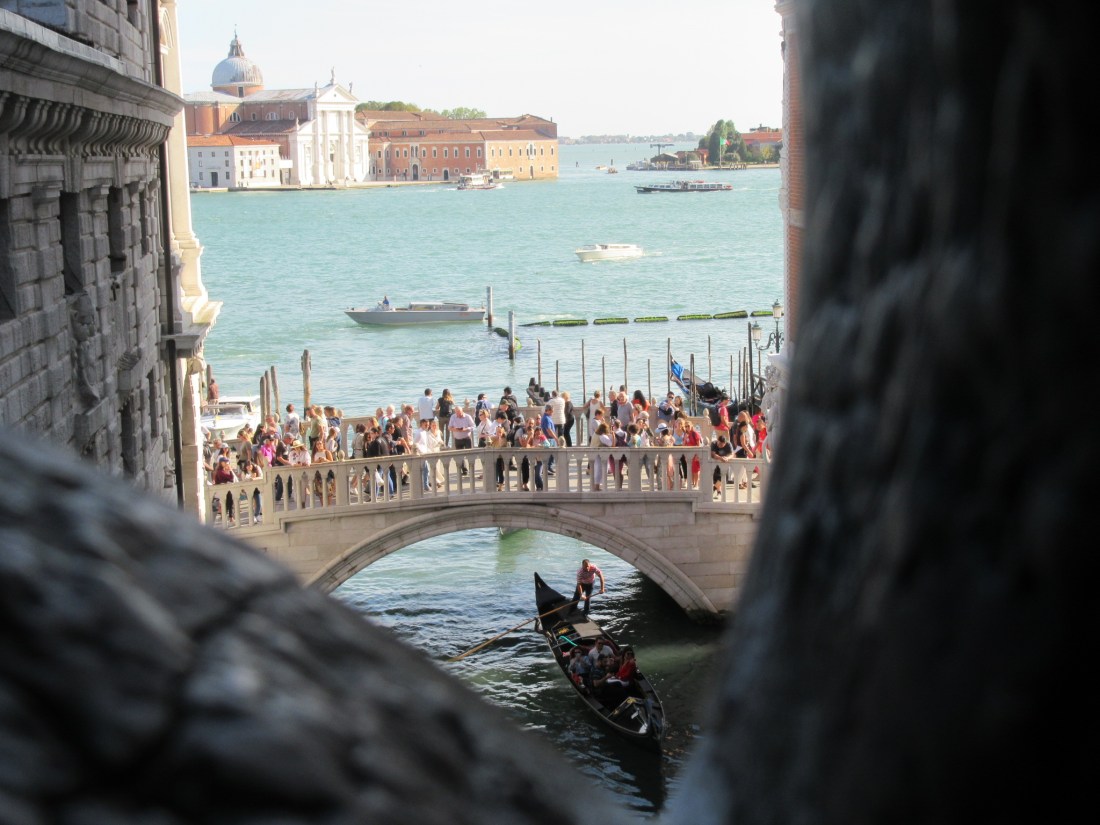
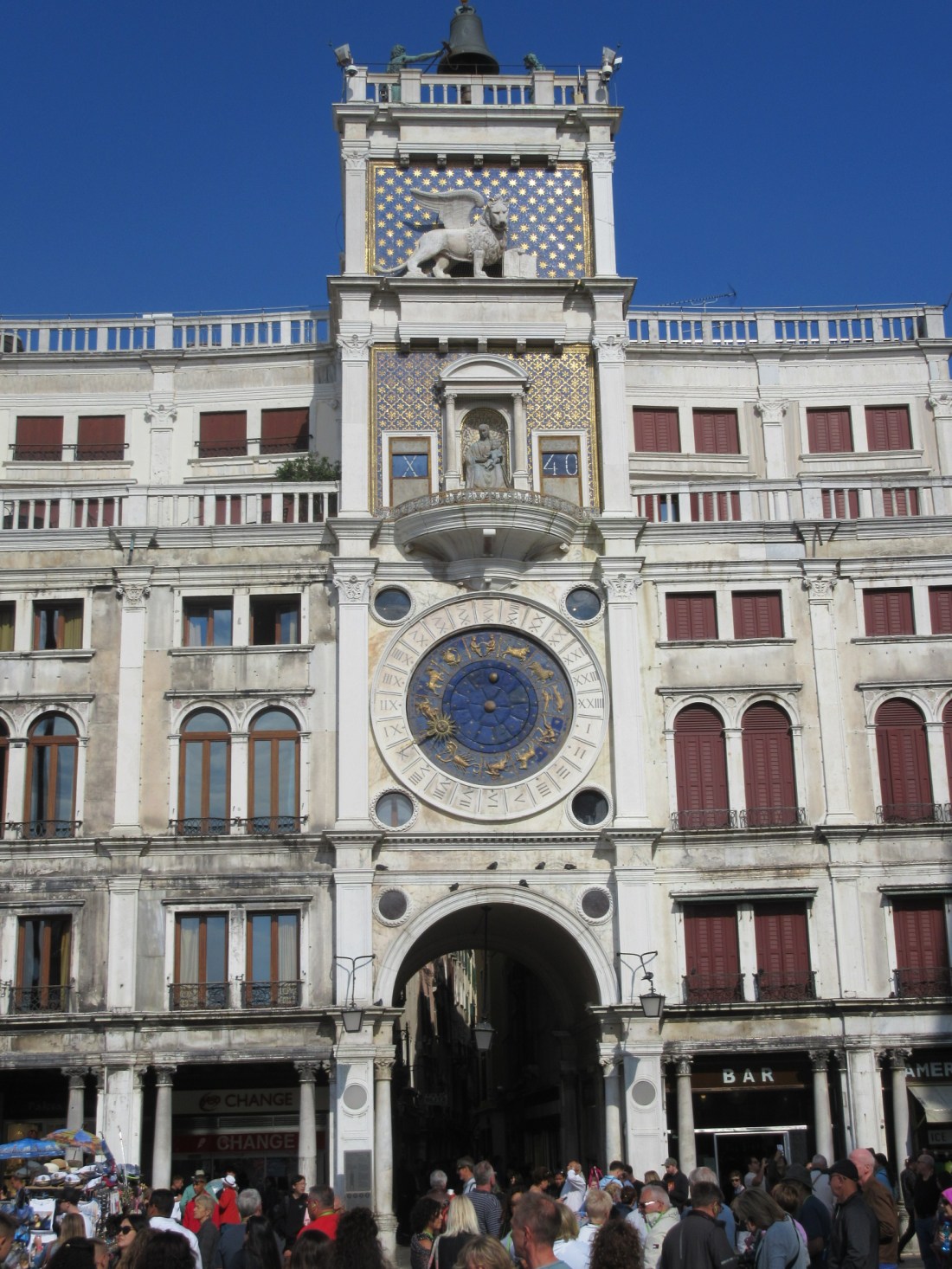
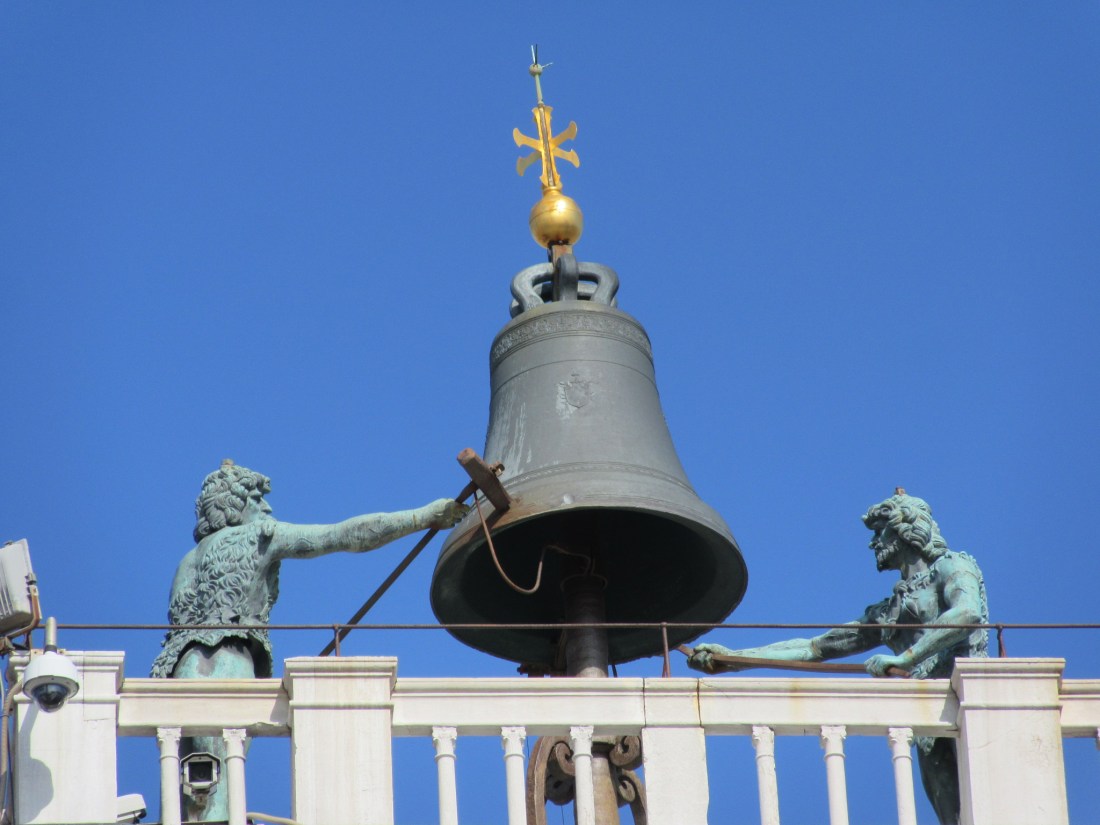
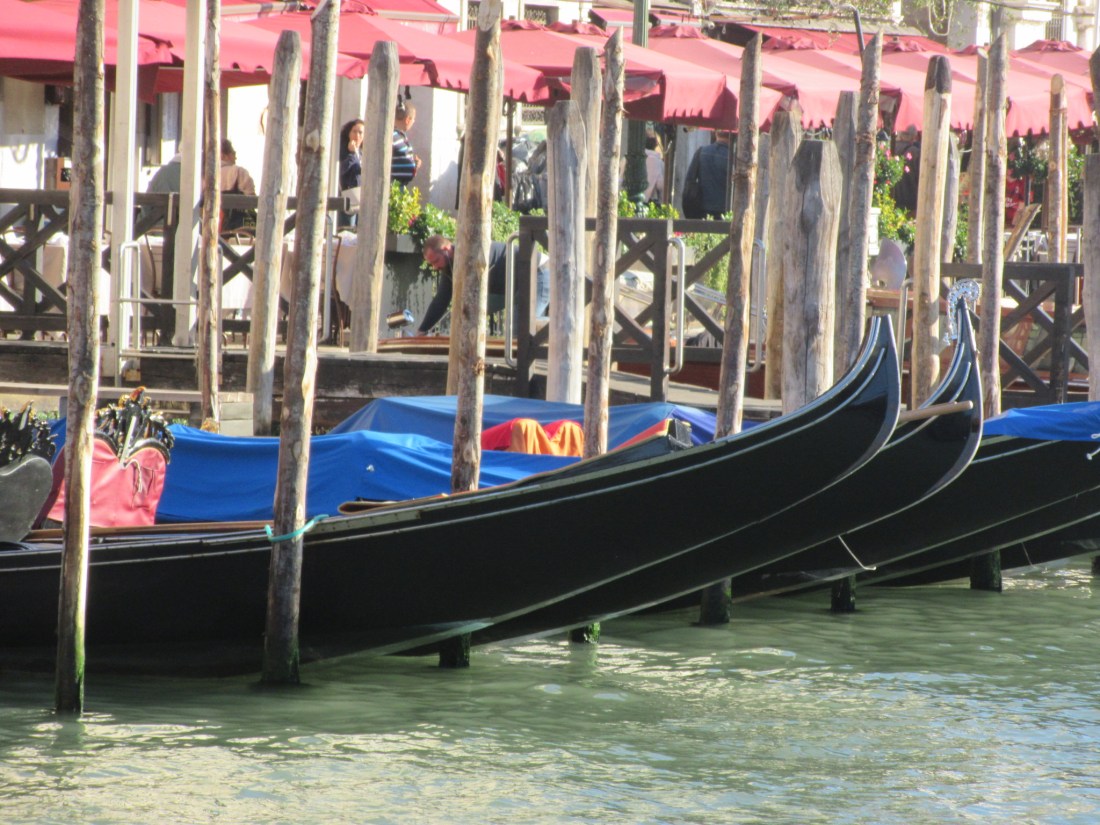
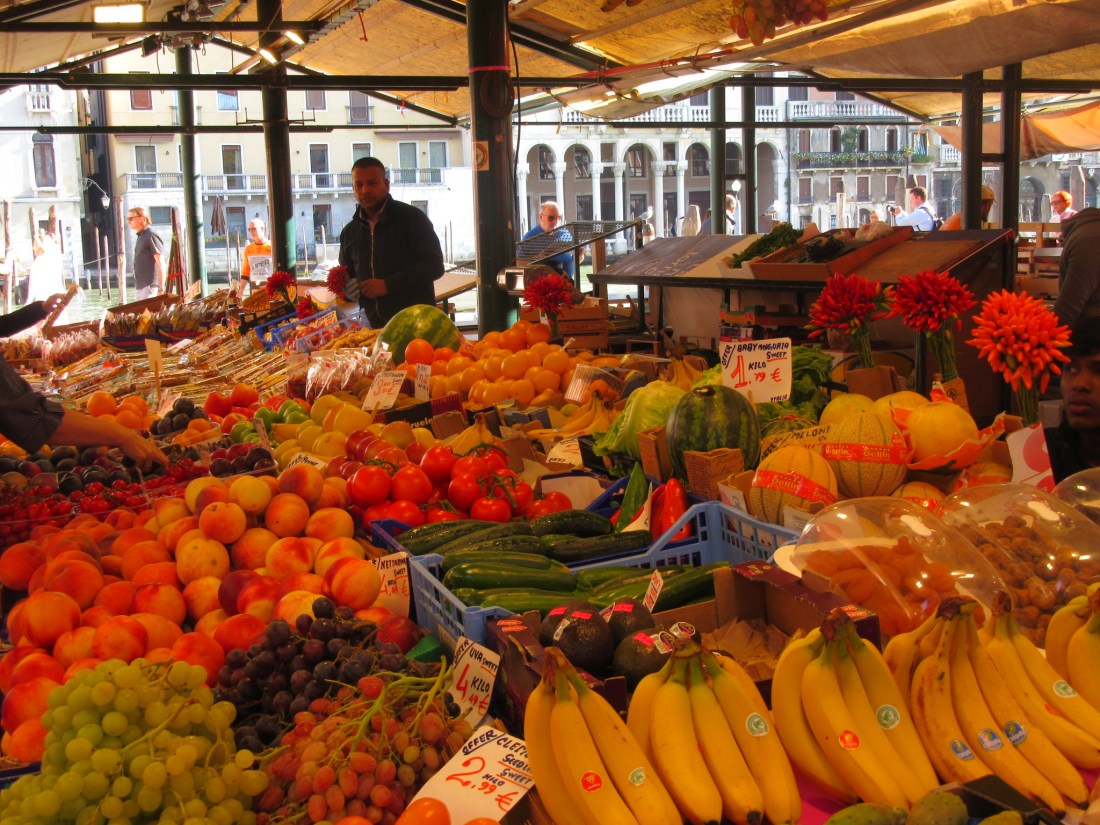
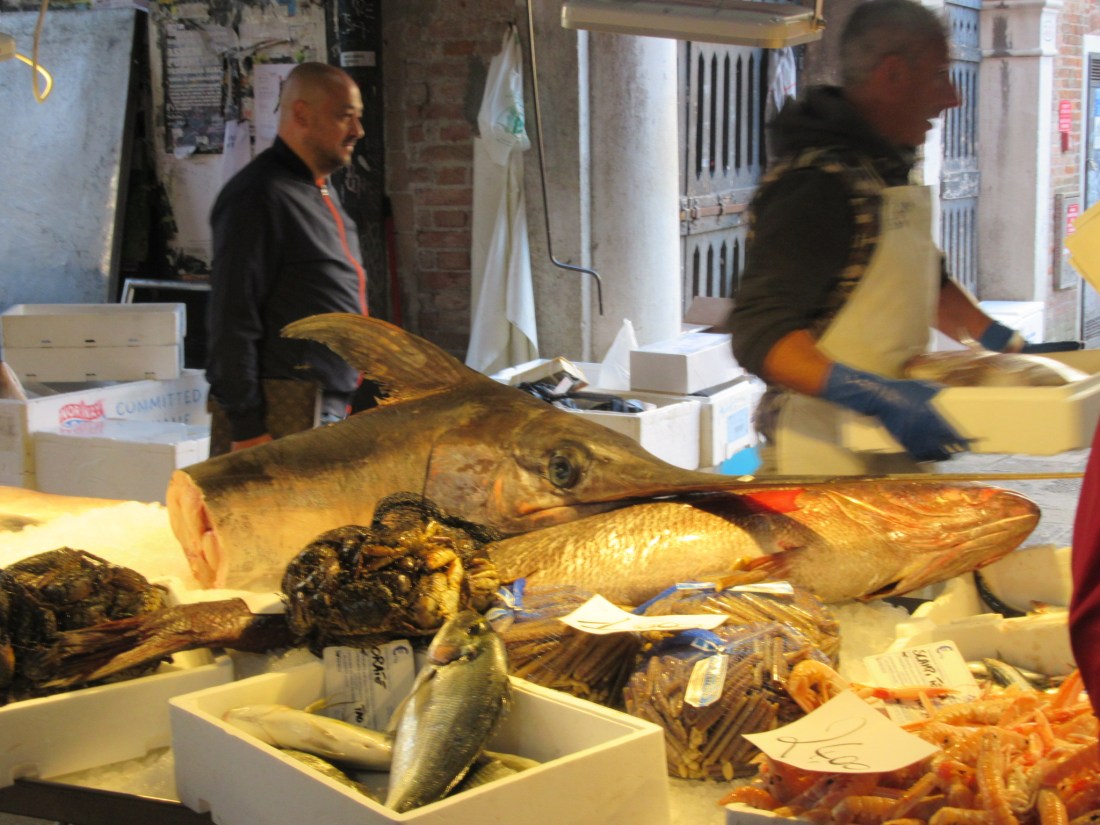
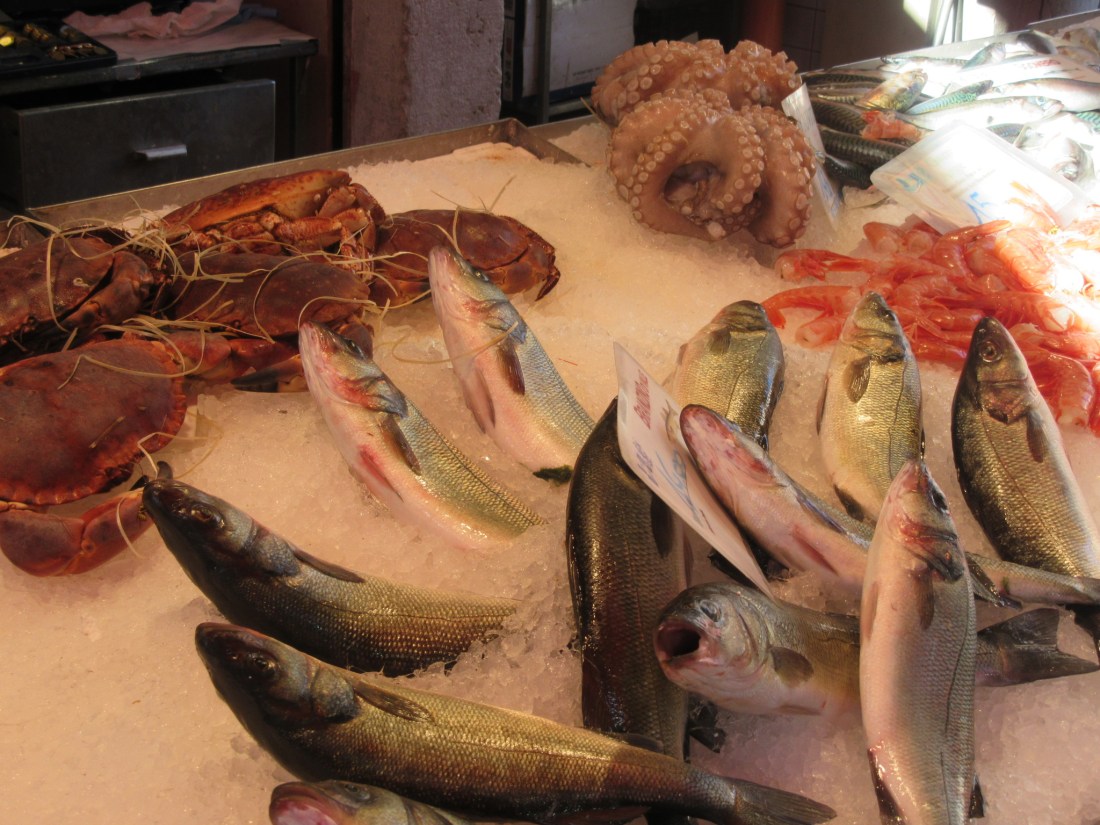
Dorsoduro – the neighborhood we called home for 6 nights.Going down the Grand Canal.Under the Rialto Bridge.Passing palazzos.St Mark’s BasilicaNo pictures allowed inside but trust me there was more gold leaf than a certain person’s towers. (Can’t bear to say his name along with such beauty)Atop St Mark’sCampanile (bell tower) on the left and Doge’s (leader of the city-state) Palace on the right.The Bridge of Sighs connects the palace to the prison.The view from inside the bridge – so named because when prisoners were taken to the dungeons, they sighed – knowing it was the last time they would see the canal and Venice.The Clock Tower (Torre dell’Orologio) built during the Renaissance in 1496.The tower sports one of the world’s first “digital” clocks (with dramatic flips every five minutes.)From St Mark’s Square we could see the bronze men (Moors) swing their huge clappers at the top of each hour. In the 17th century, one of them knocked an unsuspecting worker off the top and to his death – probably the first-ever killing by a robot!Of course, we saw gondolos everywhere!Walked over to the Rialto Market (Mercato), where we saw beautiful displays of fruits & veggies.And “interesting” ways to show off the fish.Many chefs were there, hauling off the “catch of the day”.
“First, think. Second, believe. Third, dream. And finally dare.” – Walt Disney
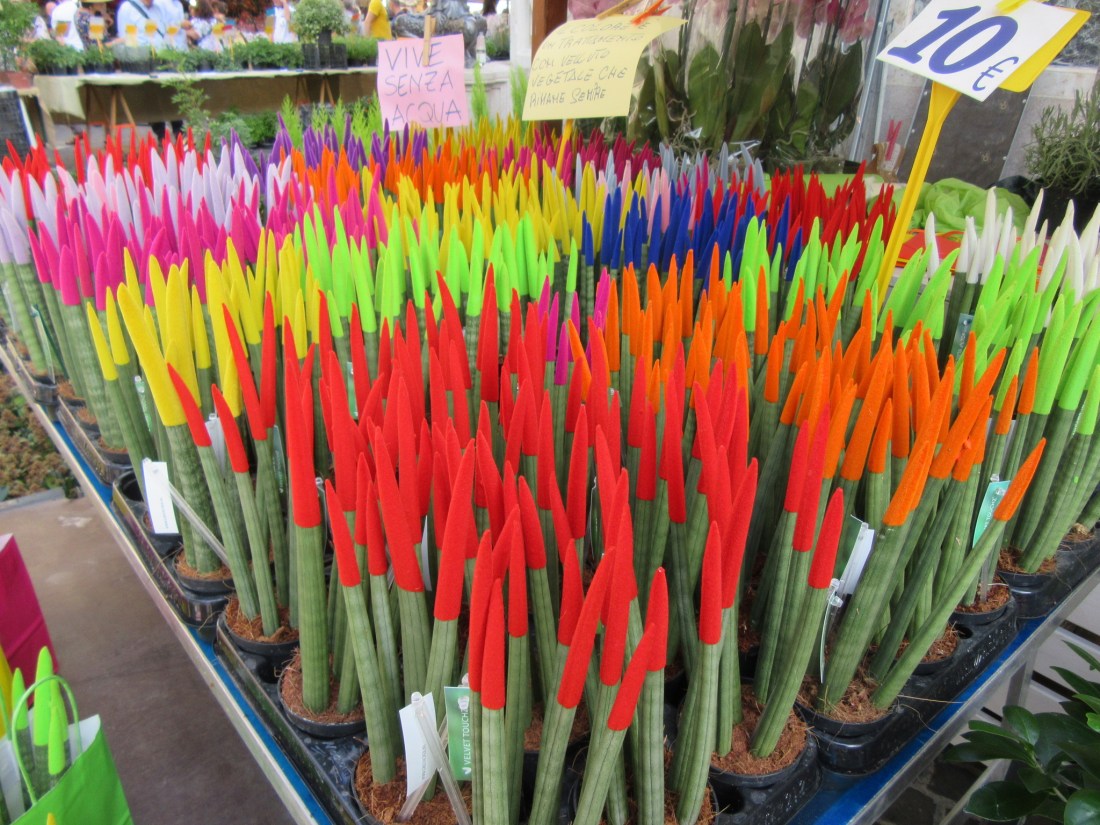
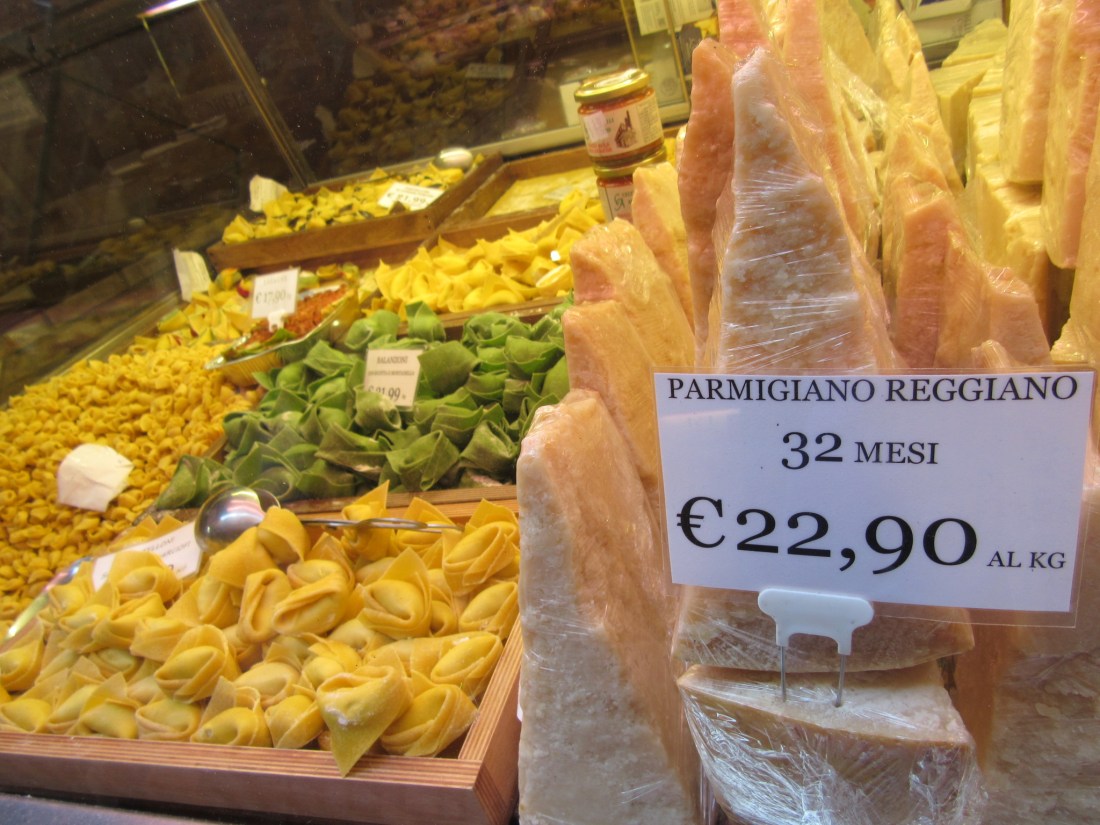
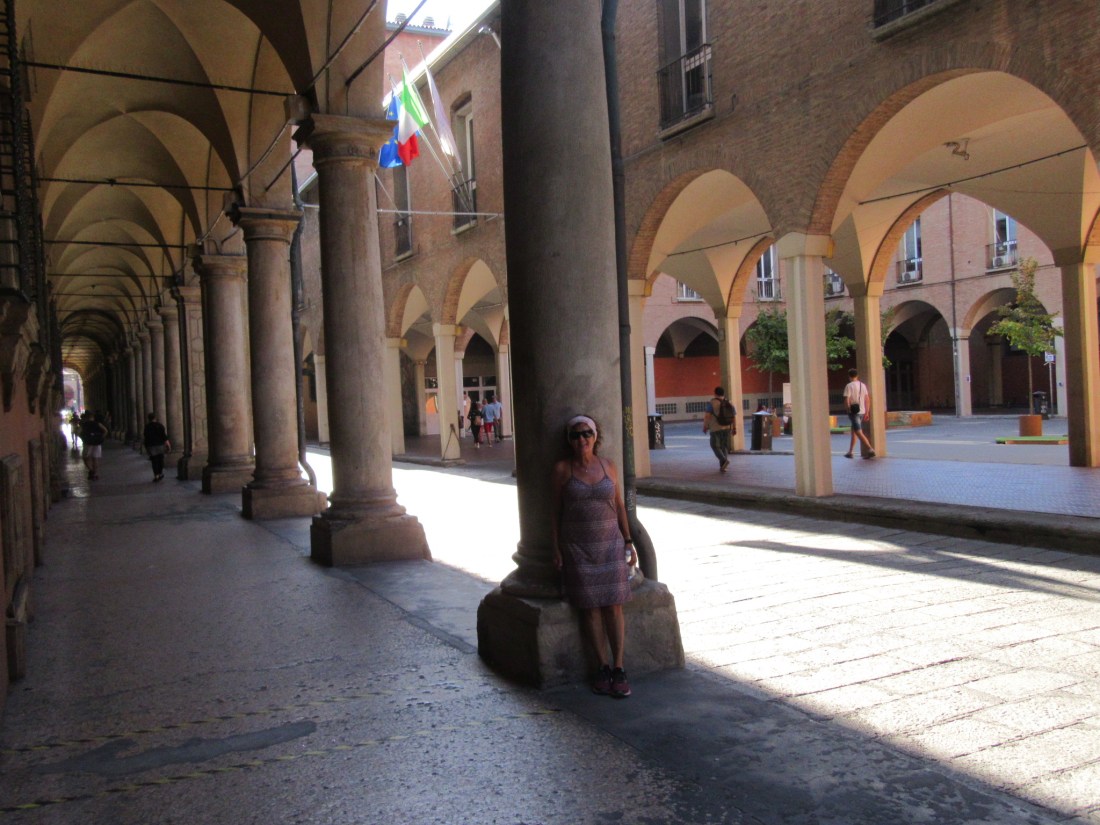
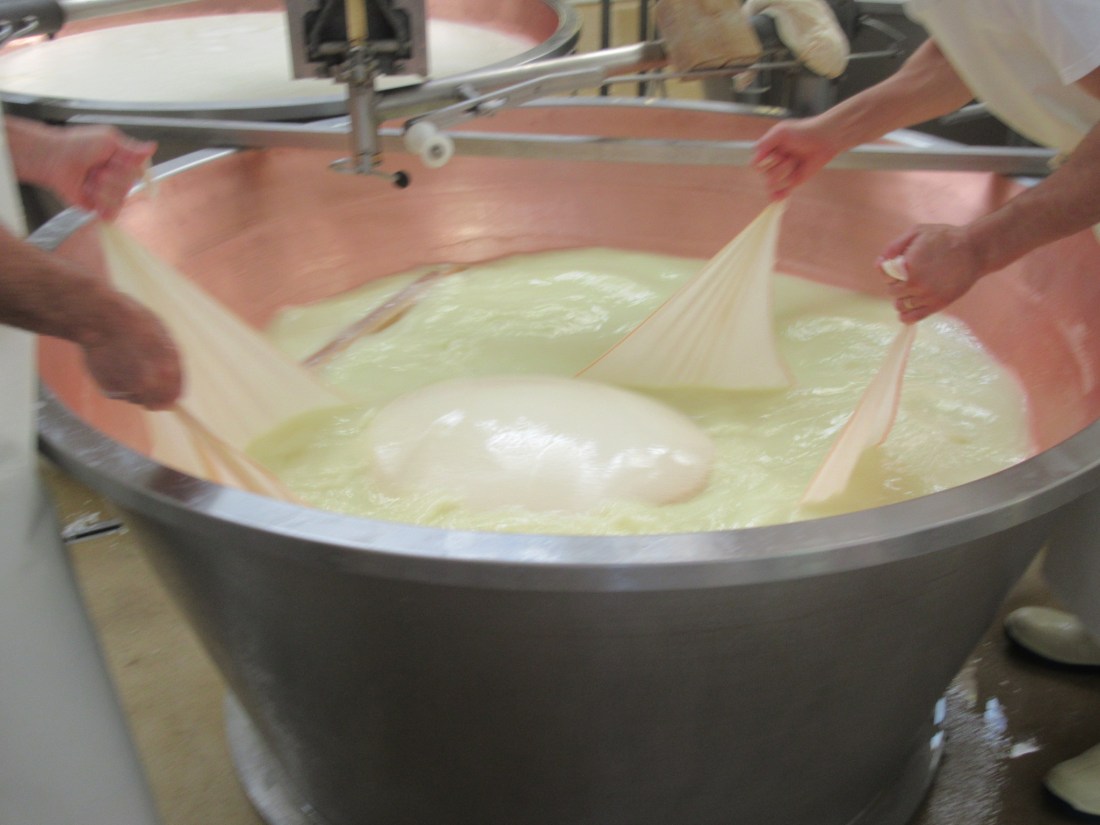
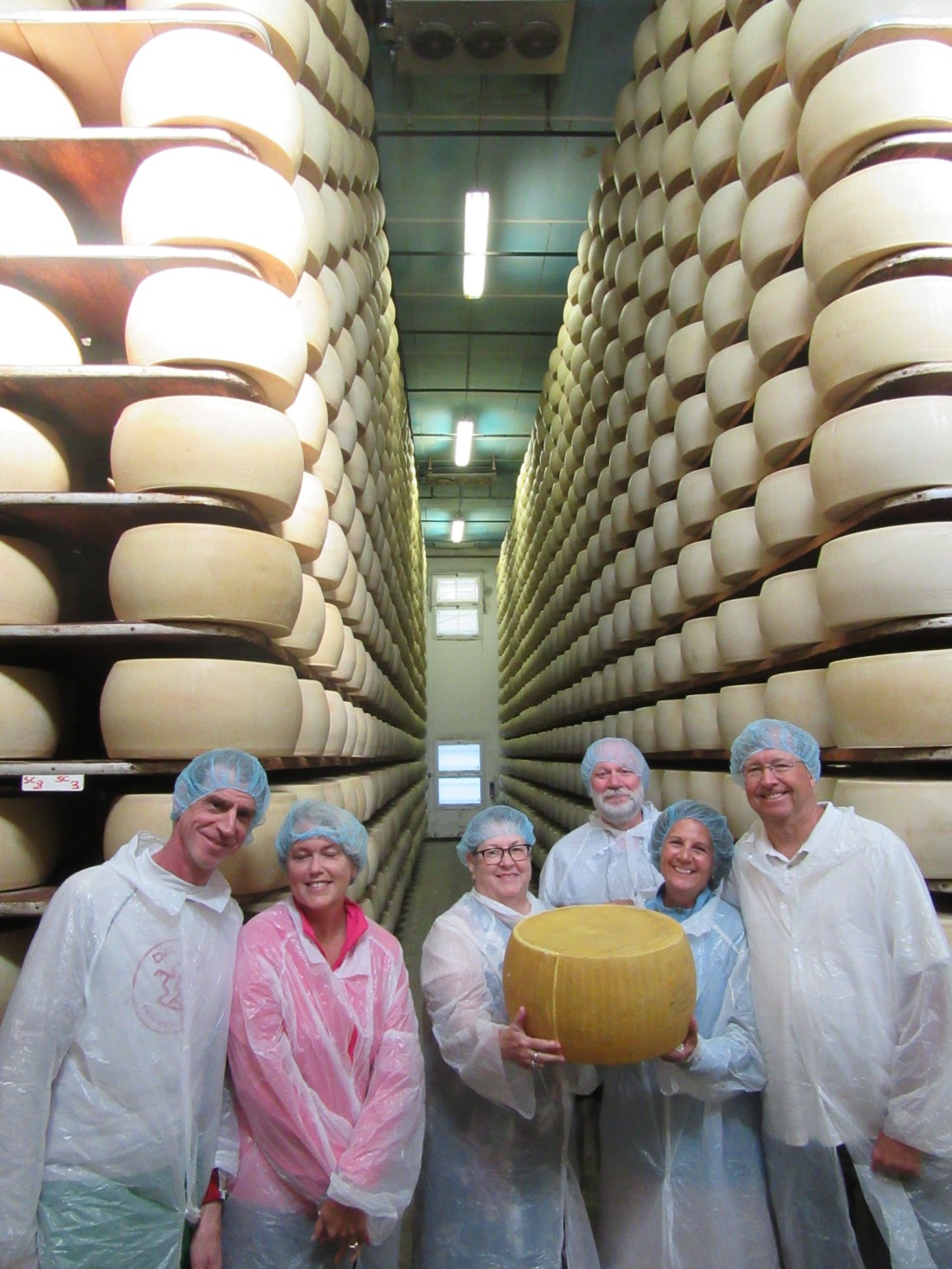
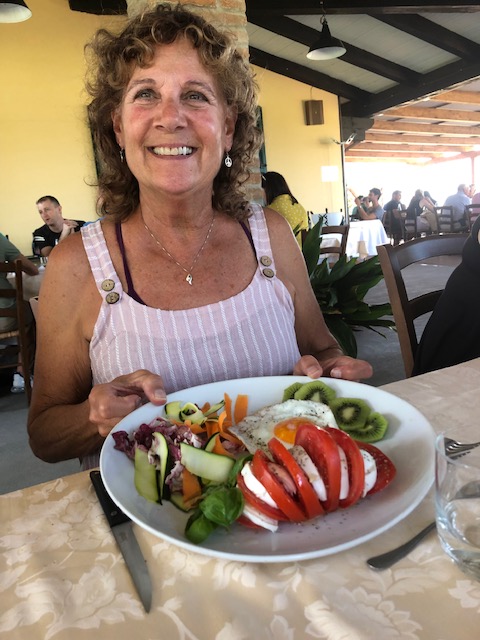
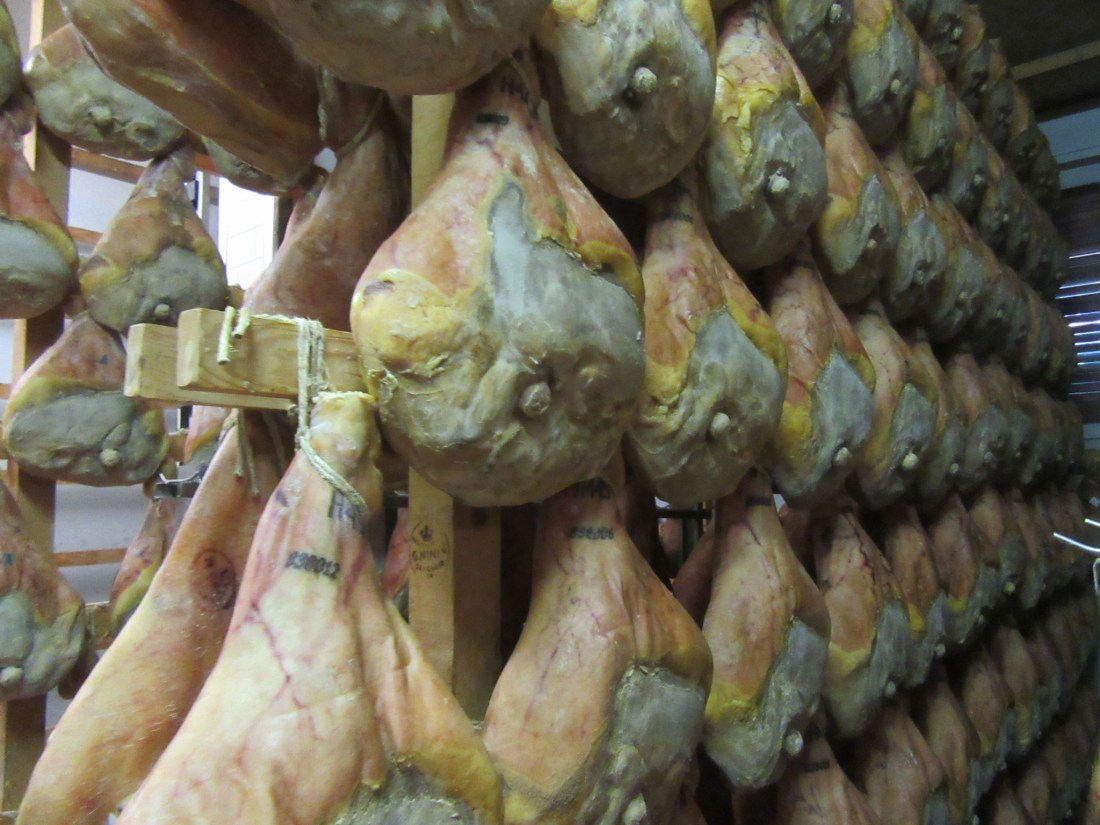
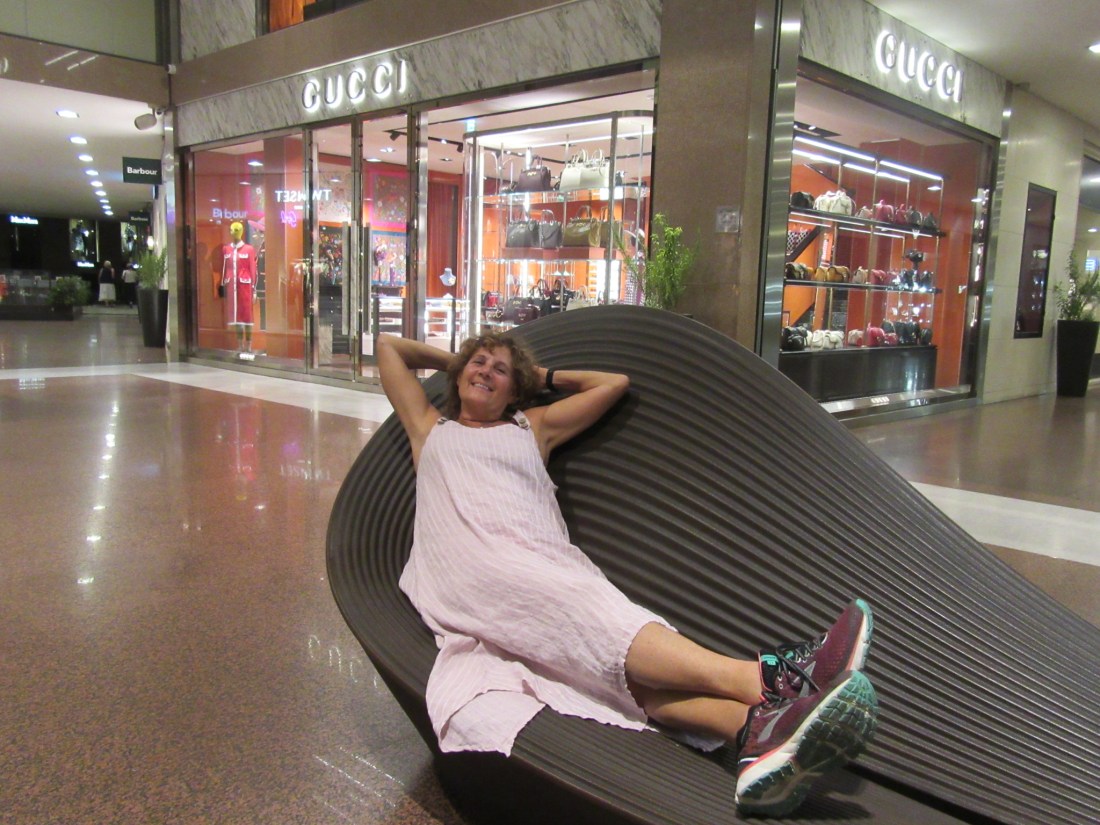
George dreamed of going to Bologna and so here we are!He found these rather strange looking plants and called me over to discuss. “Hmm, I know I have these growing in a planter in Florida”…on closer inspection we realized they’d been dipped in velvet! Ugh, neither of us were fans after that.Little did we know that tortellini is very prevalent in Bologna. And look at that cheese, yum!So many loggias or covered archways all around the city. Very pretty!Ummm, interesting fountain?Biggest reason for going to Bologna was a food tour that George arranged for us. We started at the cheese factory.So interesting to see how parmigiano reggiano is made.And so much fun to dress in plastic for this tour ; – )Next we went to a third generation balsamic vinegar operation where we learned that the really good balsamic is made of…two ingredients – grapes and time! That’s all folks!!!What can I say about the lunch they served us at this beautiful hillside agriturismo other than it was amazing!?! We lost count of the many courses they served us.And treated me well, even though I was the lone vegetarian.Prosciutto factory was a bit disturbing.All in all it was a fantastic day and our tour guide was as cute as he could be. And most importantly, George thoroughly enjoyed himself!Bologna has interestingly shaped benches for people to relax, all around the city. I’m game😉
“Come with me, where dreams are born, and time is never planned.” – Peter Pan
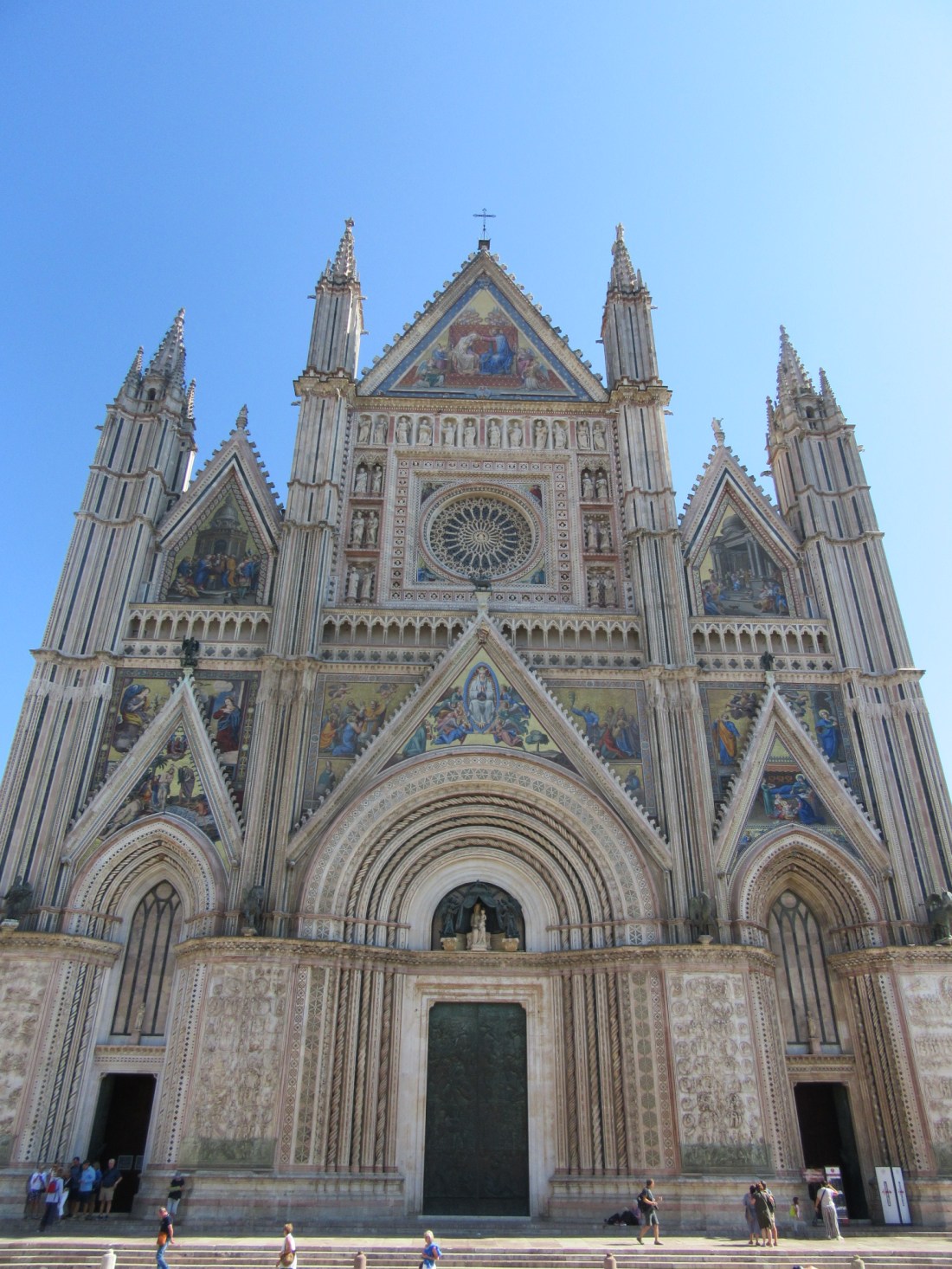
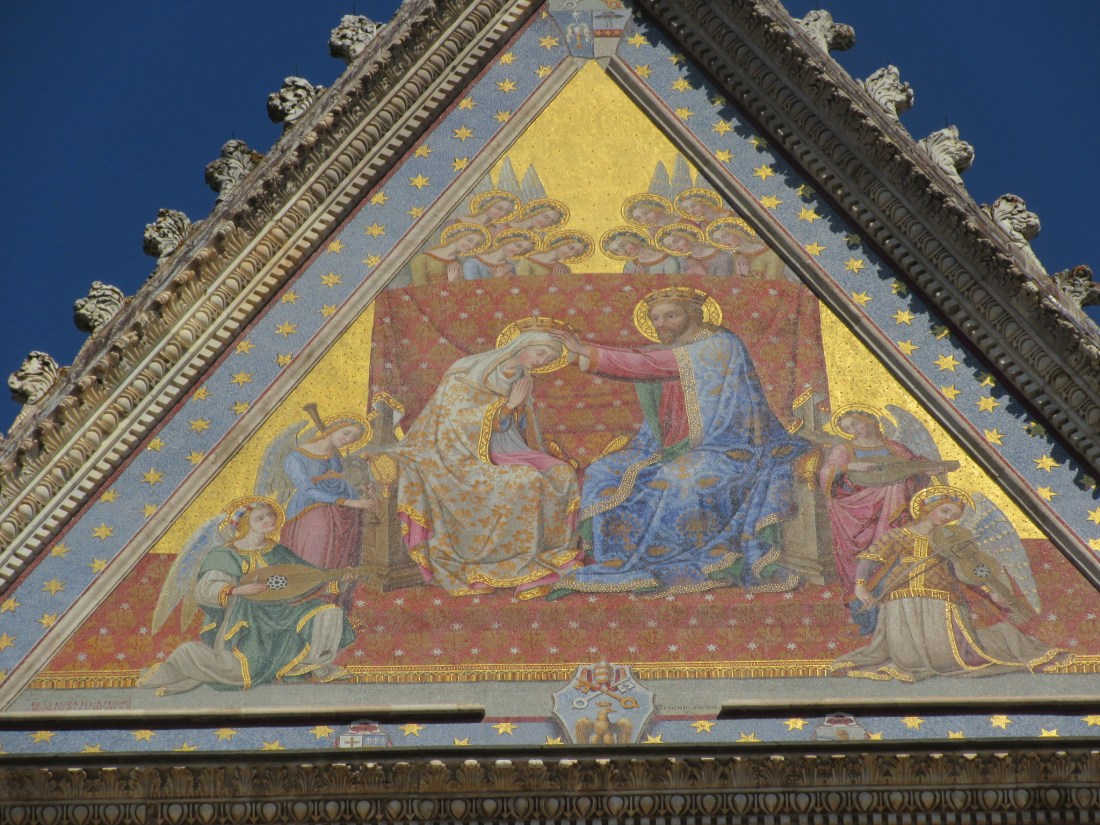
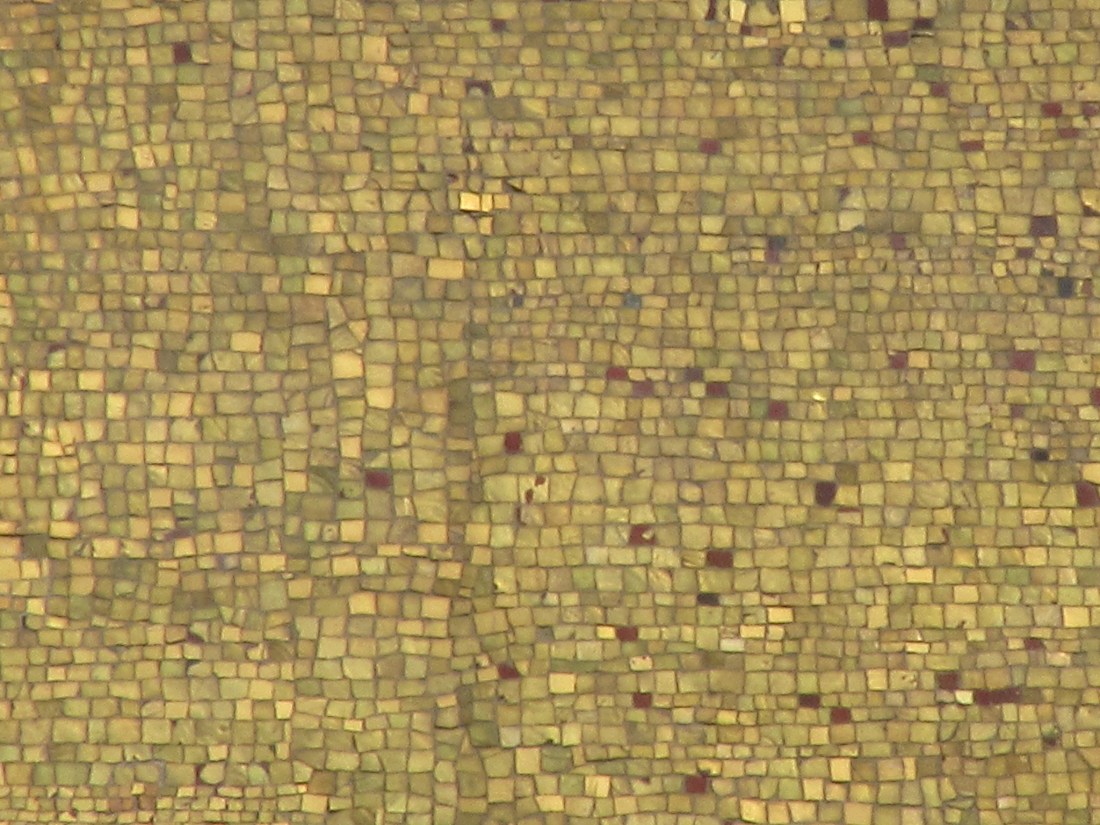
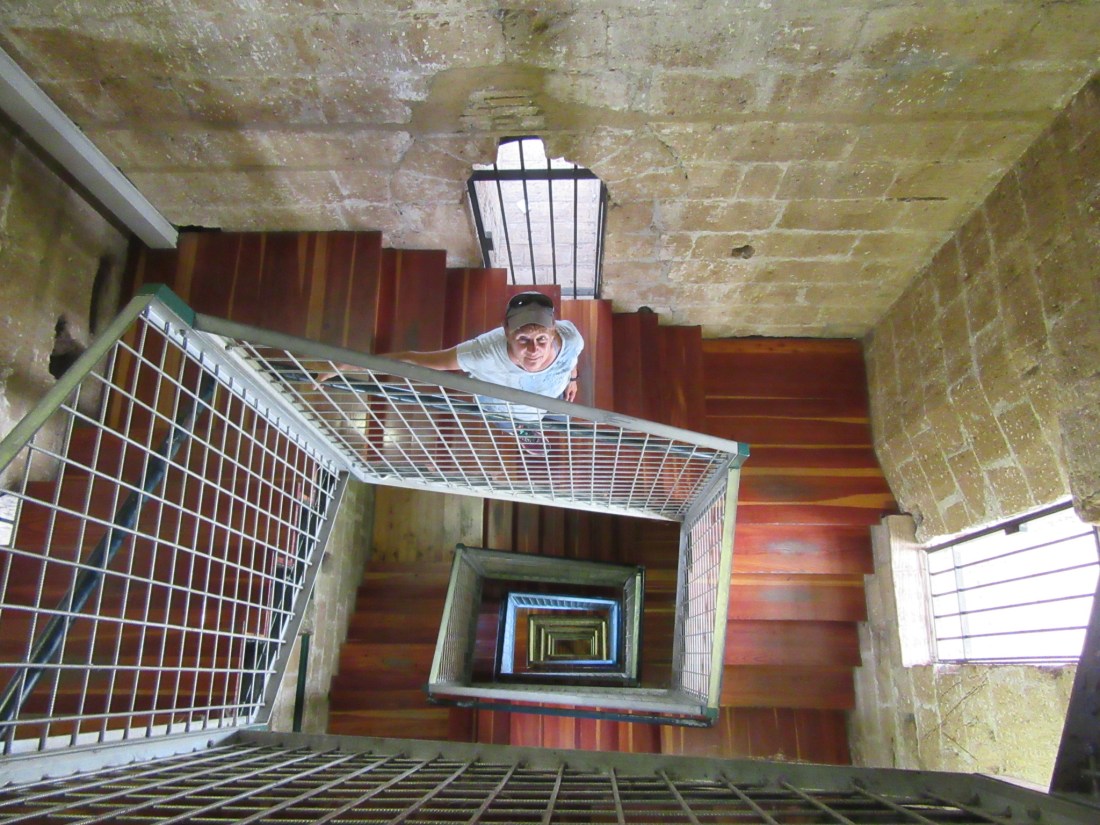
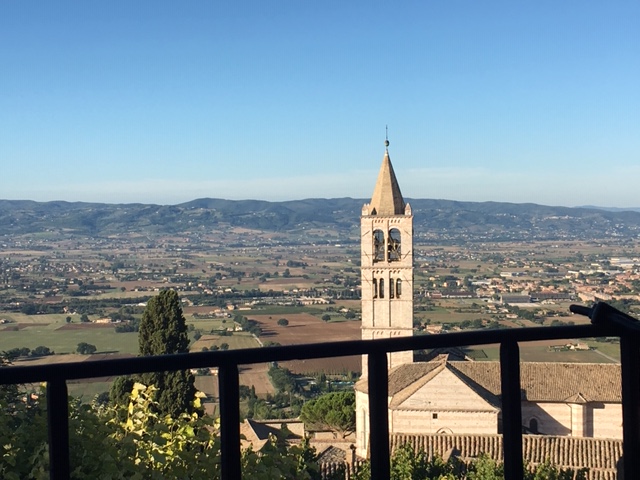
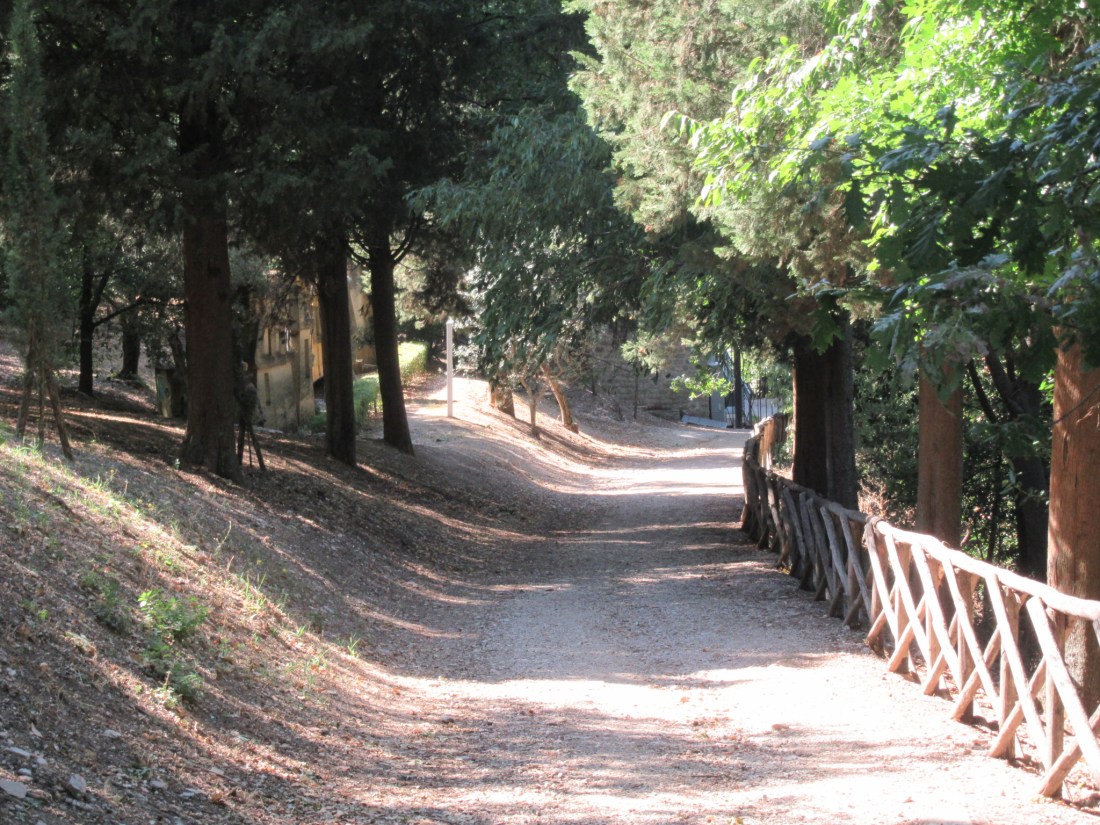
Orvieto’s cathedral has Italy’s liveliest facade. This colorful, prickly Gothic facade divided by four pillars, has been compared to a medieval altarpiece.The mosaics gleam in the afternoon sunshine.Close up of 14th century, gold leaf mosaic.The interior is warmly lit by alabaster windows, highlighting the black-and-white striped stonework.Impressive, right?In the center of the town is the Torre del Moro (Tower of the Moor). Great way to see the surrounding countryside.Easiest tower steps EVER!!! Wooden – evenly sized and spaced. Never seen the likes of these. Such a breeze to climb!Later that day we arrived in Assisi. It was hard to leave our balcony with this view, to explore the town that St Francis put on the map!Murph and I went on this forest walk just down from the Basilica. Nice to be in the woods for a change.Great vantage point for viewing the surrounding hills.Basilica of St Mary of the Angels – This huge Basilica marks the spot where Francis lived, worked, and died. It’s a grandiose church built around a humble chapel – reflecting the monumental impact of this simple saint on his town and the world.
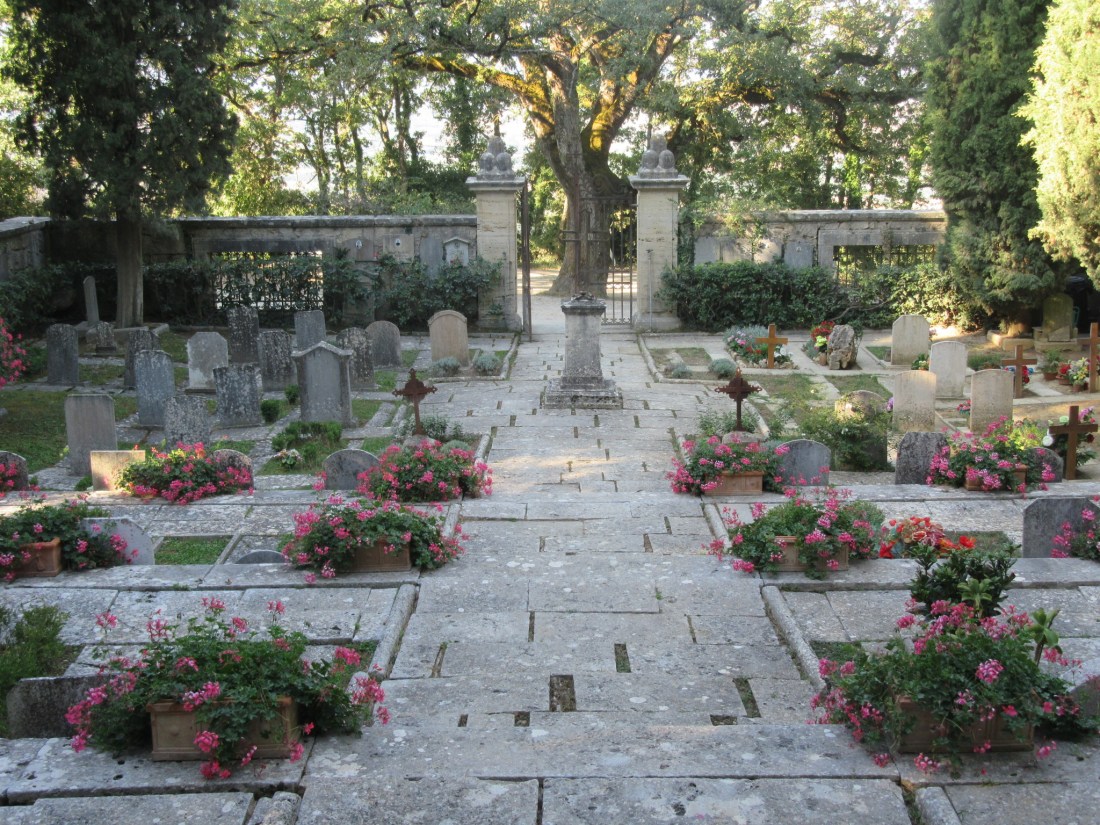
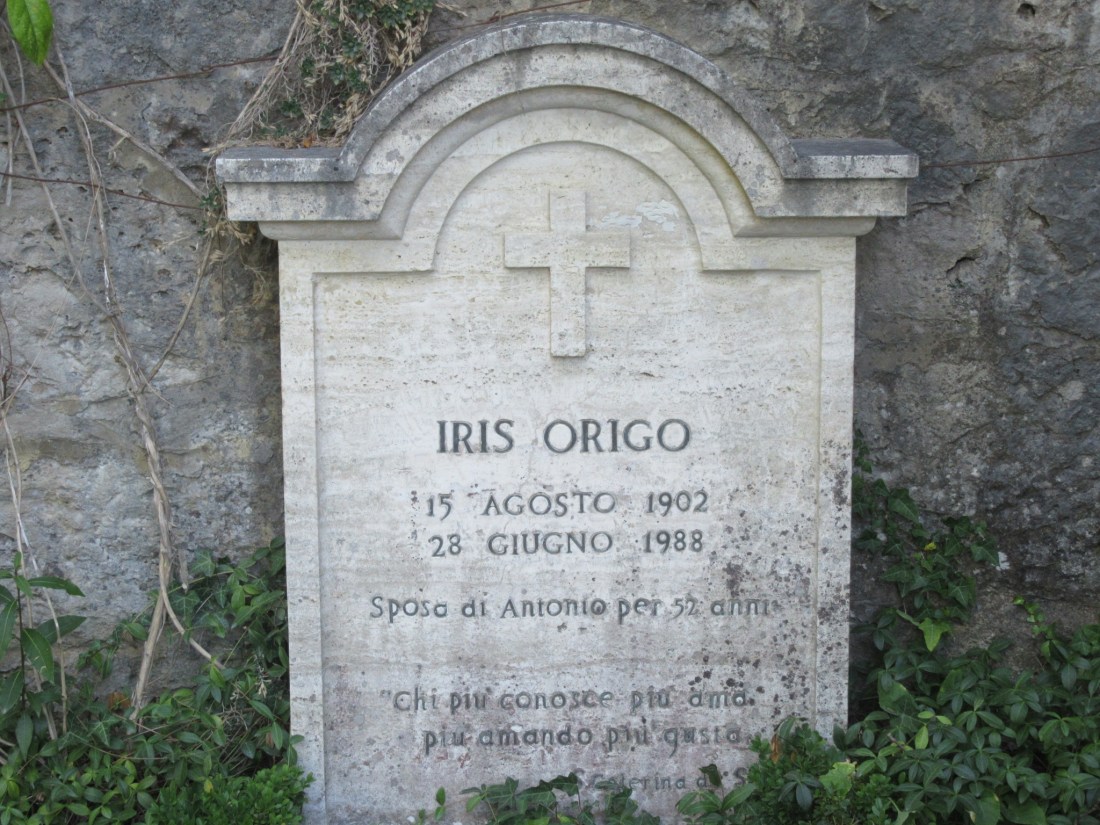
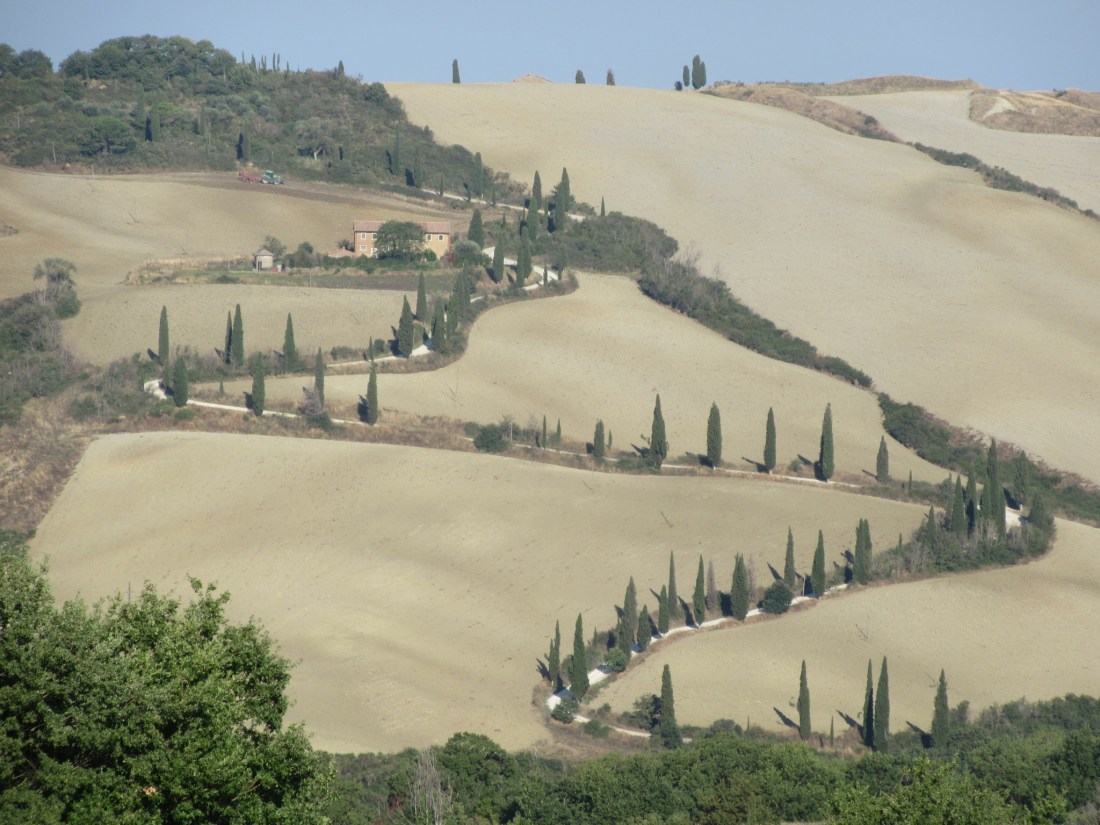
When we read ” B & B Palazzolo La Foce let’s you sleep aristocratically in a small villa just below La Foce Gardens.” I immediately called that as my “pick”. We were not disappointed!The view was so amazing – George went down for a closer look. The peak on the left is an inactive volcano.Going to be hard to leave this place to tour the area hilltowns…One evening we went on the La Foce Gardens tour where I wished I had every one of my gardening friends with me!The gardens were a labor of love for Iris Origo, an English-born, Italian-bred aristocrat who left her mark on this area.The gardens cap a hill with geometrical Italian gardens and rugged English gardens that flow into the Tuscan countryside.Worth a pilgrimage for garden lovers.That evening we drove up rugged, hair pin turn roads to Monticchello to walk around and eat dinner.Very pretty at night.A bit out of order but this is part of the fortification for Montepulciano.La Foce cemetery – where Iris is buried.Iris was instrumental in creating the beautiful gardens but she is more renowned in the area for her part during WWII. She and her husband harbored many children and soldiers. At one point they had to flee to a neighboring hill top with 30 children in tow!Love these cypress trees.These two white horses came to graze in the nearby field in the evenings.How does this even happen!?!
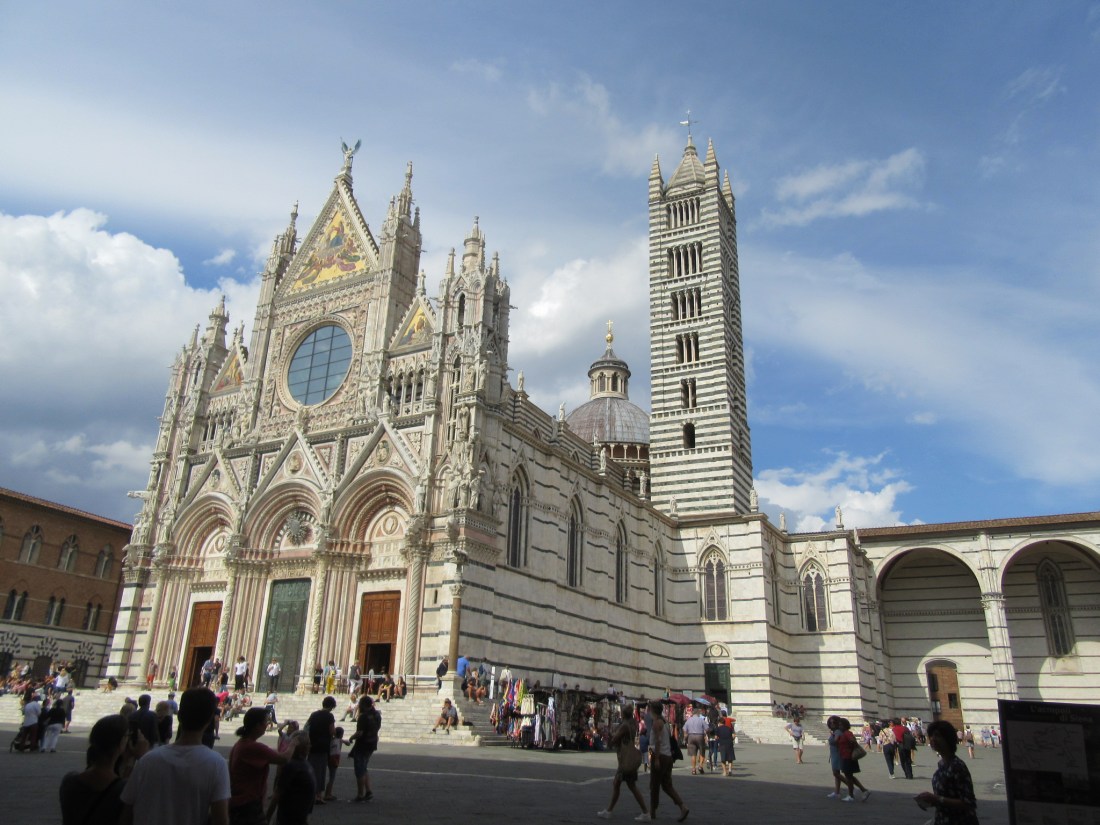
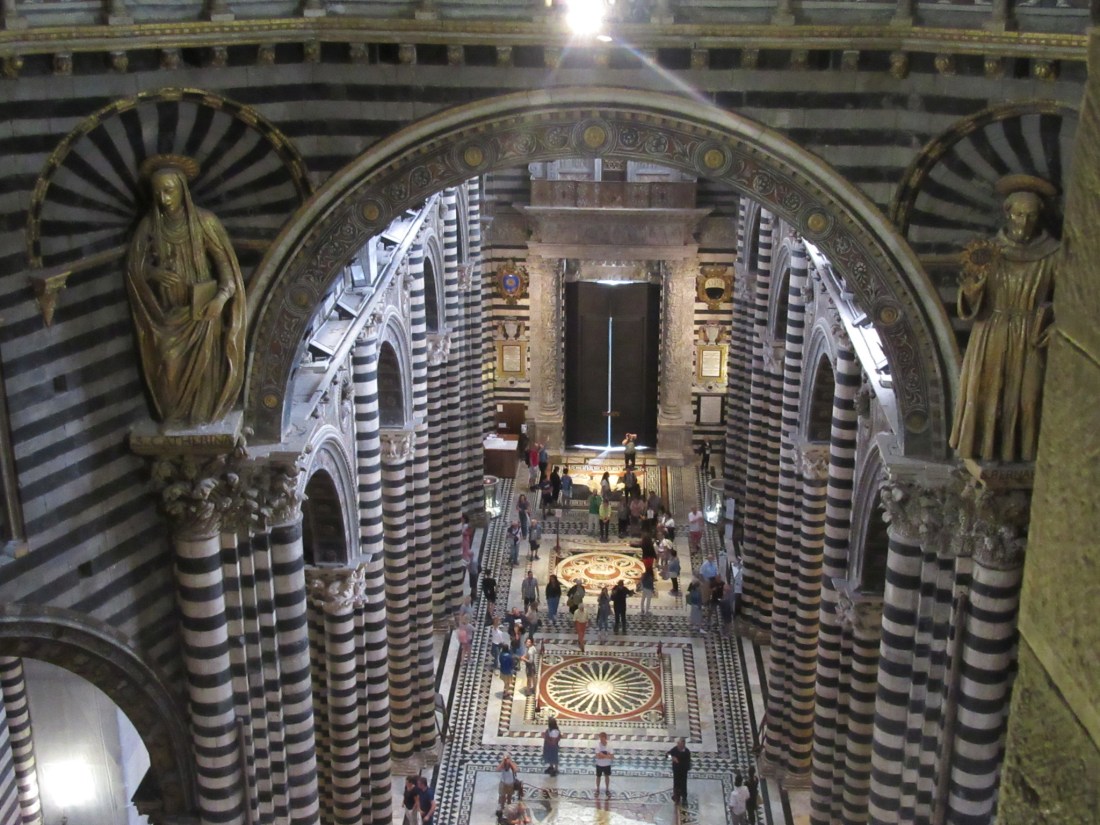
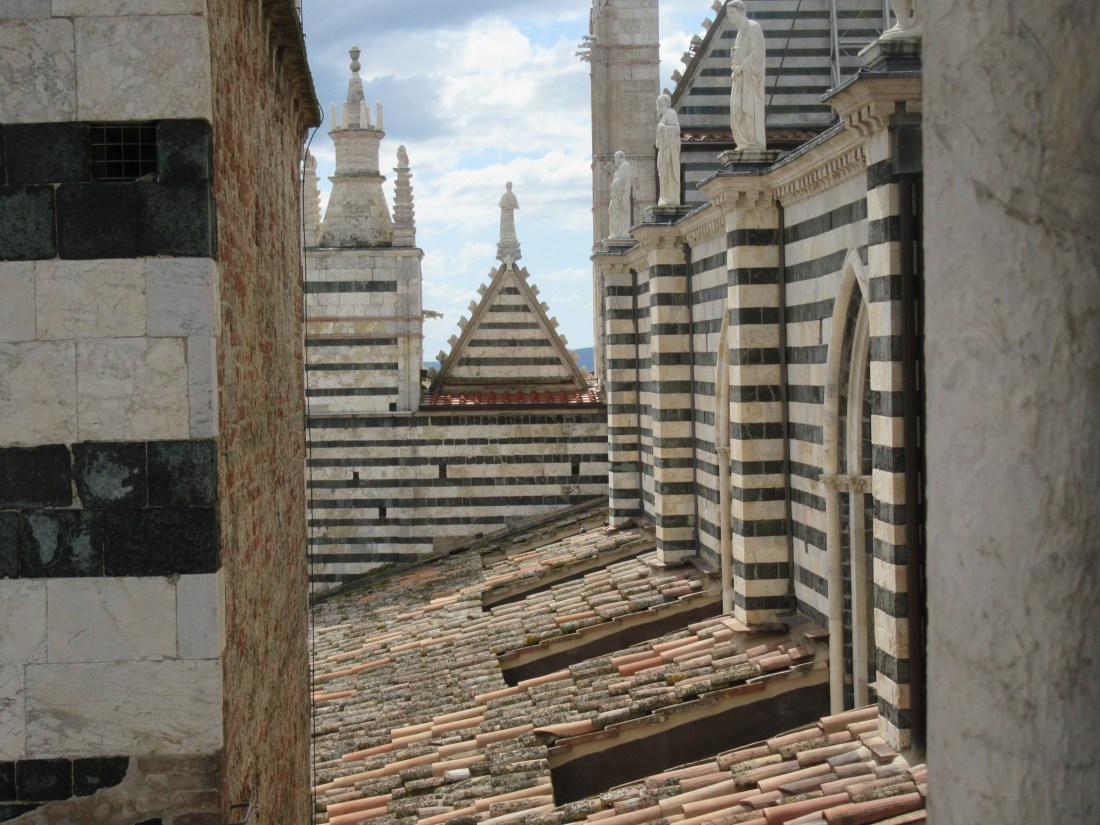
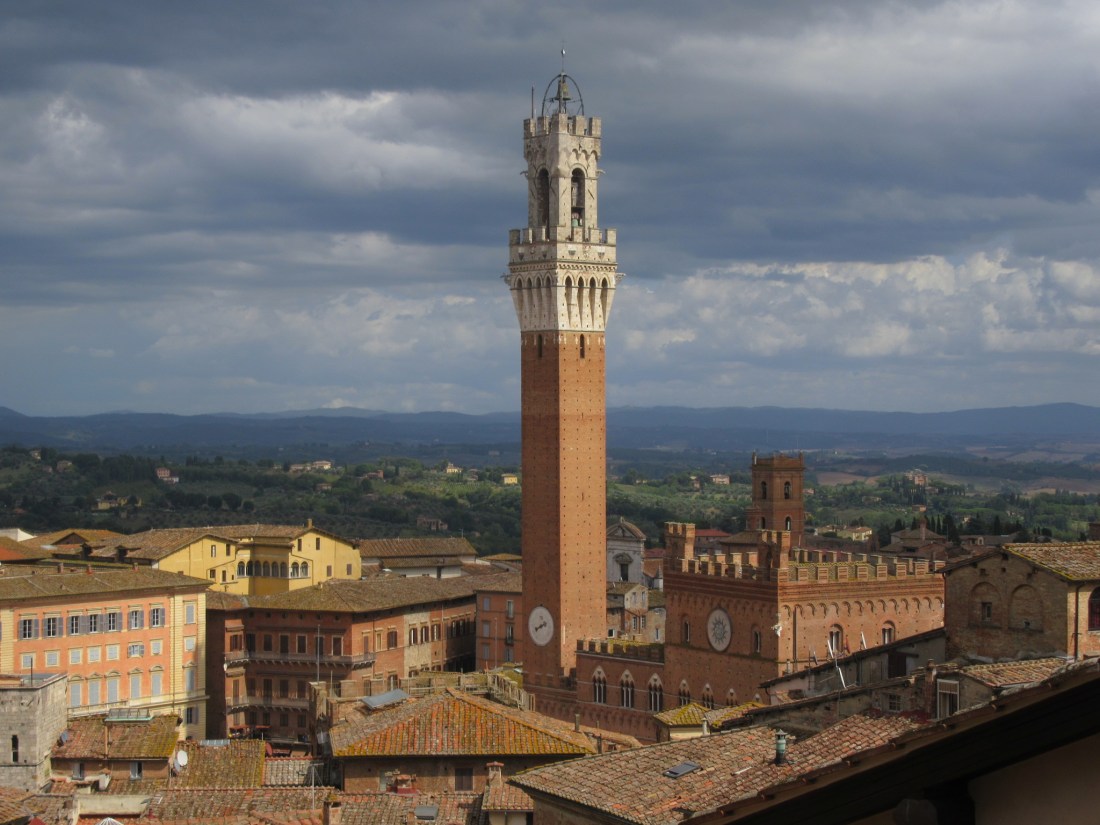
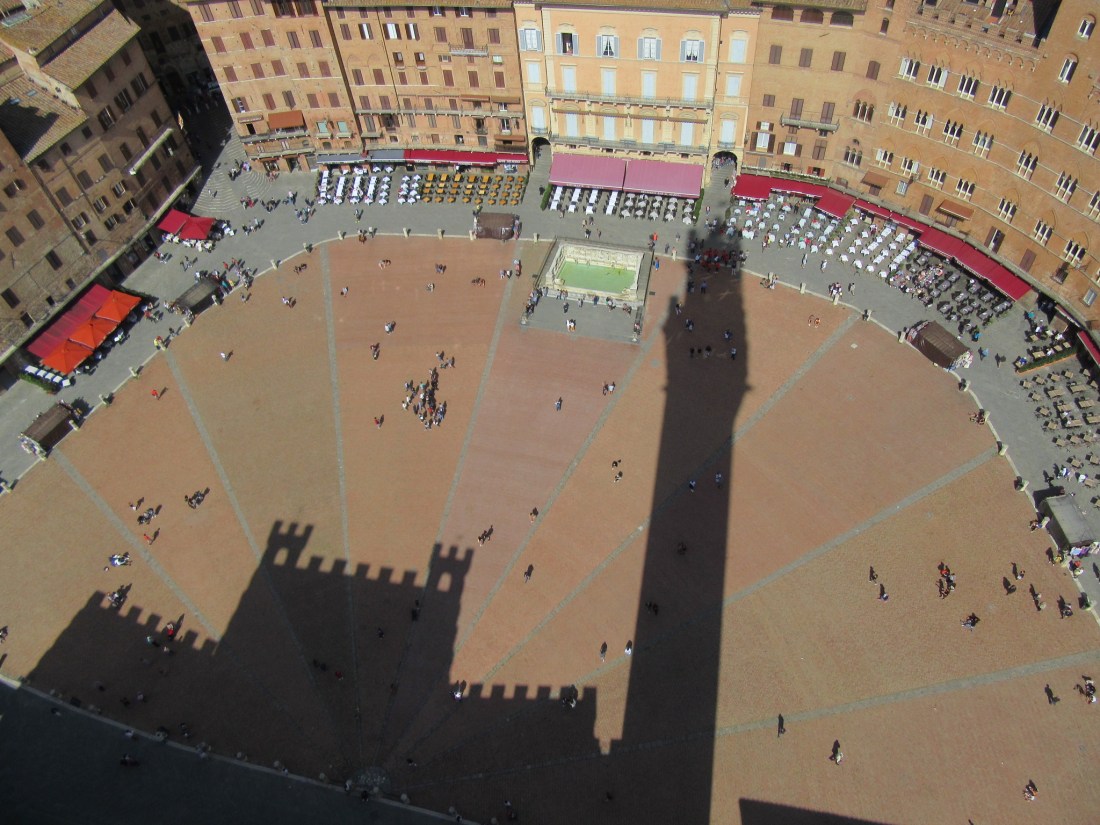
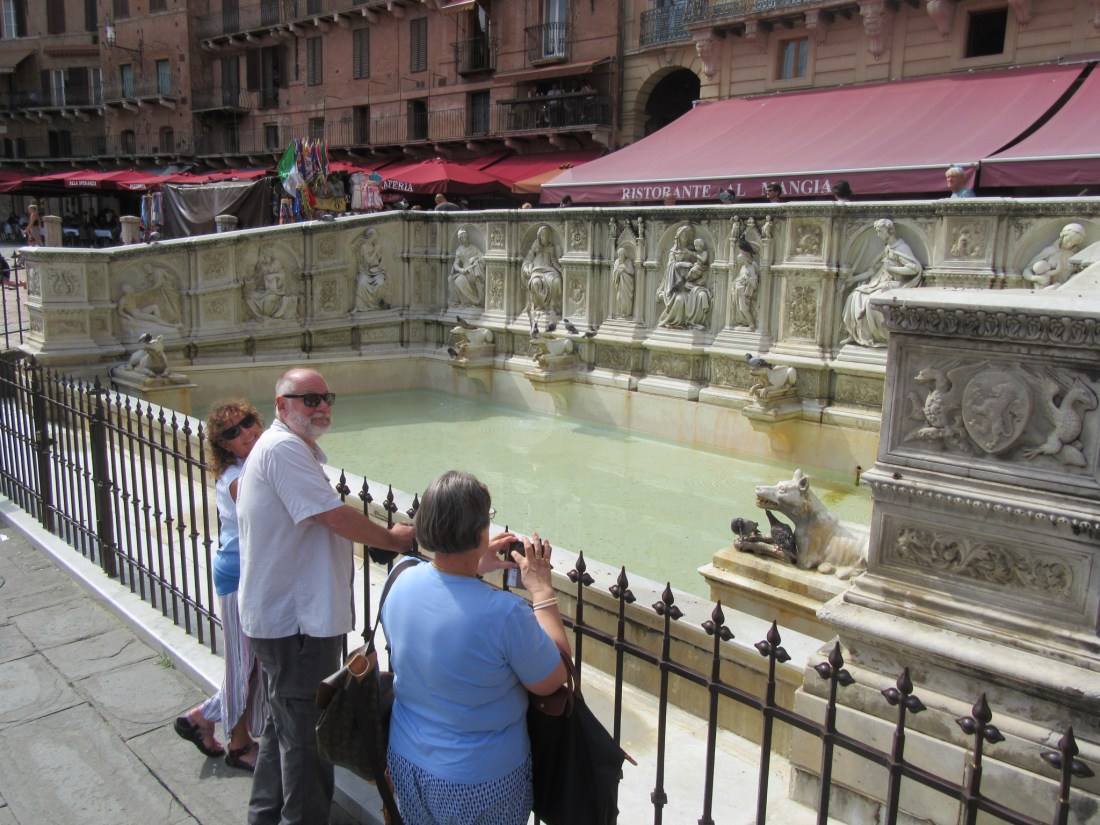
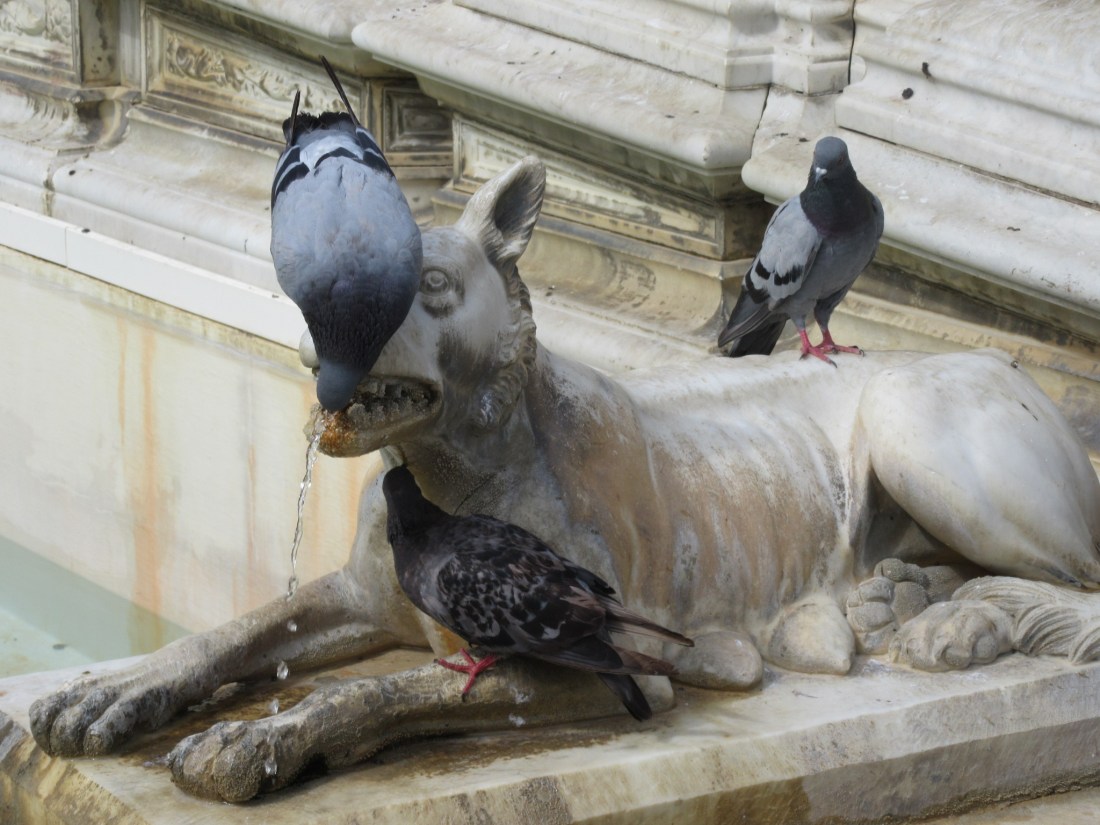
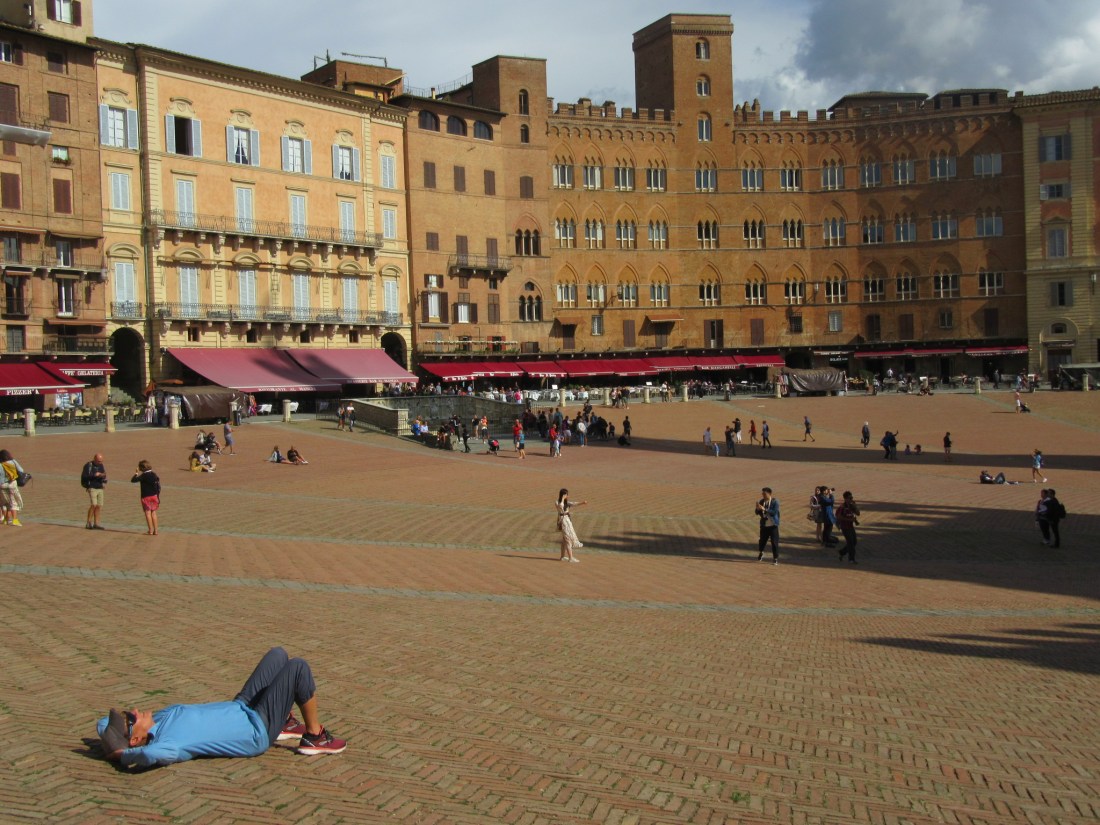
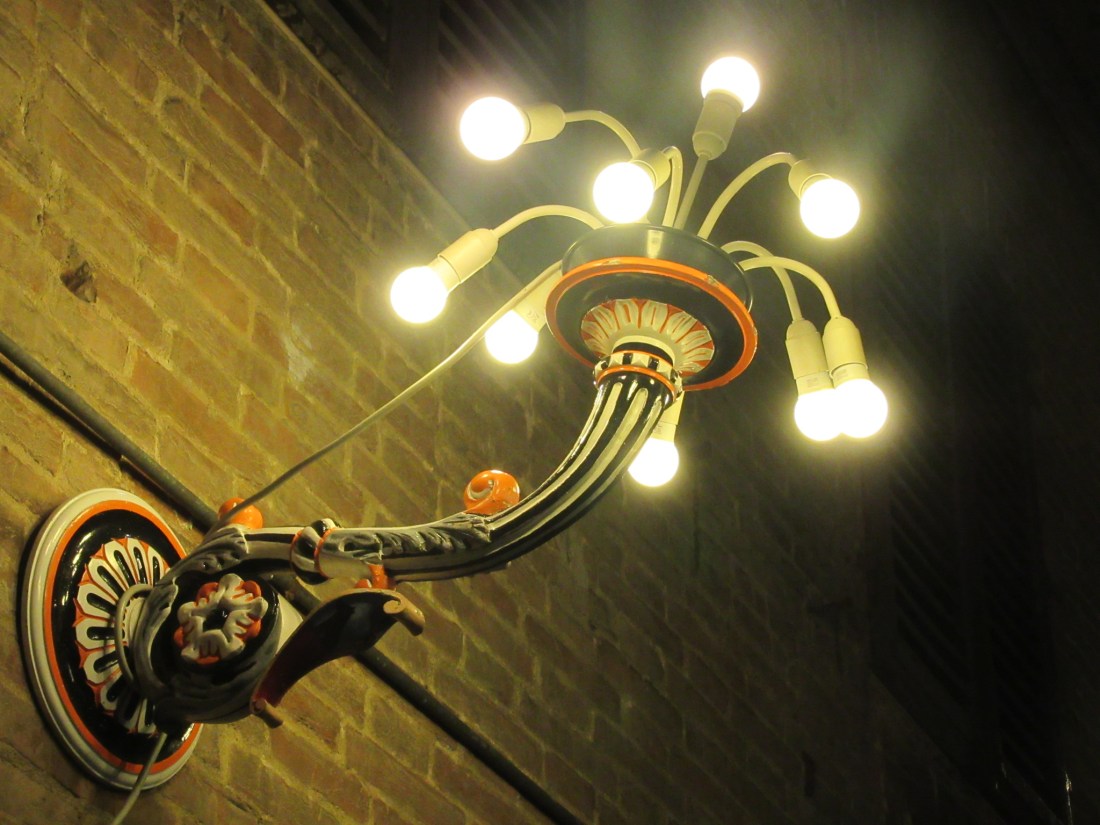
Duomo – This 13th century Gothic cathedral, with it’s striped bell tower – Siena’s ultimate tribute to the Virgin Mary – is heaped with statues, plastered with frescoes, and paved with art.We went on a guided tour up to the rafters of the Duomo. While ducking our heads, we peered through opened stain glass windows for a bird’s eye view of the cathedral below.And we walked along the roof top. Very cool!!!Back inside and almost level with the dome, it was a real “high” to be this close to the top.We’re usually on the floor looking straight above our heads.Siena’s 17 historic neighborhoods, or contrade – each with a parish church, well or fountain, and square – still play a active role in the life of the city. Each is represented by a mascot (porcupine, unicorn, wolf, etc) and unique colors worn proudly by residents. When we heard the thunder of distant drumming we ran to see the action. This contrade,celebrating a holiday, honoring the Virgin Mary.With many neighborhood residents, wearing their contrade scarves, following the parade. As we walked around the town that evening we saw many long tables set up in different squares. Adults and children alike eating and laughing – clearly enjoying their neighbors and this holiday.A fine picture of Siena’s city hall complete with tower. This tower was built around 1340. At 330 feet, it’s one of Italy’s tallest secular towers. Medieval Siena was a proud republic, and this tower stands like an exclamation point – an architectural declaration of independence from papacy and empire.This is a fun shot of the tower’s shadow in the main square or campo. We were at the top of the tower when Murph took this picture.George and me at the Fountain of Joy (Fonte Gaia). The joy is all about how the Sienese republic blessed it’s people with water.And the pigeons too, I guess 😉ll Campo (officially the Piazza del Campo) – First laid out in the 12th century is the only square we’ve ever seen where people stretch out as if at the beach. Pretty nice view I’d say!Mary, George and me at the Campo on our evening stroll.Even their street lights are contrade themed. Very beautiful sight while walking along, as they are all in different colors to match the specific contrade (neighborhood) in which they hang.
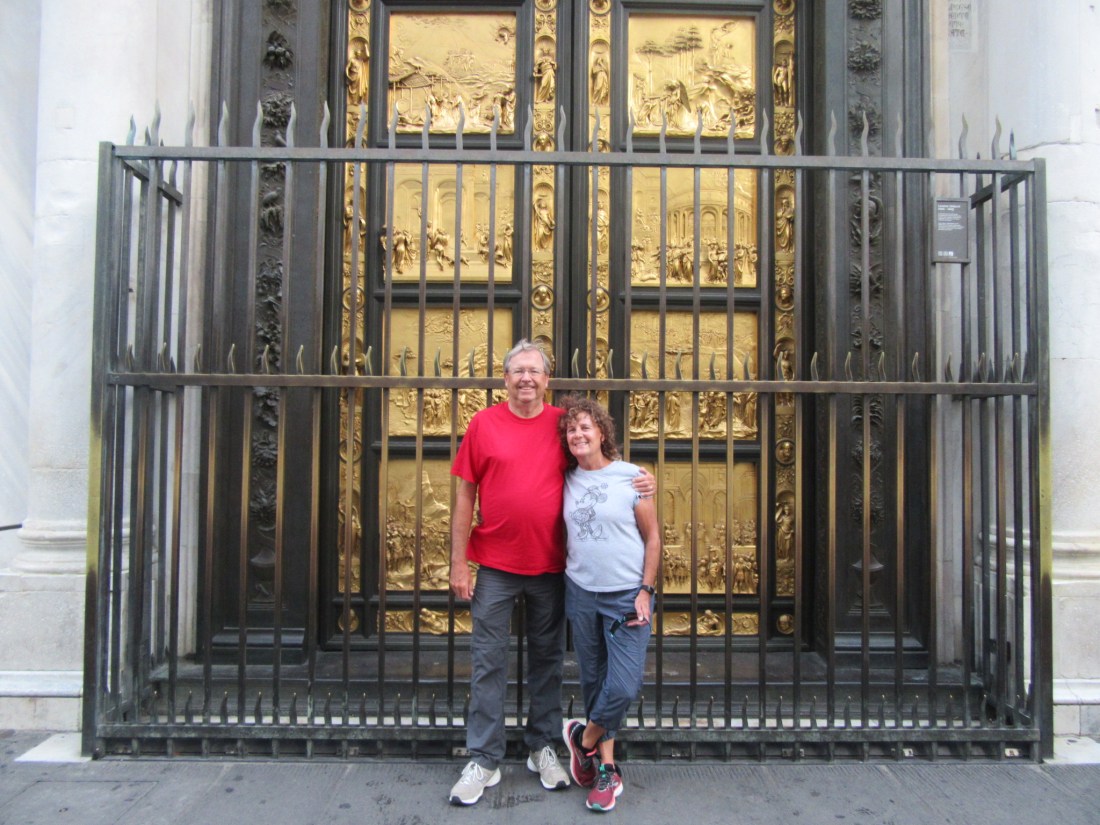
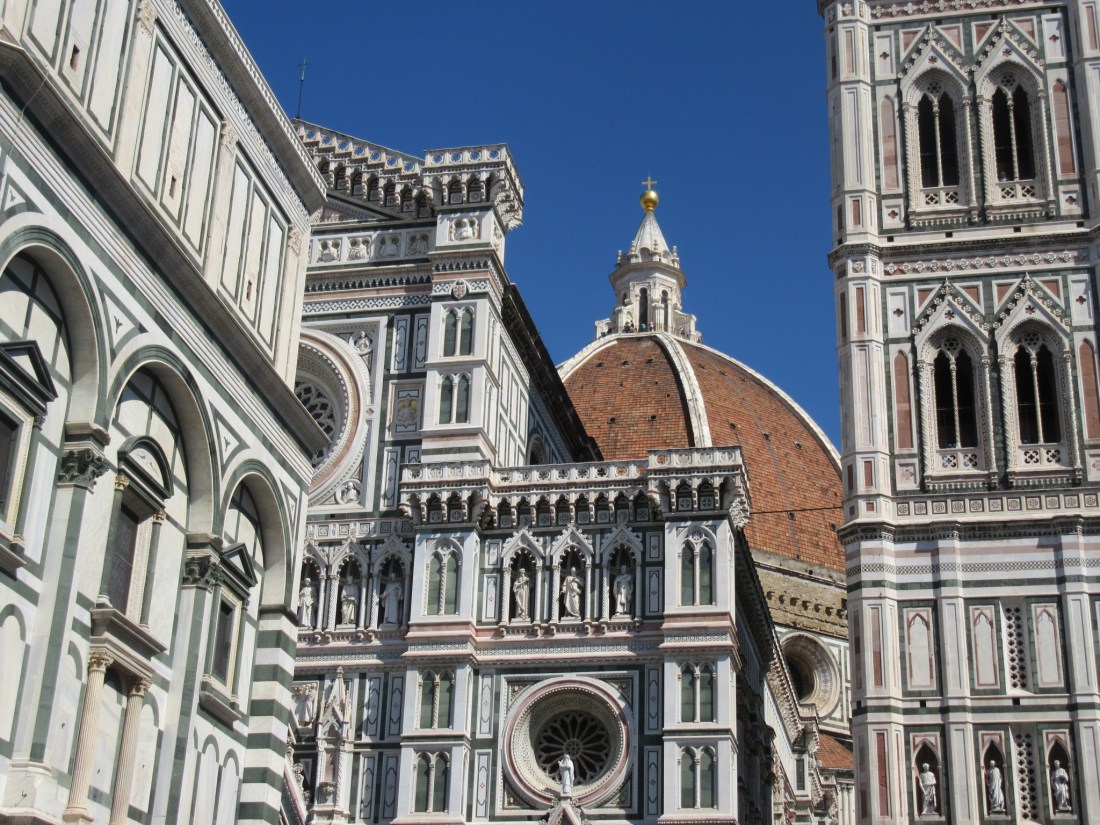
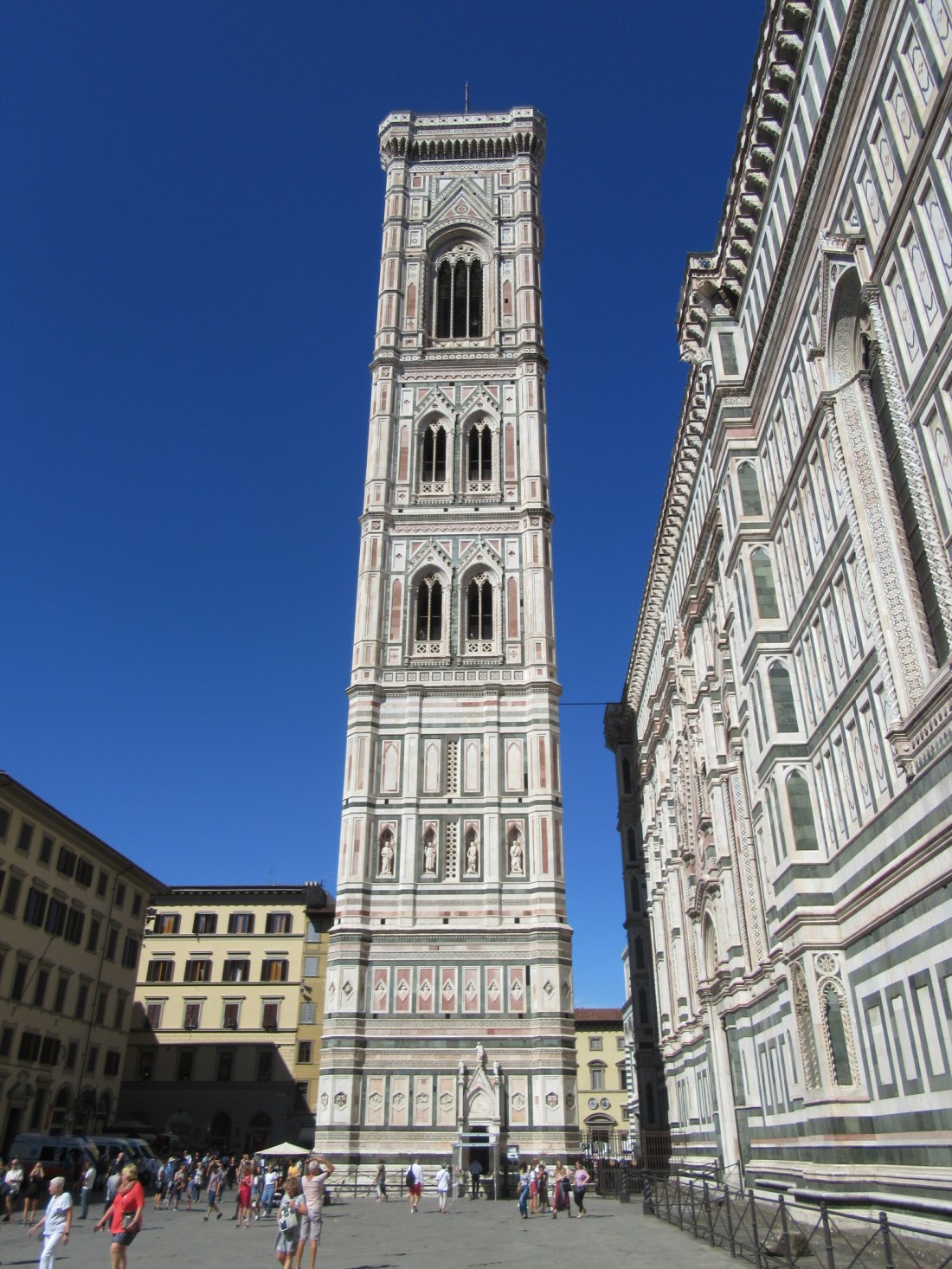
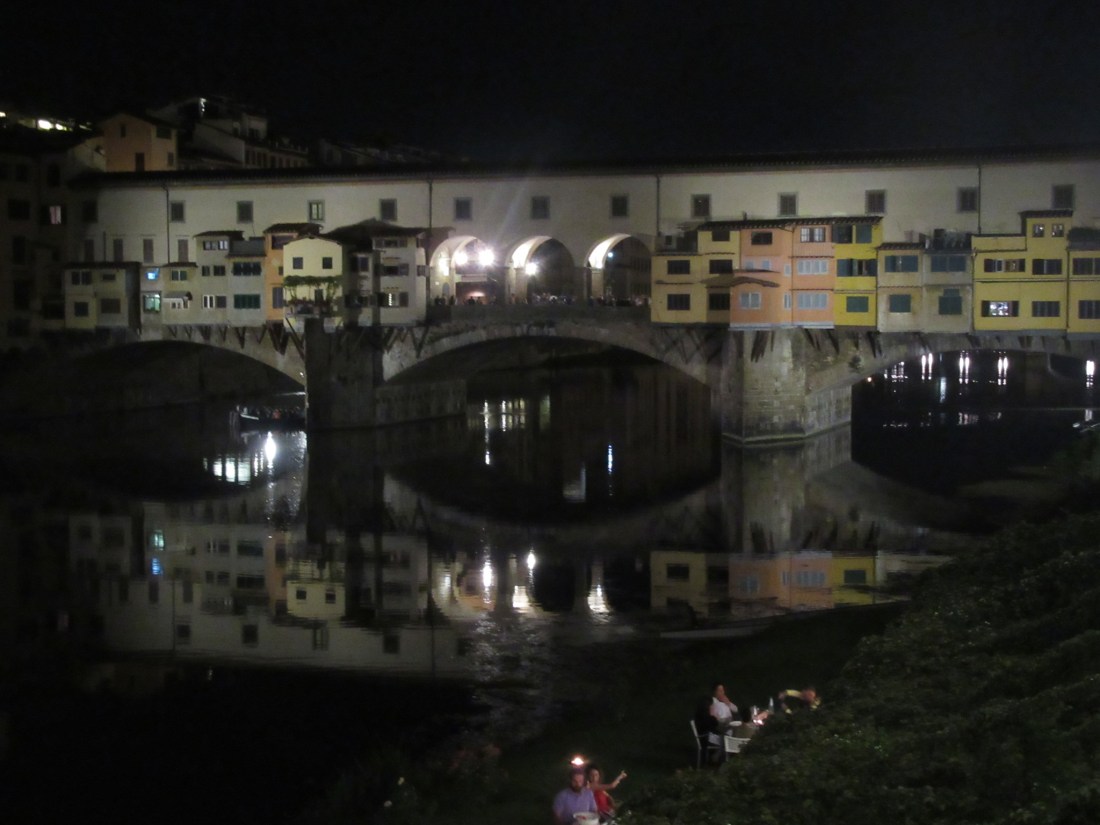
Built in the 11th century, atop Roman foundations, this is Florence’s oldest surviving building – one thousand years old. The Bapistry is known for it’s bronze doors. The most famous ones are these east doors that face the Duomo. Ghiberti spent 27 years (1425-1452) working on these panels. Murph and I ran over to see the doors one morning just after sunrise.Each panel in the doors depicts scenes from the old testiment. This one is of onlookers exulting as Moses receives the Tablets of the Law from God. (Or as I would say, the Ten Commandments)Iconic photo of Giatto’s tower (right), Brunelleschi’s Dome (in back), Duomo or Cathedral (center) and Bapistry (left). Breathtaking marble workmanship!We could stand here for hours to look at the details of this work of art!You know we did!!! Great view from up top 😉Ponte Vecchio at night. Nice reflections.Florence is so picturesque!Santa Croce – Michelangelo’s church and neighborhood while growing up.This sculpture by Michelangelo is in the Duomo museum. It was intended to be his sculptural epitaph. He used his face as the face of Joseph, so it’s kind of a self portrait.Evening photograph taken from the Piazzale Michelangelo – hilltop square with stunning views of Florence.Sculpture by Luca della Robbia – just love it!
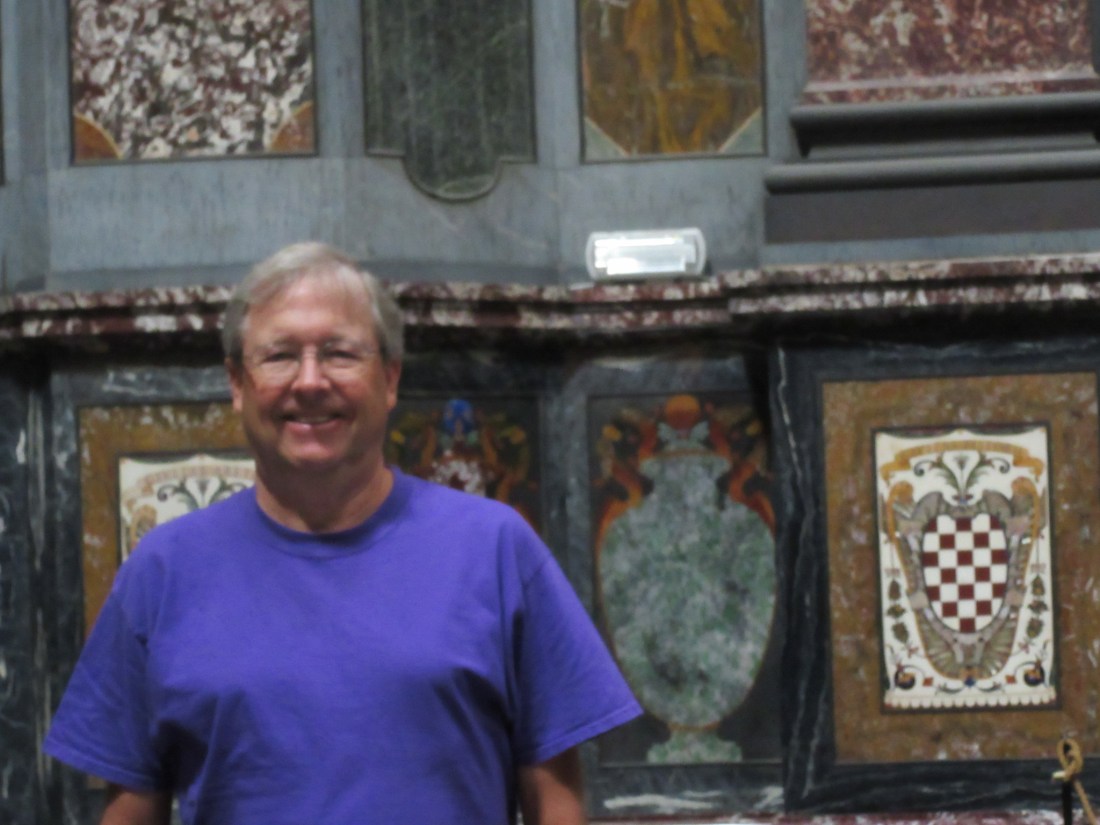
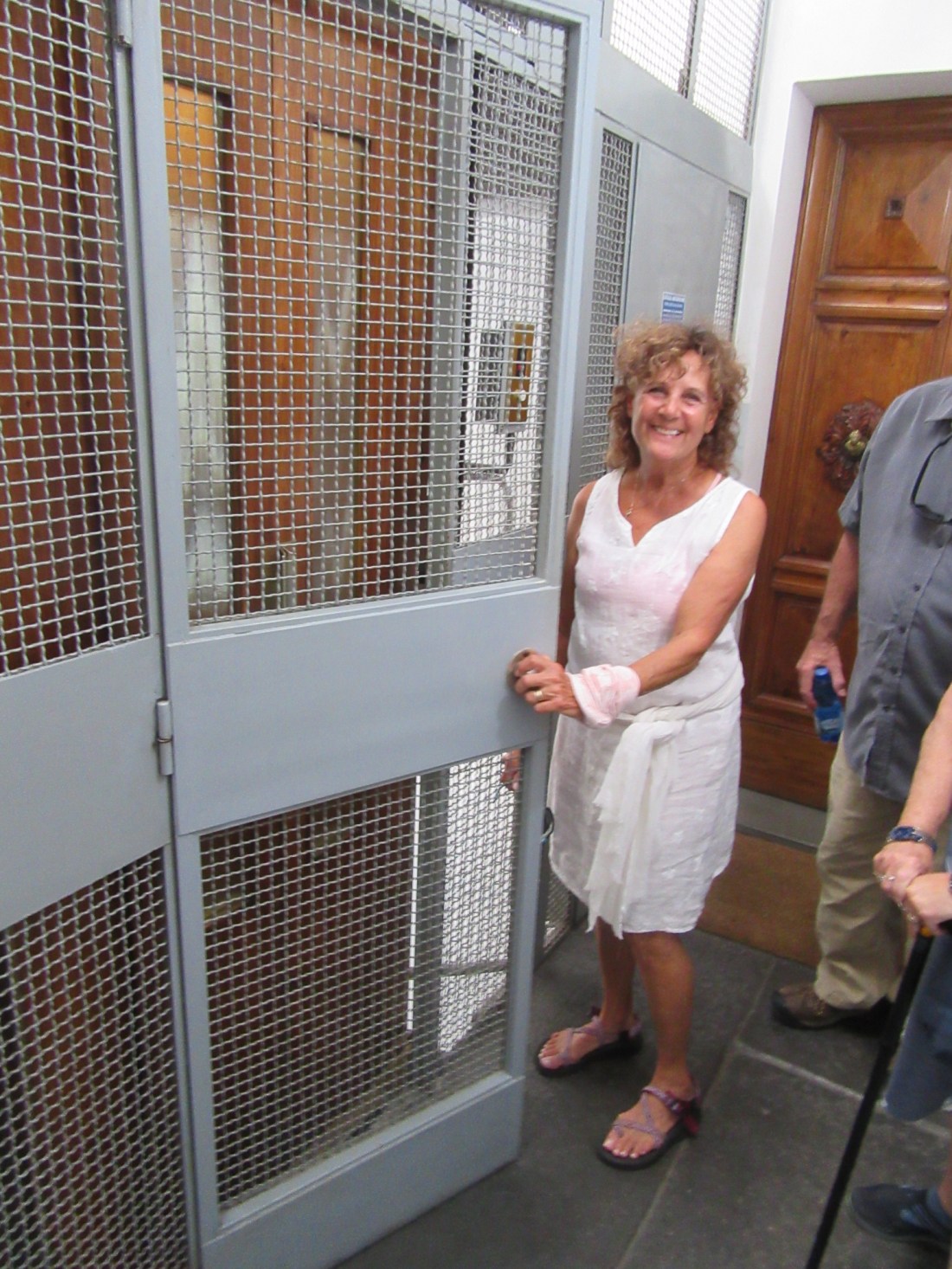
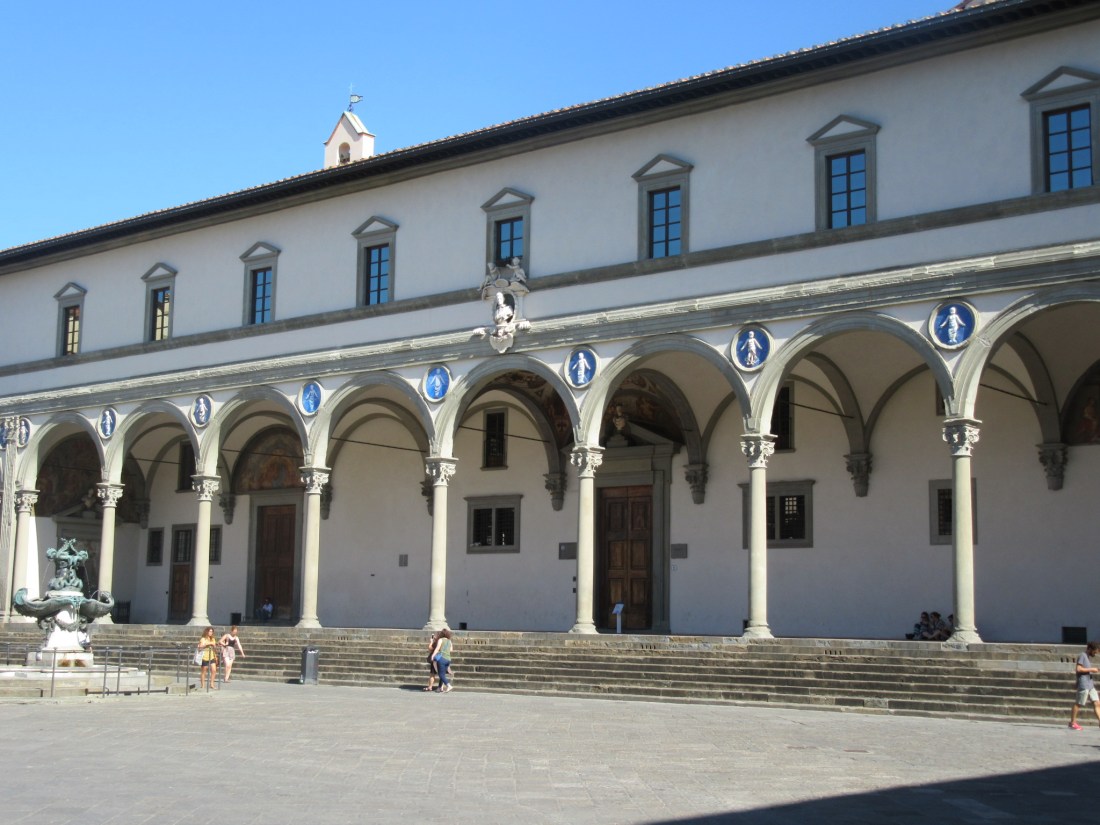
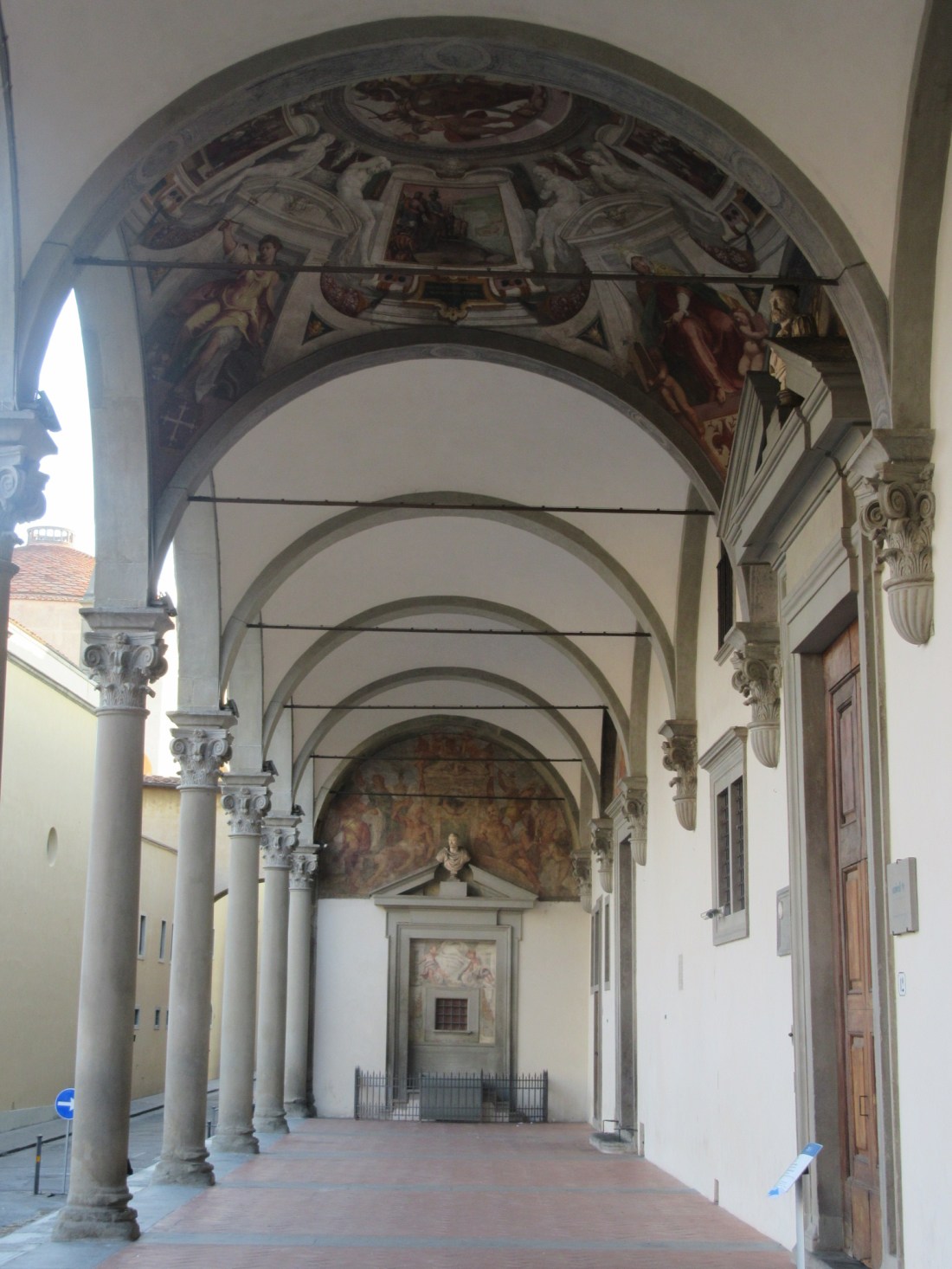
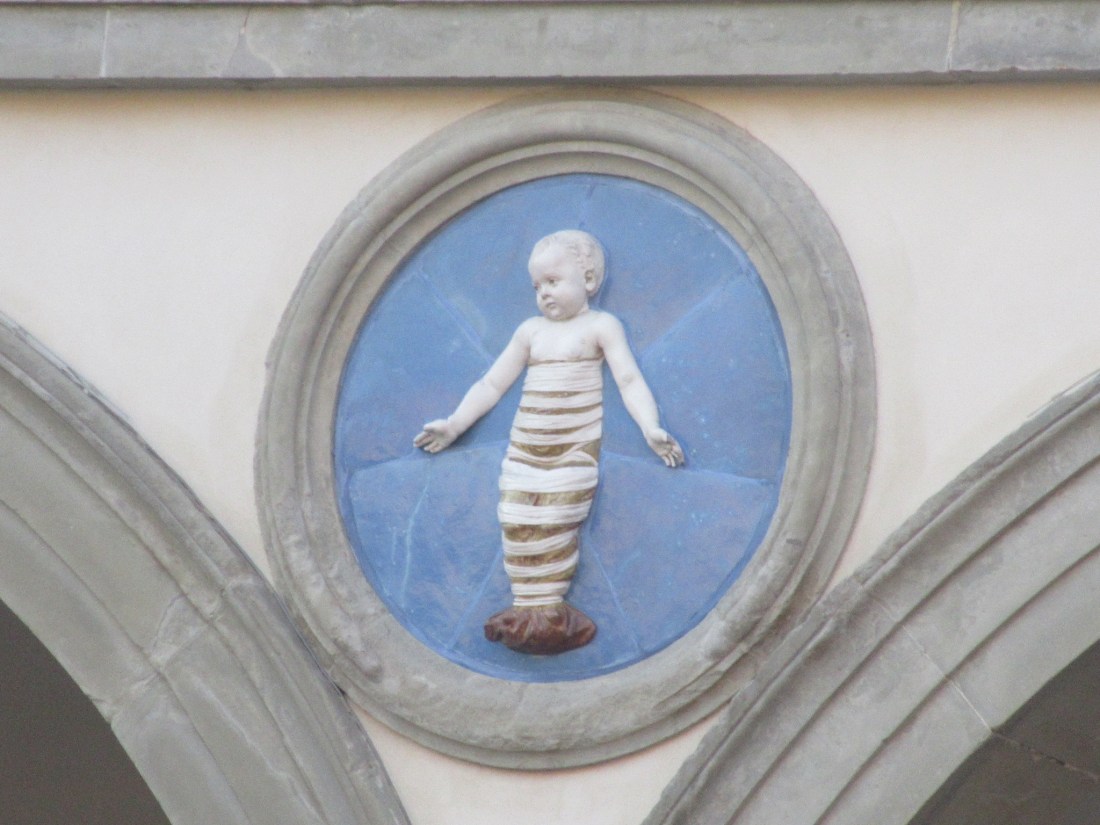
In case you’ve forgotten our photographer. You can see by this photo why HE’S holding the camera most of the time. Anyway, here we are at the Medici Chapel.The elevator we took to and from our rooms was a 3 step operation. Open first set of doors…then slide this set of doors open.Squeeze into tiny elevator and push button “T” for terra. Don’t forget to close all the doors when you get out or else the elevator is nonoperational for the next people.Walked over to the 1st Renassaince square ever, created by Brunelleschi, to tour the Hopital of the Innocents.See the door at the end of the loggia?This grate was where women dropped their newborn babies if they couldn’t care for them. The grate was only large enough to fit a newborn. A bell was rung and a nurse would find the baby on a cushion on the ledge inside. A wet nurse would be assigned to the baby so it could be cared for quickly. After 400 years and hundreds of thousands of babies having been dropped here, the policy changed. Women were no longer allowed to anonomously leave their babies. The grate was sealed and from then on women came to them at 7 months of pregnancy. They were taken in to have their babies and to help nurse other babies too.Back in the 1400’s it was believed that for the first year a baby should be wrapped in order for it’s spine to develop properly. There were many of these painted terra cotta medallions by Luca delle Robbia showing different ways to wrap babies.Months ago George read about this sandwich shop so it was his pick for the day.
.
I think you can see that we enjoyed our lunch. No sitting on the curb allowed! The Polizia made sure of that! See you after we’re done eating.
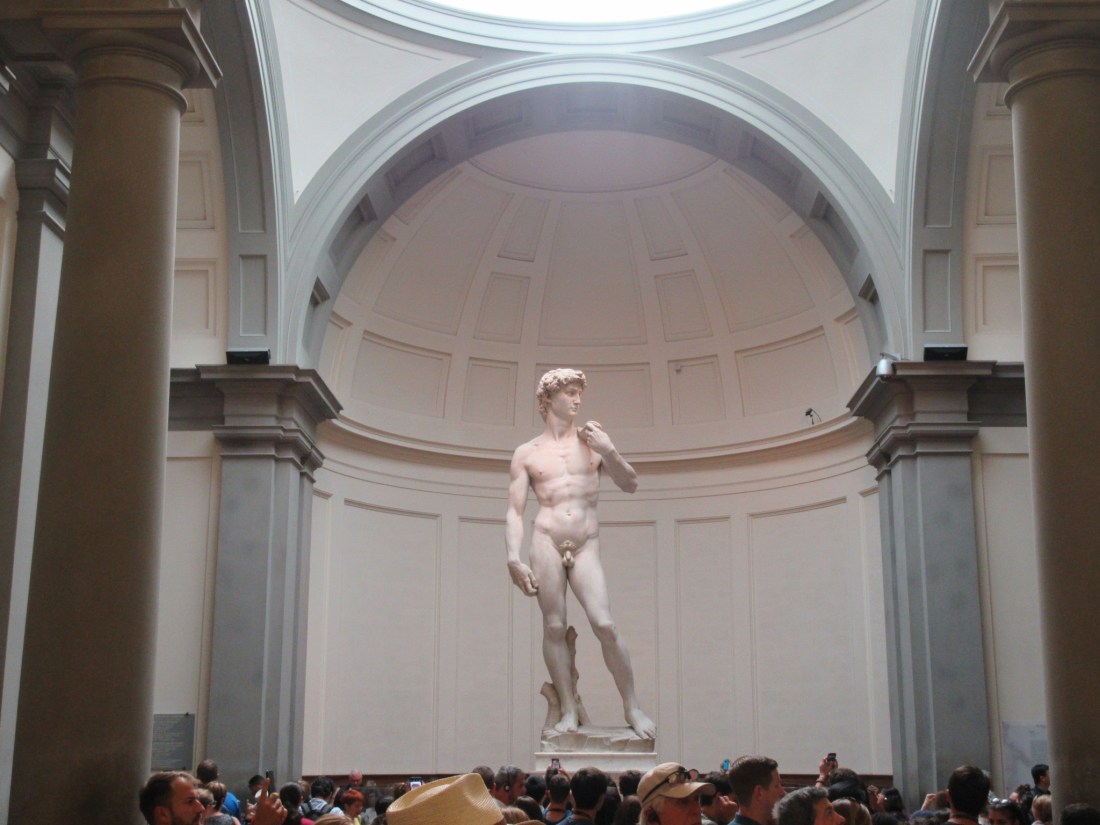
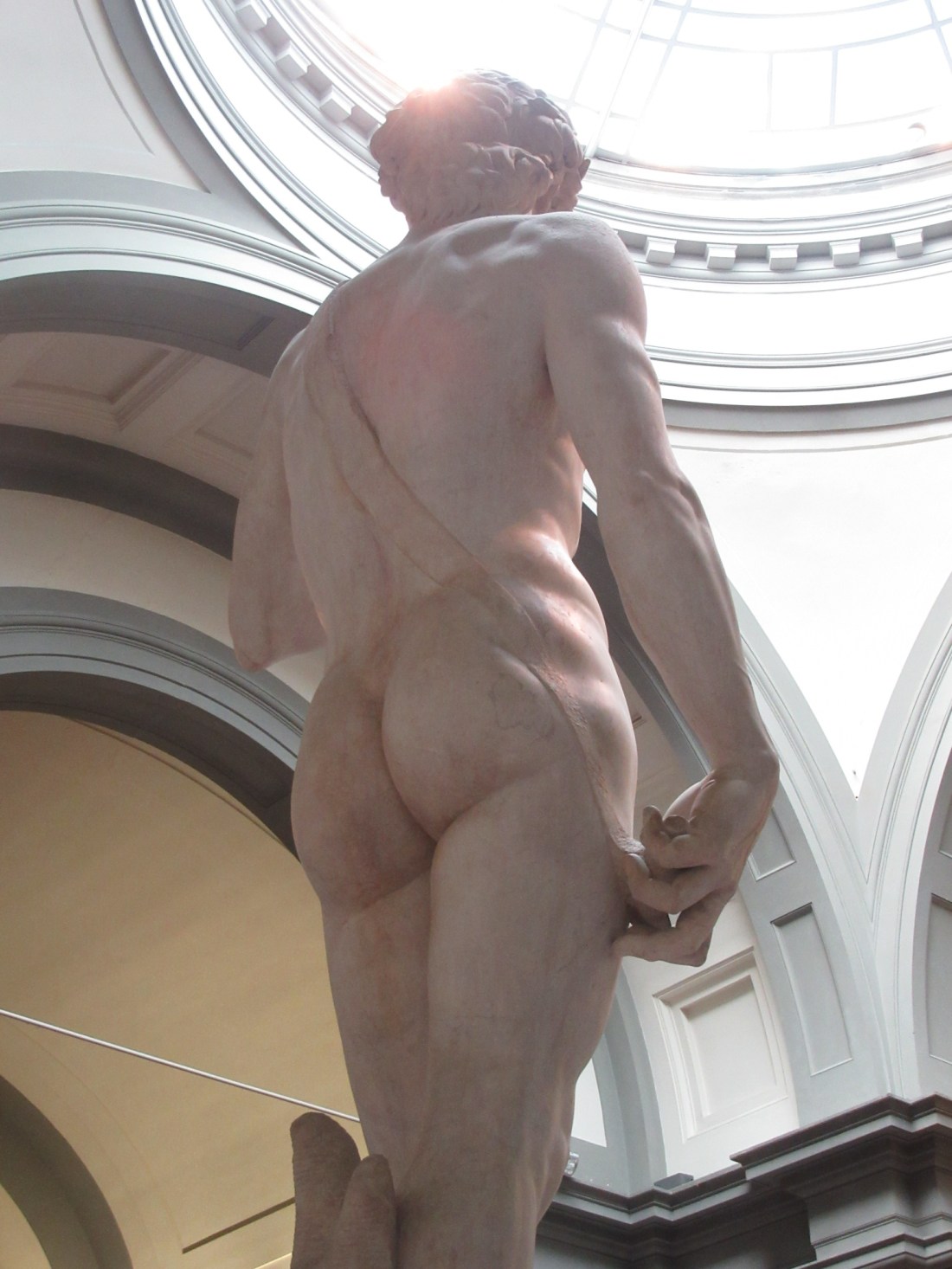
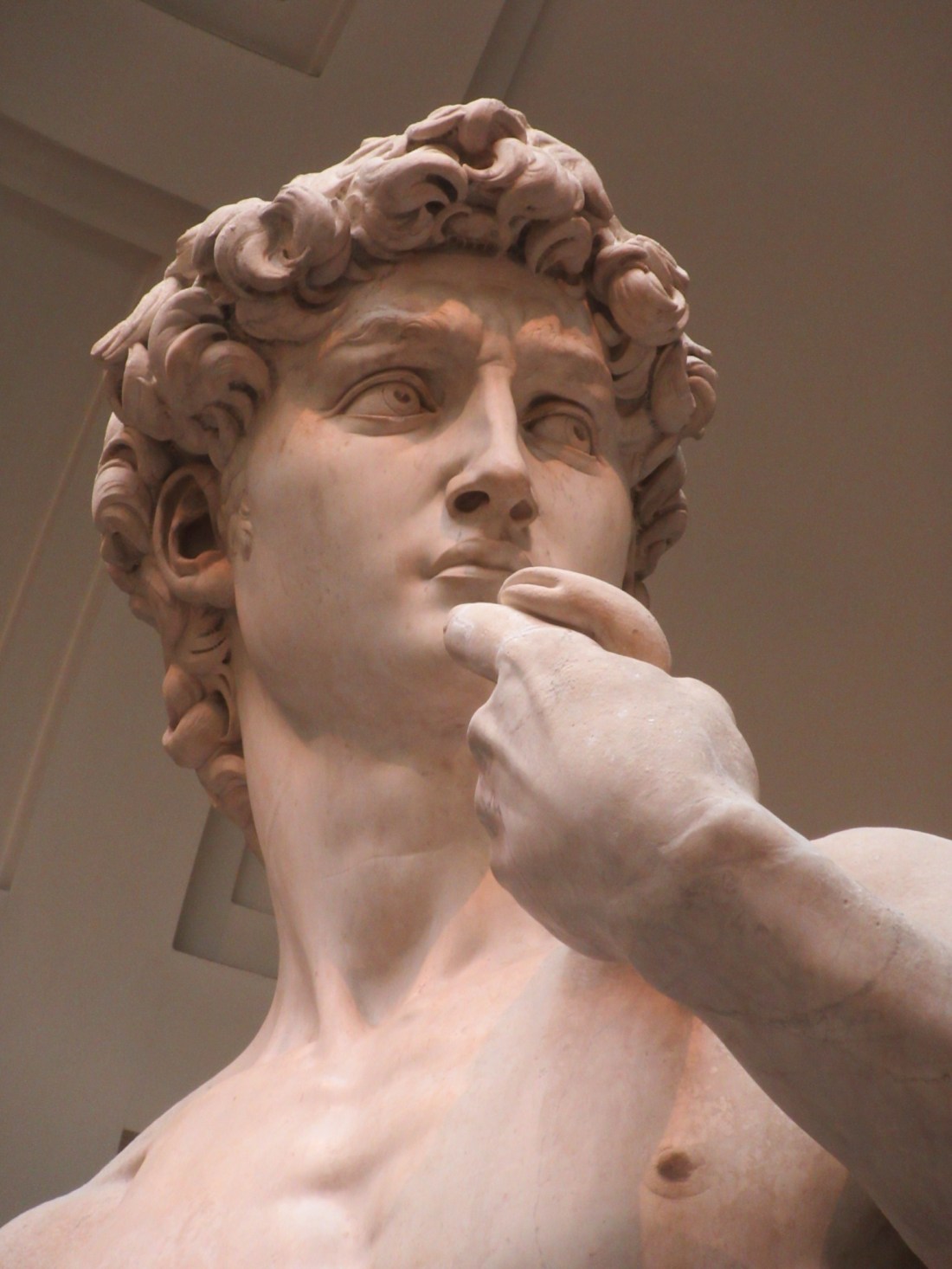
Michelangelo (26 years old) was given a block of marble that other sculptors had rejected as too tall, shallow, and flawed to be of any value.But Michelangelo picked up his hammer and chisel, knocked a knot off what became David’s heart, and started to work.The statue captures David as he’s sizing up his enemy. He stands relaxed but alert, leaning on one leg in a classical pose known as contrapposto.In his powerful left hand, he fondles the handle of the sling,ready to fling a stone at the giant.His gaze is steady – searching with intense concentration, but also with extreme confidence.Michelangelo has caught the precise moment when David is saying “I can take this guy.”David is the symbol of Renaissance optimism. He’s not a brute. He’s a civilized, thinking individual who can grapple with and overcome problems. He needs no armour, only his God-given physical strength and wits.
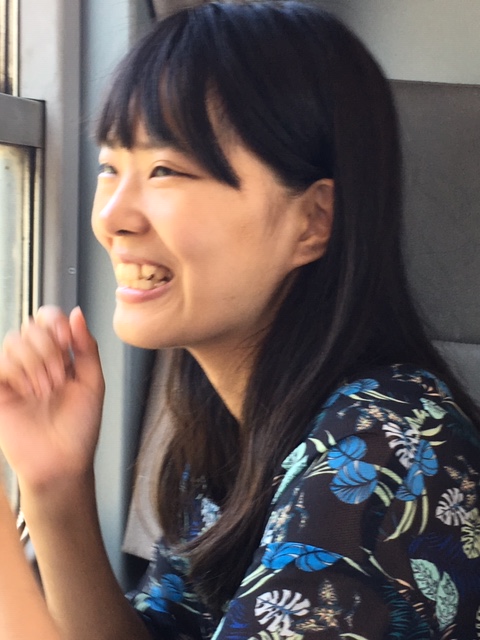
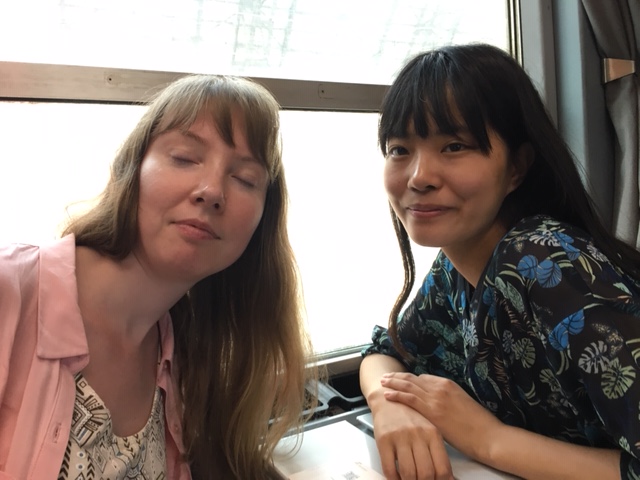
People often ask me if we speak the language of the country we’re going to visit. My answer is always “No, but we manage to communicate.” When we were on the train a few days ago I sat next to these two lovely young ladies. As I watched them chat and giggle I quickly realized they were from different parts of the world. In talking to them I learned that one girl was from Moscow and the other Japan. And yet here they were, cell phones out sharing family pictures to one another and learning about the other’s life etc. It’s absolutely my favorite part of travel. Observing people as they happily meet the challenge of talking to one another. (I do have to apologize to the girl from Moscow for the poor photo I took – we were all trying to get off of the train when I asked to take a picture of them and I didn’t have time to check.)
“You have brains in your head. You have feet in your shoes. You can steer yourself any direction you choose.” – Dr Seuss
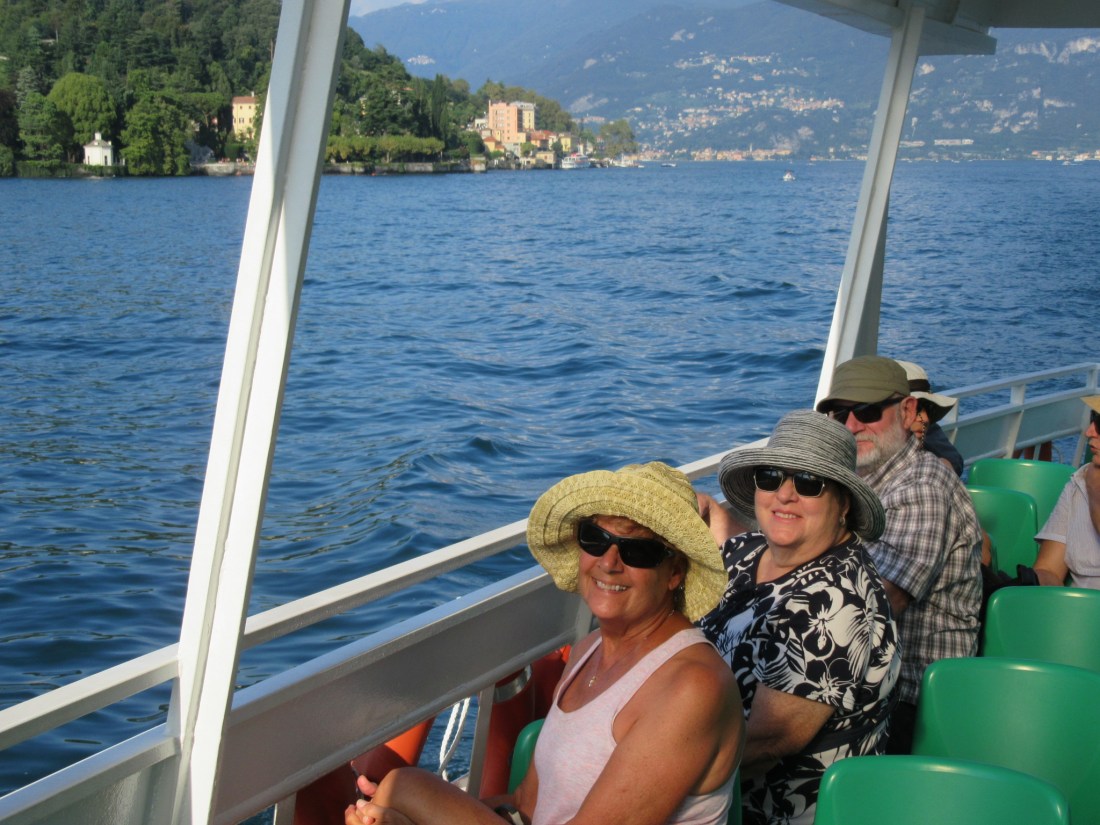
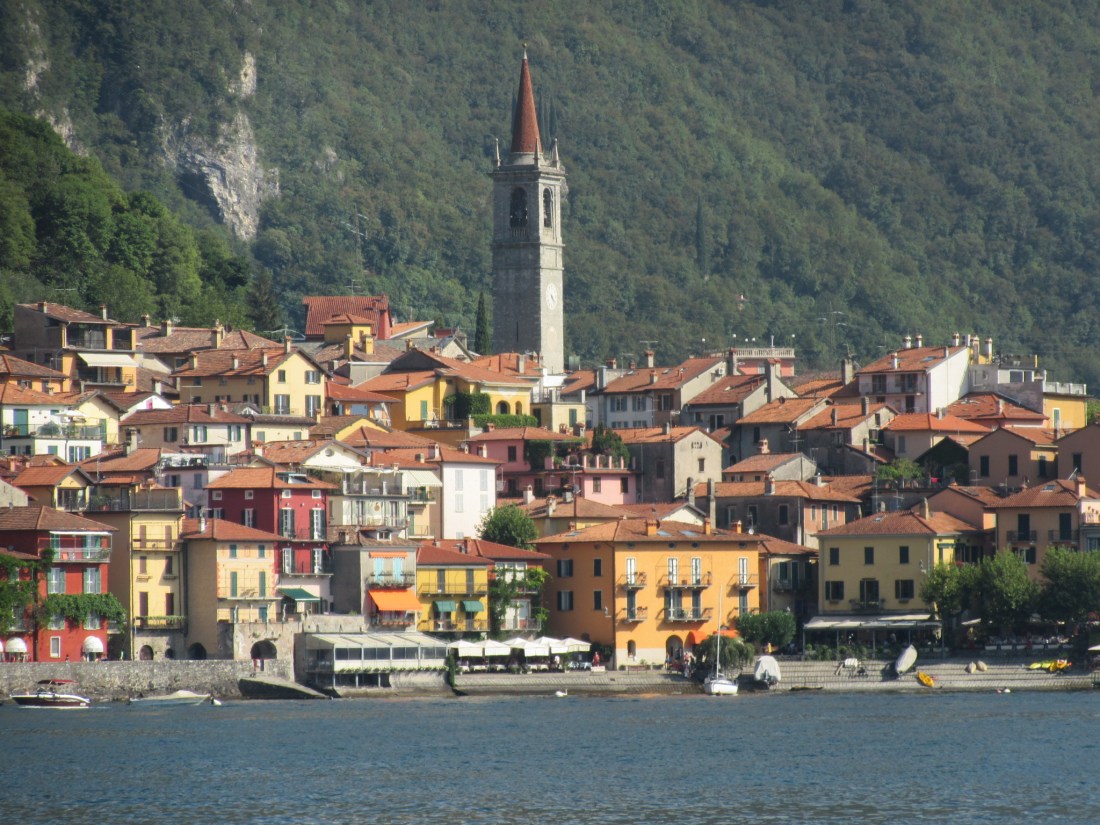
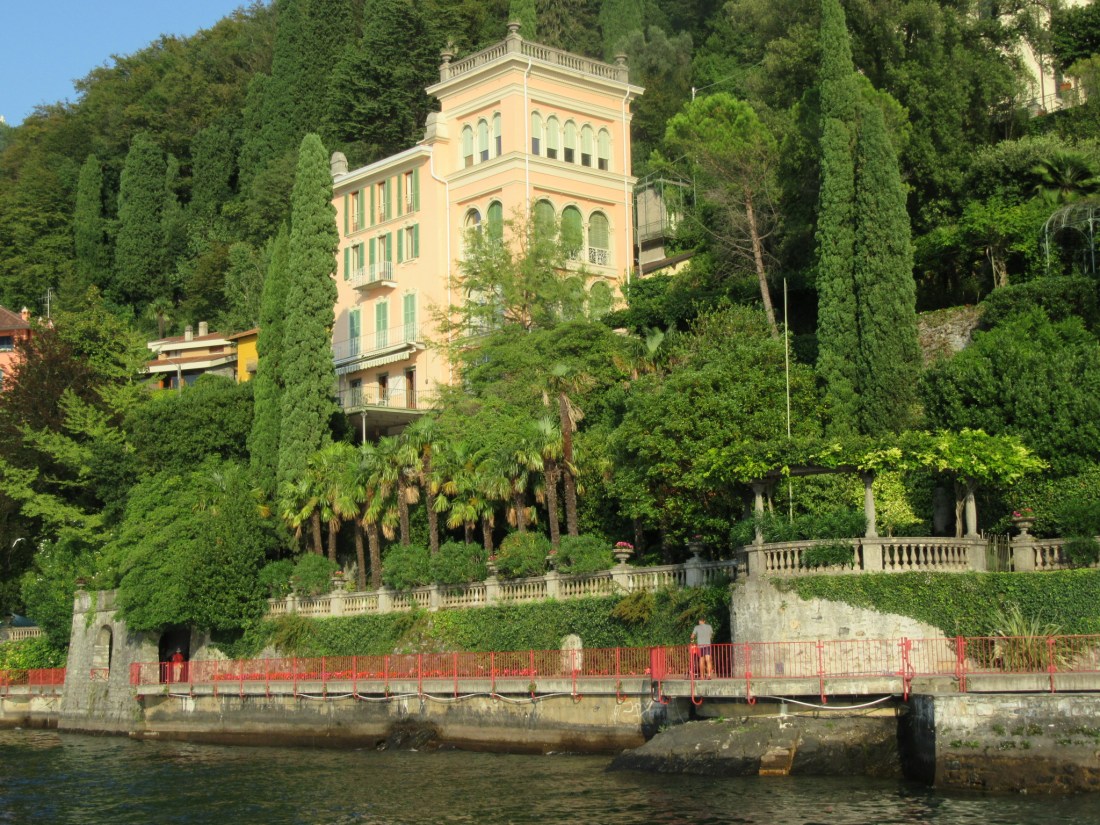
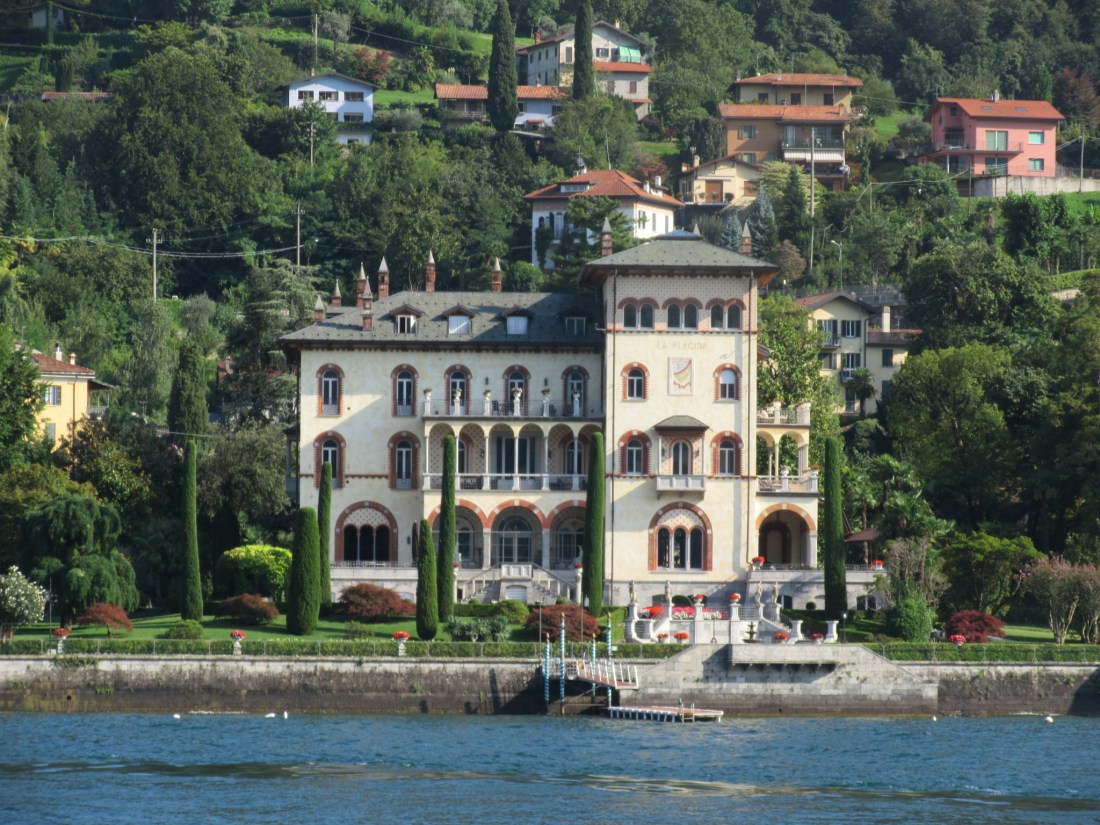
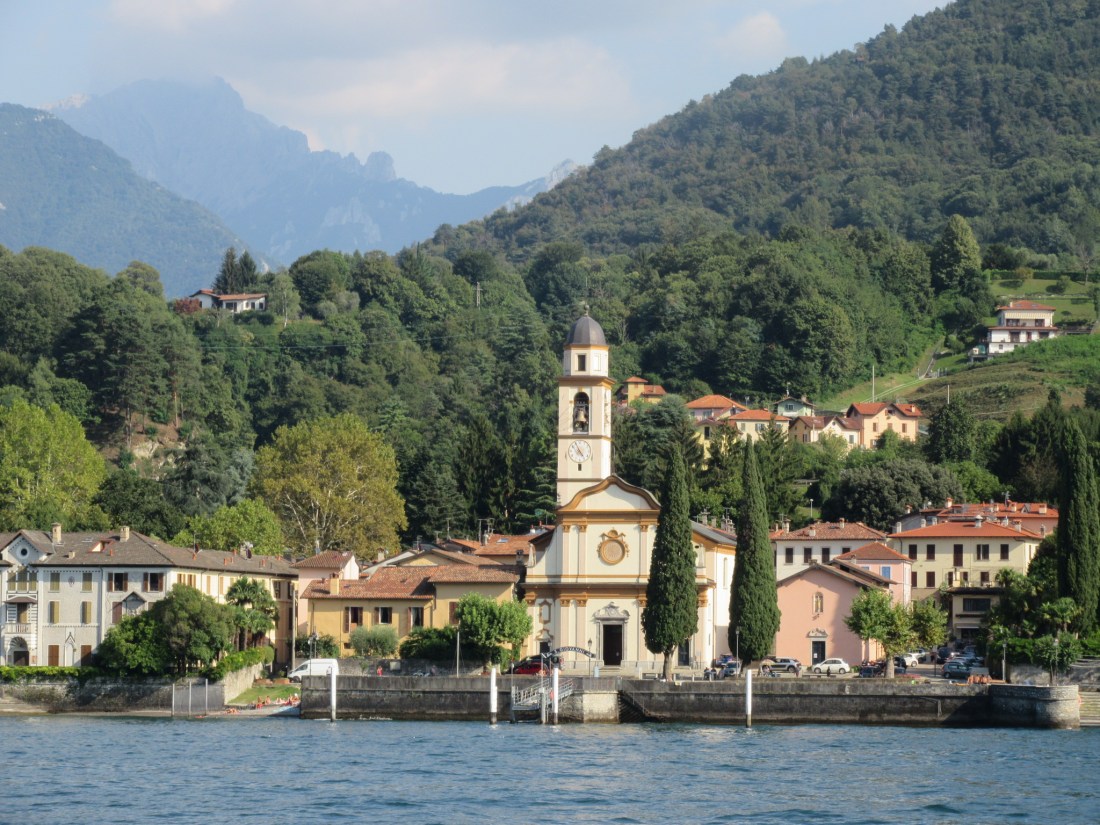
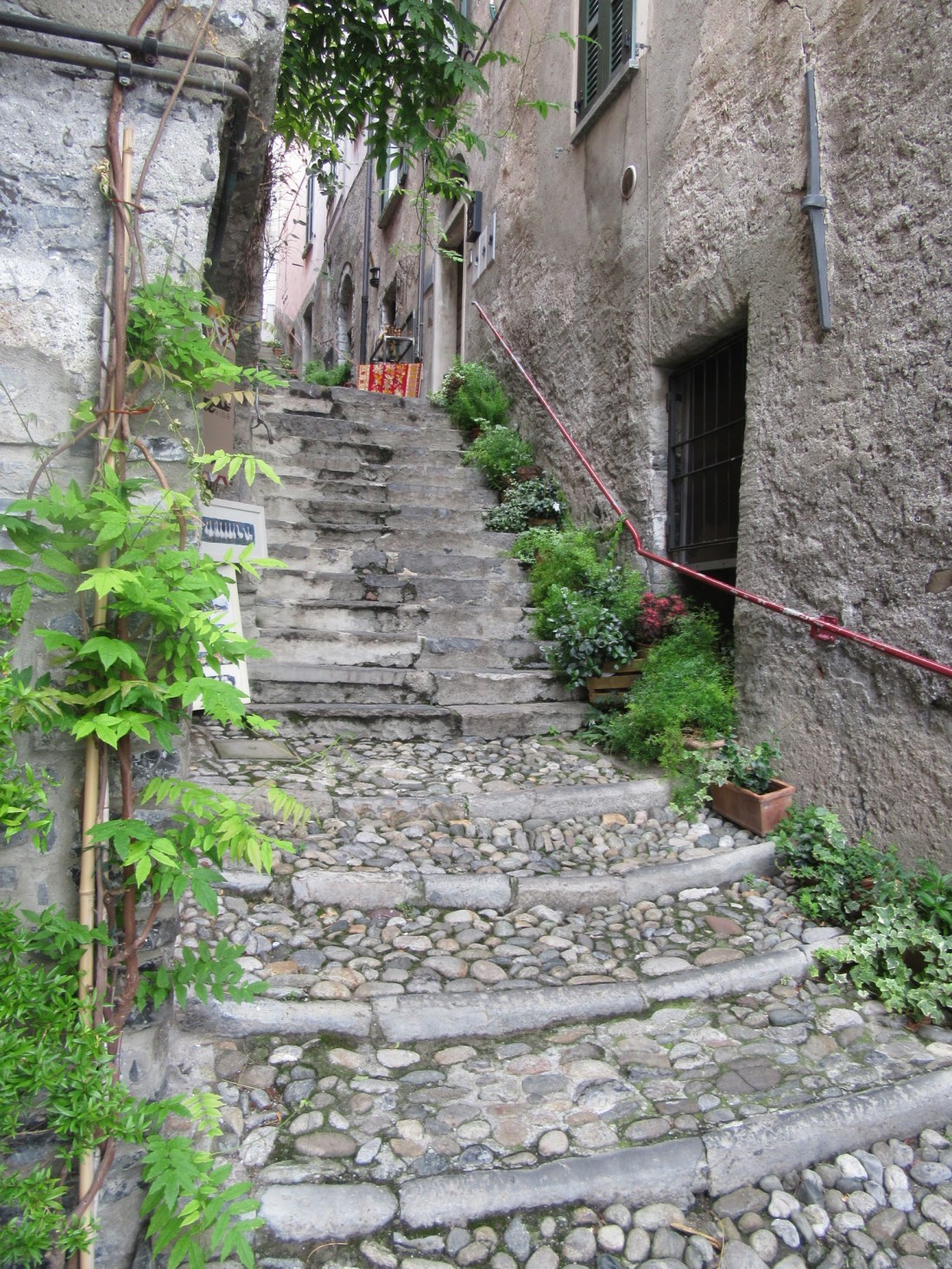
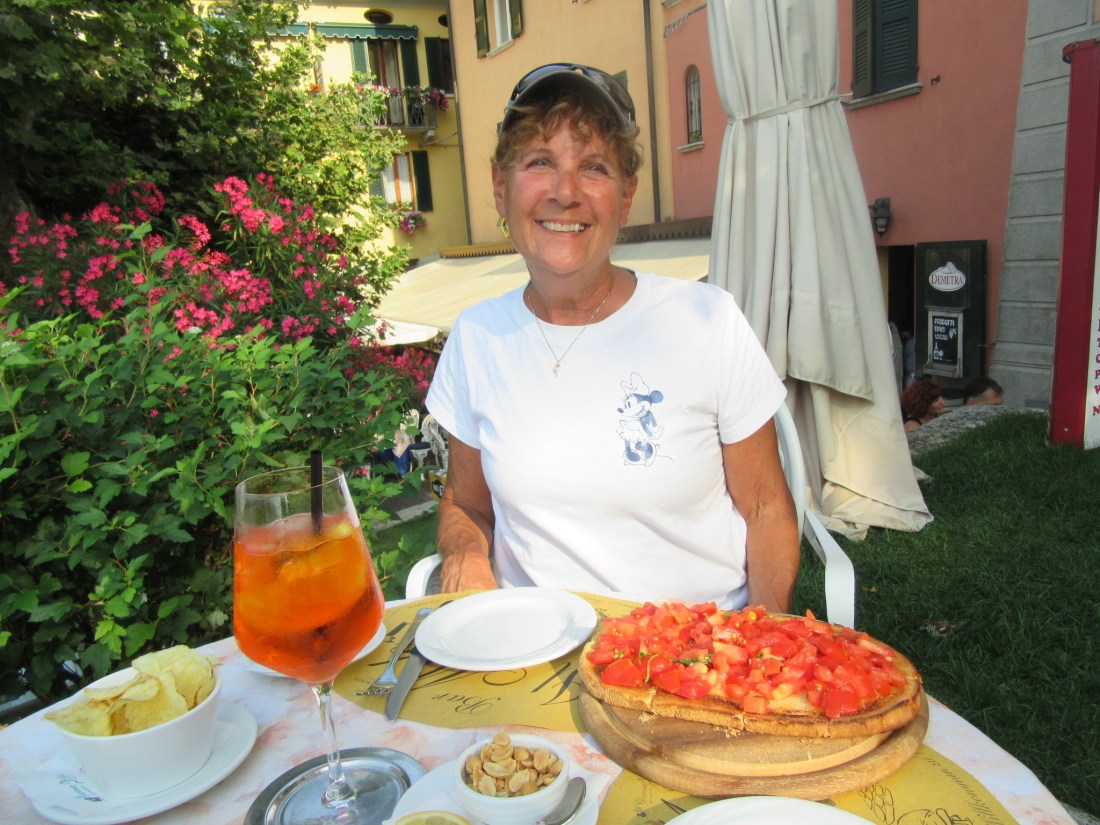
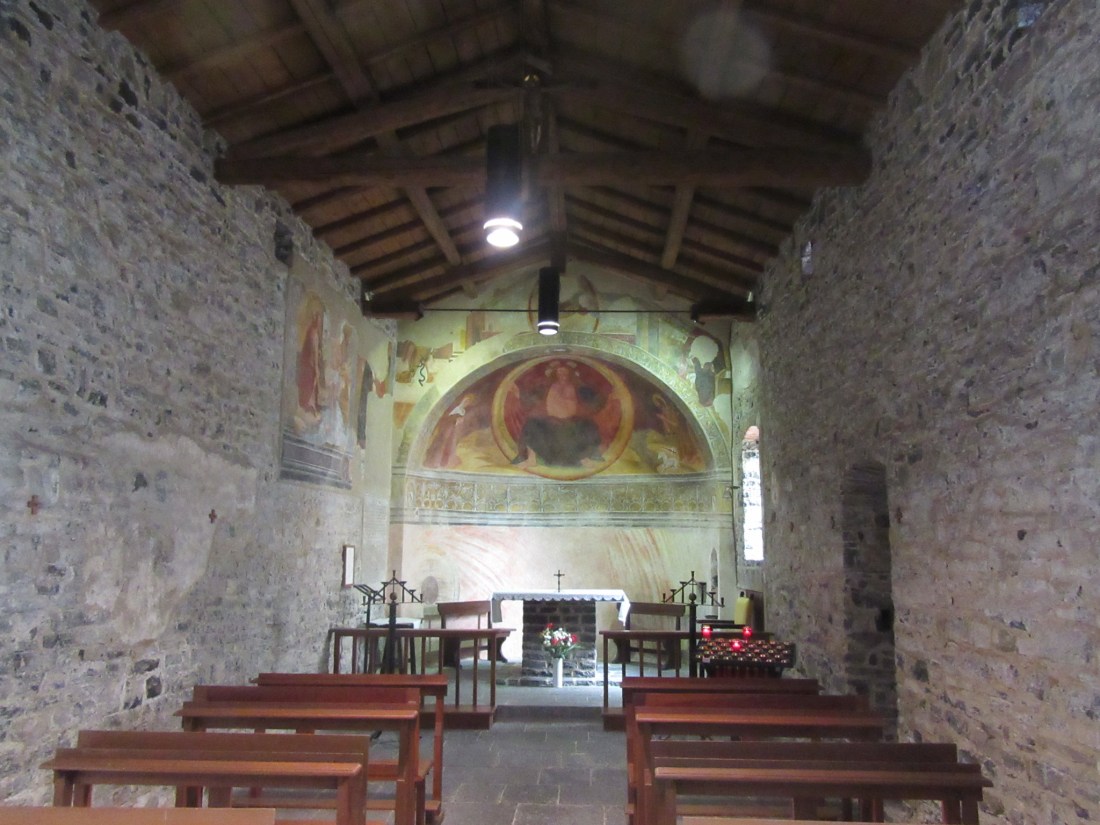
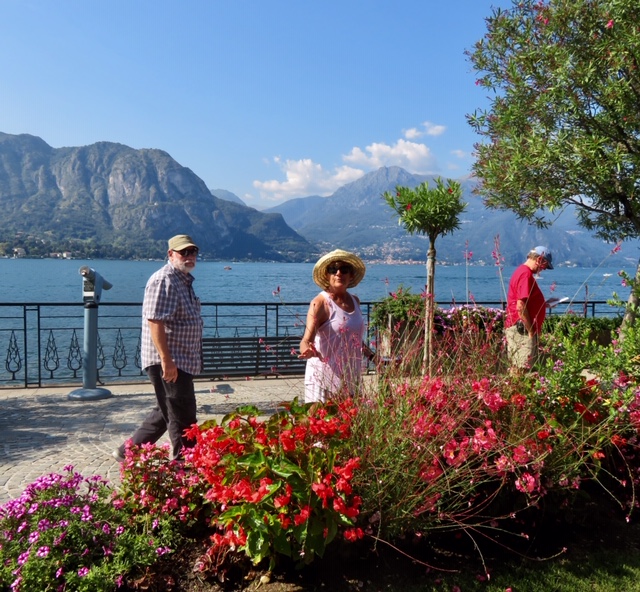
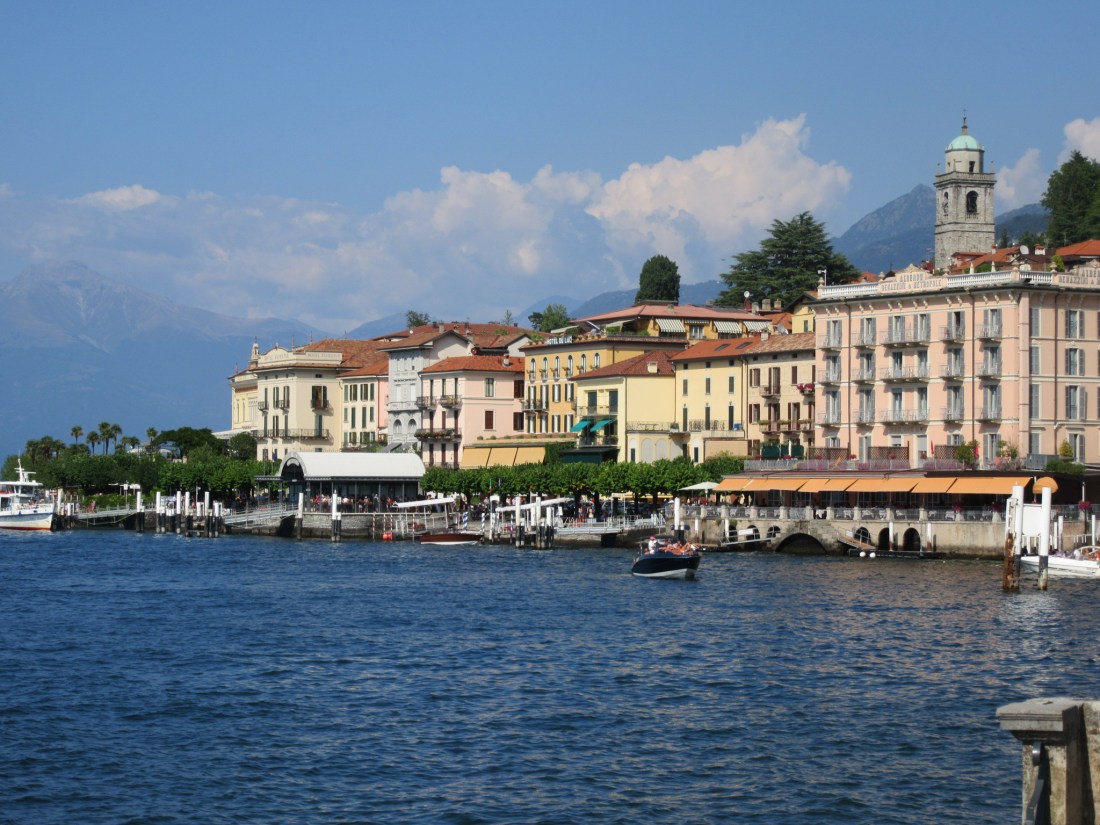
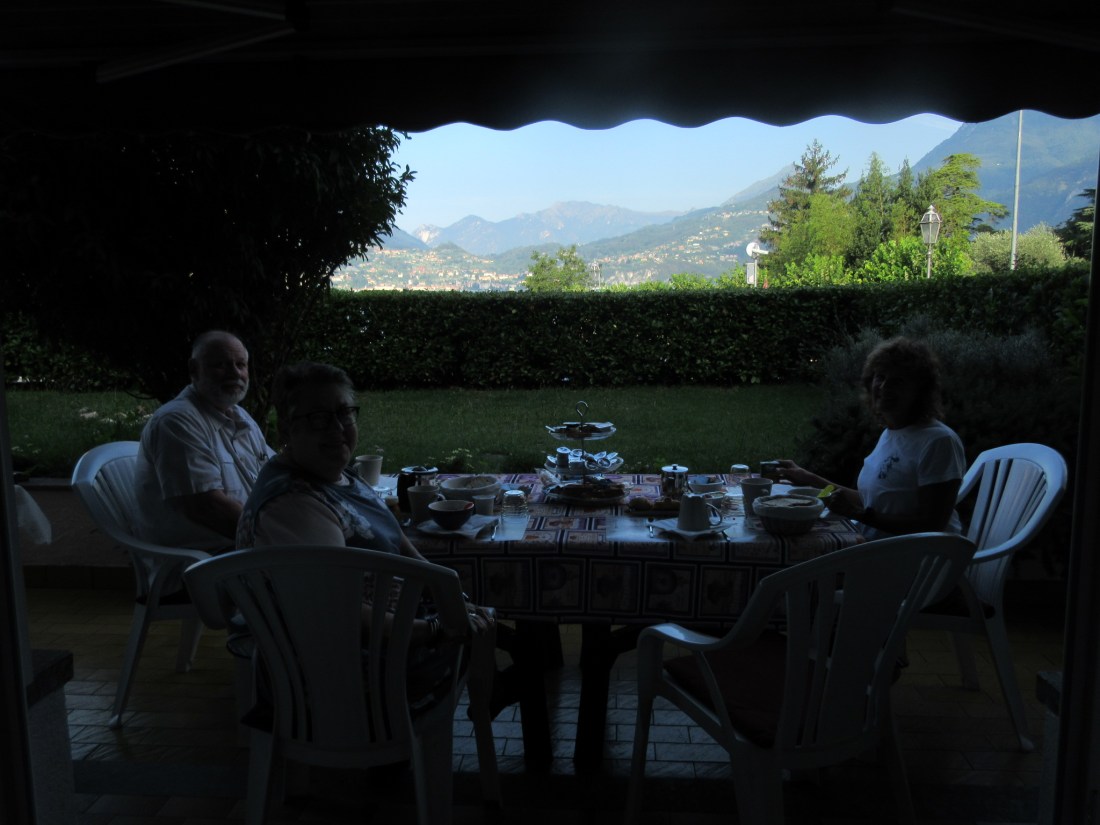
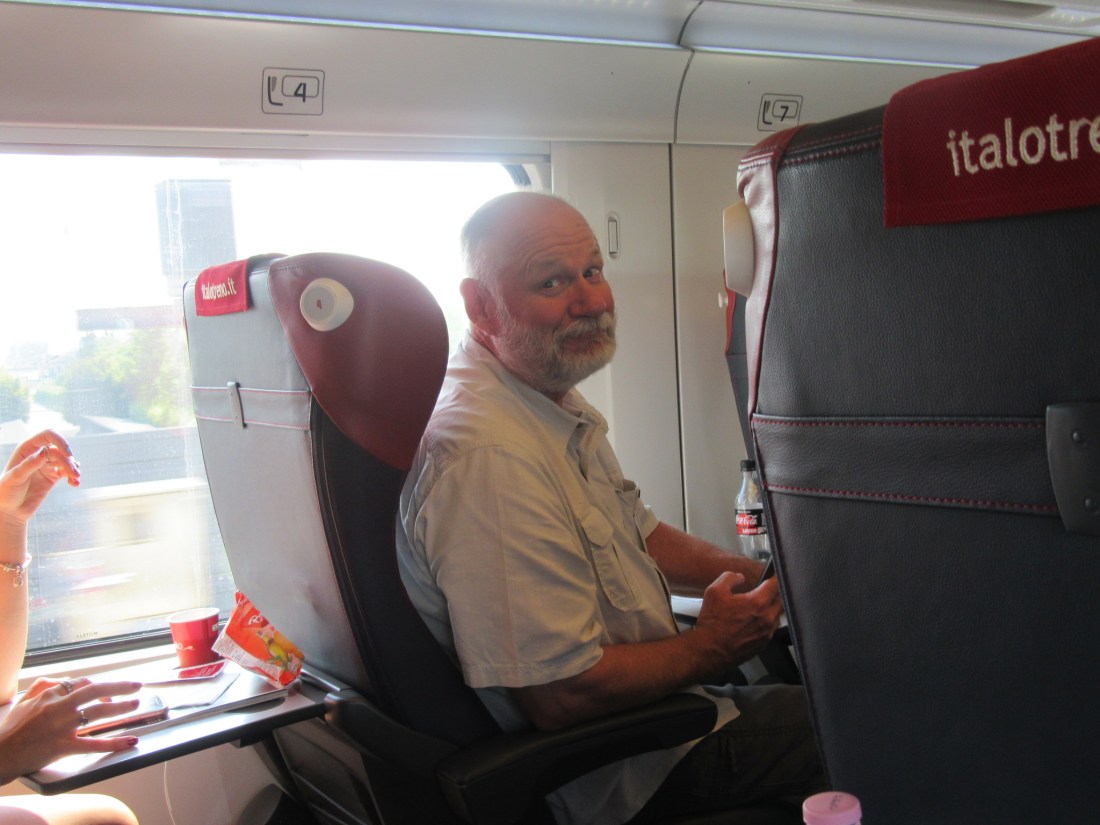
When we were in the planning stage of our trip, Mary said her number one wish was to boat on Lake Como. Just about as soon as we got into town we headed to the docks. All of us chose a spot on the railing and for the next three hours we boated!We floated by Varenna, our home for the next three nights.And we sailed by beautiful villas.And more beautiful villas, hoping for a glance at George Clooney😉No, George but so many magnificent villas!Once on land it was time to explore Varenna – seriously, can’t we go anywhere that’s flat!?!I worked up a powerful appetite 😋9th century church, we discovered on one of our explores, with original frescoes.Being on the water makes for some very happy flowers!Also, visited Bellagio – down the lake from Varenna. Very pretty, filled with expensive shops. Good thing we only have carry on luggage. Not a lot of extra room!Tough lighting for the photographer but I wanted so show you our view at breakfast.Curious George is anxious to know where we’ll end up next. 😎





























 Murphys on the Move